
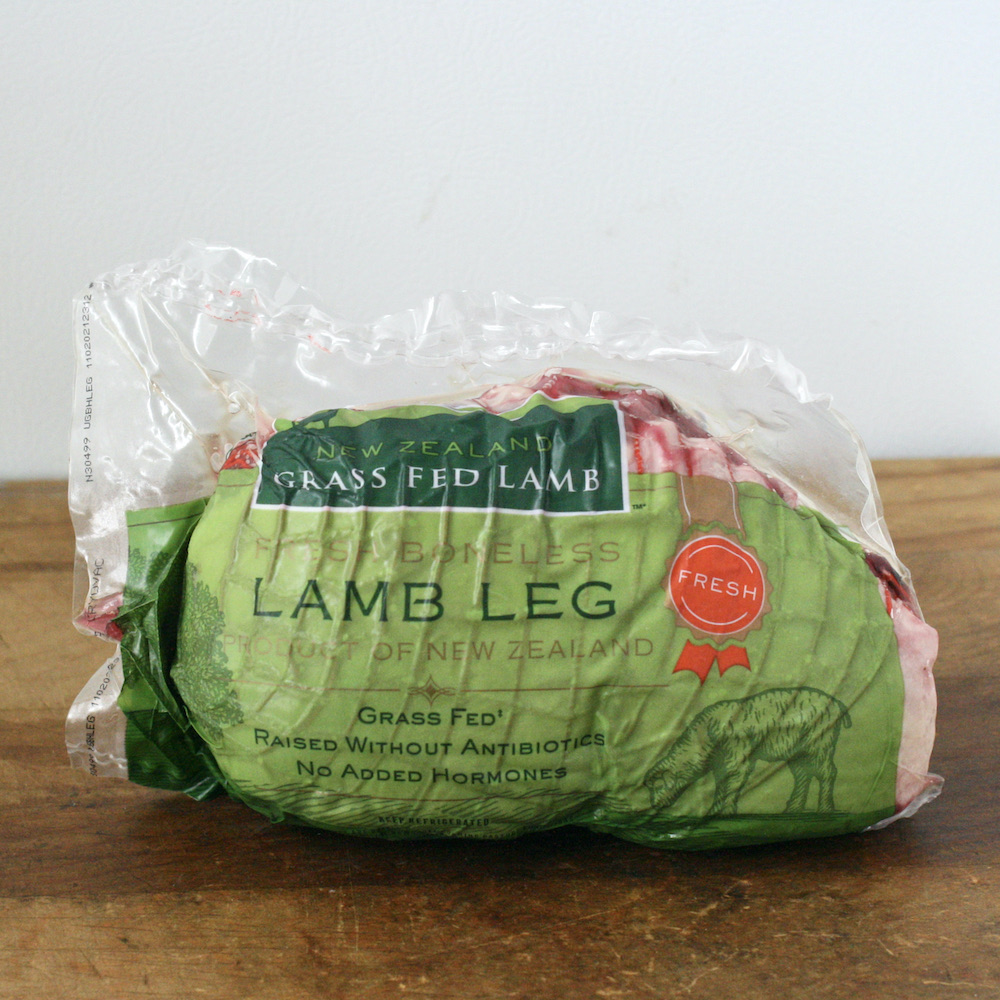
Product images · Packaging may change
Fresh New Zealand Lamb
100% grass-fed New Zealand boneless lamb leg, based on SKU-matched 2022 packaging. Sold by weight.
A CLOSER LOOK
The food facts.
Positives
Feed100% grass-fedGood
100% grass-fed on the September 2022 package. The matching Spring Lamb programme uses grasses, chicory and clover; attributes vary by product. The current package, organic status and non-GMO feed are unconfirmed. 100% grass-fed appears on SKU-matched September 2022 packaging; the current package has not been verified.
More info
Good
100% grass-fed on the September 2022 package. The matching Spring Lamb programme uses grasses, chicory and clover; attributes vary by product. The current package, organic status and non-GMO feed are unconfirmed. 100% grass-fed appears on SKU-matched September 2022 packaging; the current package has not been verified.
A lifetime forage diet excludes grain, including during finishing. Grass-fed beef generally has more omega-3 fat and a lower omega-6 to omega-3 ratio than grain-fed beef.
Actual feeding, pasture or processing context; no farm or current lot allocation.
A lifetime forage diet excludes grain, including during finishing. Grass-fed beef generally has more omega-3 fat and a lower omega-6 to omega-3 ratio than grain-fed beef.
Original research dates retained. Historical packages do not establish current lot identity.
Sources
- 100% grass-fed (2022 package) — supporting source
- New Zealand Spring Lamb feeding programme · Why Choose Grass-Fed New Zealand Spring Lamb? and product-attribute disclaimer
Product information
Origin & producer
Related businesses
Country of origin · New Zealand
New Zealand origin in Trader Joe’s retained September 2026 catalog. The supplying farm is not named.
Declared product country, distinct from the historical2022 ME50 processor observation; no named farm or currentlot traced.
The retained catalog entry is unpublished; current availability is unconfirmed.
Sources
- Trader Joe’s retained exact New Zealand lamb catalog record · Item 035098: Product of New Zealand. Updated September 19, 2026; catalog captured the same day.
Processed in · Lorneville, Invercargill, New Zealand (dated source)
ME50 on the SKU-matched September 2022 package maps to Alliance Lorneville; current plant allocation is unconfirmed.
Brand · New Zealand Spring Lamb
New Zealand Spring Lamb
Processor · Alliance Group Limited — Lorneville (ME50) (dated source)
Alliance Lorneville is identified by ME50 on the SKU-matched 2022 package; this is a processor, not an identified farm.
Alliance Lorneville (2022 package)
The SKU-matched September 2022 package identifies New Zealand Spring Lamb and ME50, mapped to Alliance’s Lorneville plant in New Zealand. This is a dated processor connection; the current supplier and supplying ranch are unconfirmed.
Named historical brand/processor, not a supplying farm or transfer of beef-only treatment declarations to lamb.
Current package not independently inspected.
Origin & producer notes · A SKU-matched September 2022 package identifies New Zealand Spring Lamb and ME50 (Alliance Lorneville). Current supplier and plant allocation remain unconfirmed.
A SKU-matched September 2022 package identifies New Zealand Spring Lamb and ME50 (Alliance Lorneville). Current supplier and plant allocation remain unconfirmed.
Feed
Feed notes · 100% grass-fed is printed on SKU-matched 2022 packaging. It does not establish organic feed or independent grass-fed certification.
100% grass-fed is printed on SKU-matched 2022 packaging. It does not establish organic feed or independent grass-fed certification.
How it's raised
Conditions · Pasture-based; Free-range
Pasture-based; Free-range
Outdoor access · Year-round
Lifelong outdoor pasture and free-range raising under the matching New Zealand Spring Lamb brand programme. The supplier match is dated 2022 and product attributes can vary.
Actual feeding, pasture or processing context; no farm or current lot allocation.
Original research dates retained. Historical packages do not establish current lot identity.
How it's raised notes · Pasture and free-range raising with year-round outdoor access under the matching brand programme. Supplier match dated 2022; product attributes can vary.
Pasture and free-range raising with year-round outdoor access under the matching brand programme. Supplier match dated 2022; product attributes can vary.
Antibiotics & hormones
No antibiotics (dated source)
Excellent
No antibiotics. Raised without antibiotics appears on SKU-matched September 2022 packaging; current brand prose says no routine antibiotics.
Routine antibiotic use can select for resistant bacteria. A no-antibiotics supply commitment keeps treated animals out of that programme; sick animals still need care.
Raised without antibiotics. Limiting routine antibiotic use helps reduce selection for antibiotic-resistant bacteria. Sick animals can still receive care and be kept out of this supply.
No added hormones
Excellent
No added hormones
Added growth hormones accelerate weight gain. We would choose meat raised without that intervention.
A no-added-hormones commitment excludes hormone treatments used to accelerate weight gain.
Processing
Supplier food-safety audits · Annual food-safety audits required
Trader Joe’s requires annual GFSI-benchmarked food-safety audits for sites that process, pack, store or distribute its products. This supplier standard does not certify farm animal care or disclose this package’s audit results.
Annual benchmarked food-safety auditing is a stated supplier-control requirement. It does not establish farm welfare certification, independent product quality, current audit execution or a lot-level safety result.
Individual site audit bodies, findings, corrective actions and this package’s allocation were not recovered in this selection.
Sources
- Trader Joe’s Potential Vendor Requirements · Annual GFSI-benchmarked audits: processing, packing, storage and distribution sites. September19 body; October18 canonical rendered review.
Brand cooking guide · Cooking-guide targets differ from USDA guidance
The brand’s cooking guide includes 130°F targets for lamb leg. USDA recommends 145°F and at least three minutes’ rest; the brand’s separate grass-fed page includes that minimum too.
Published culinary targets and the federal safety endpoint are different. Keep the brand’s separate145F safety note alongside the discrepancy. No food contamination, illness, unsafe meal or factory-control failure is inferred.
General whole-cut guidance; no validated cook-time schedule for the pictured boneless leg or claim about how a shopper prepared it.
Sources
- New Zealand Spring Lamb cooking guide · October 2026 page: lamb-leg target 130–145°F; doneness table and FAQ include lower targets.
- New Zealand Spring Lamb grass-fed page — safety note · October 2026 page: USDA and Health Canada recommend a 145°F minimum for whole cuts.
- FoodSafety.gov safe minimum temperature chart · Lamb steaks, roasts and chops: 145°F with a three-minute rest. Page reviewed November 21, 2024.
An unknown answer does not mean “none.” Check your package for current details.
KEEP EXPLORING
Also in the meat aisle
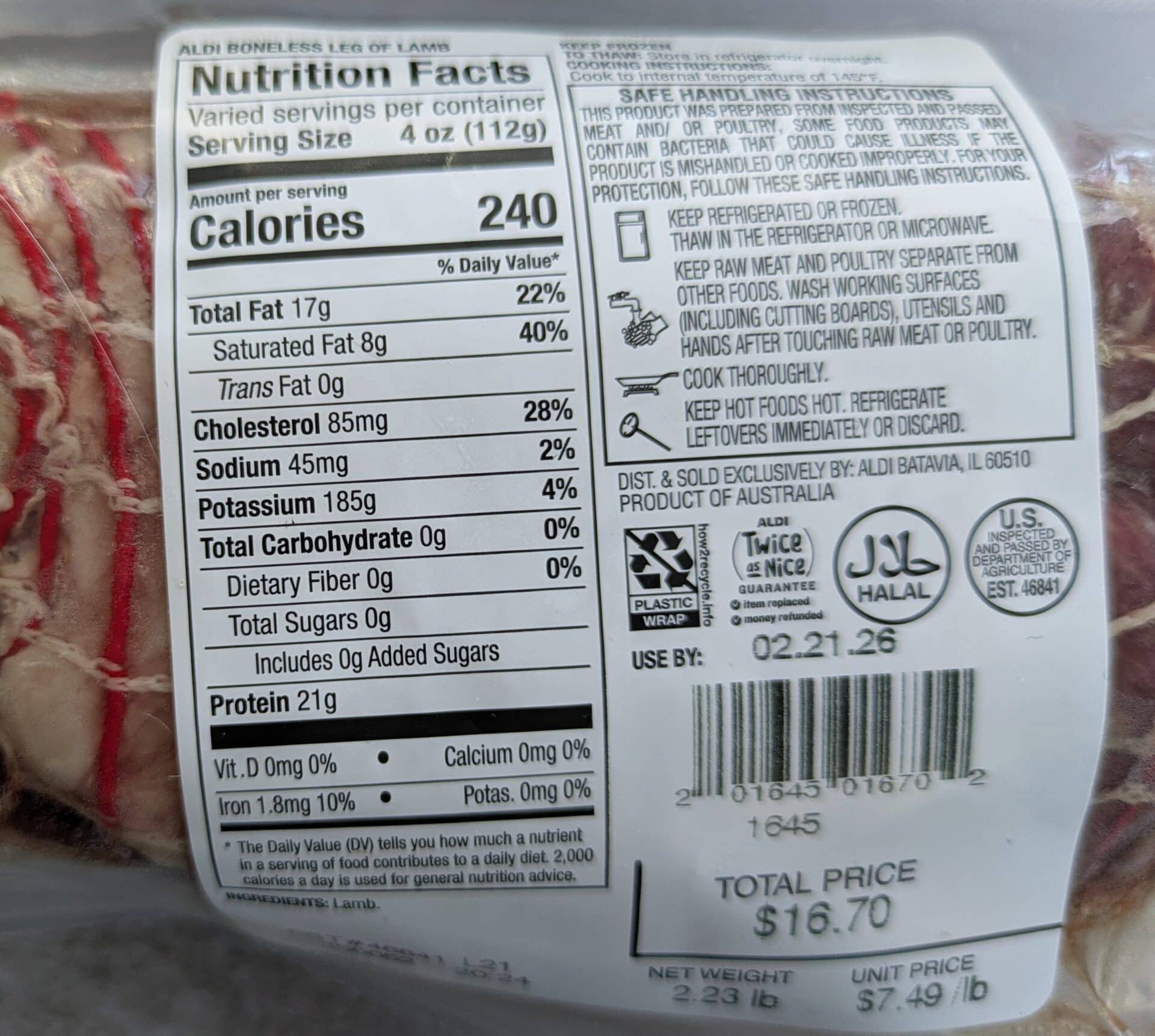
Specially Selected
Specially Selected Lamb Leg Roast (Unseasoned)
- 100% grass-fed
- 100% grass-fed
- Origin
- Australia
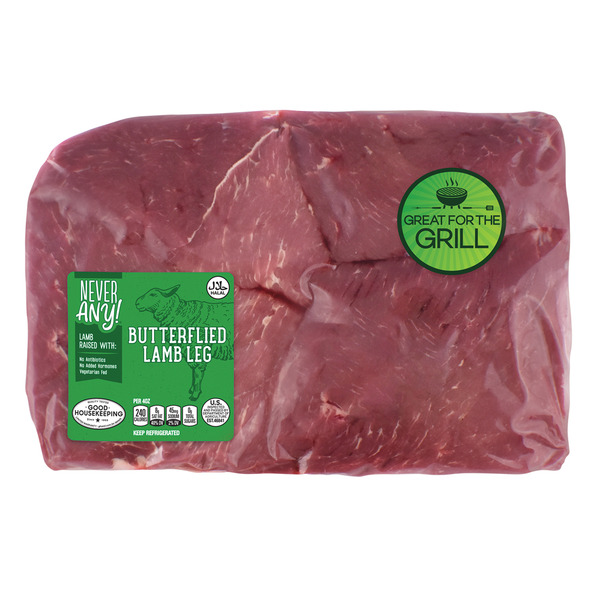
Never Any!
Never Any! Unseasoned Butterflied Lamb Leg
- Feed
- Vegetarian-fed
- Origin
- Australia
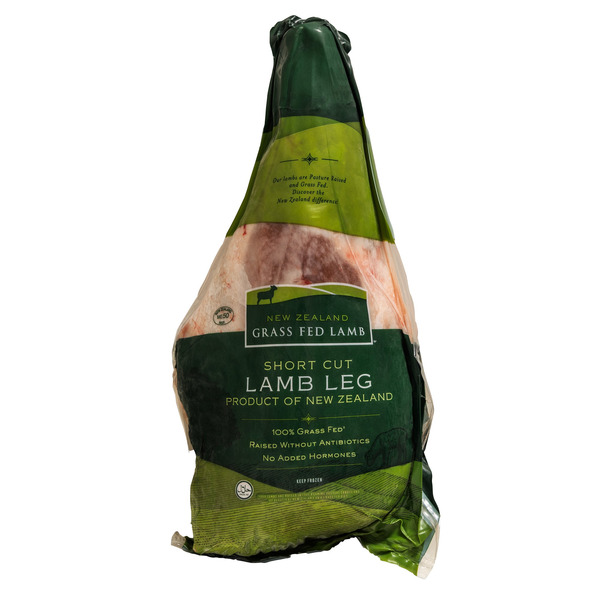
New Zealand Spring Lamb
New Zealand Spring Lamb New Zealand Lamb, Leg, Short Cut
- Feed and finishing
- 100% grass-fed
- Origin
- New Zealand