
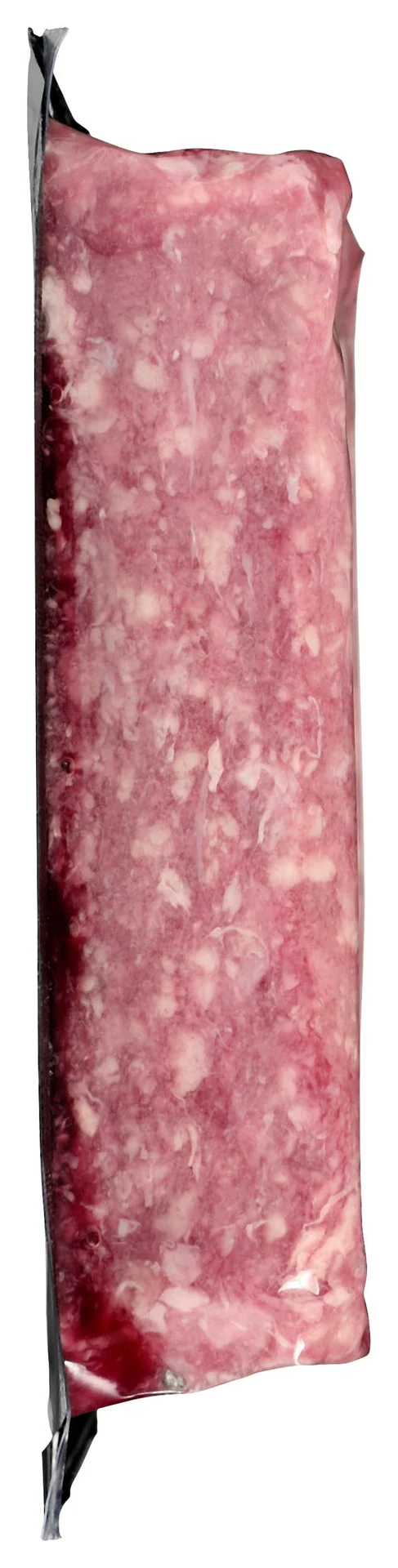
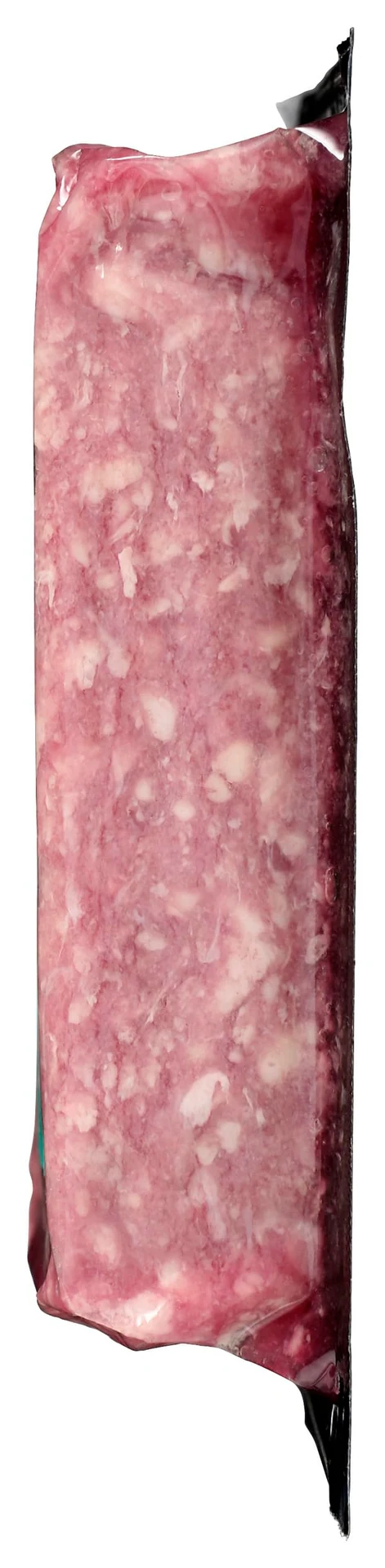
Product images · Packaging may change
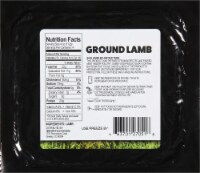
Nature's Rancher All Natural 100% Grass-Fed Ground Lamb, 1 lb
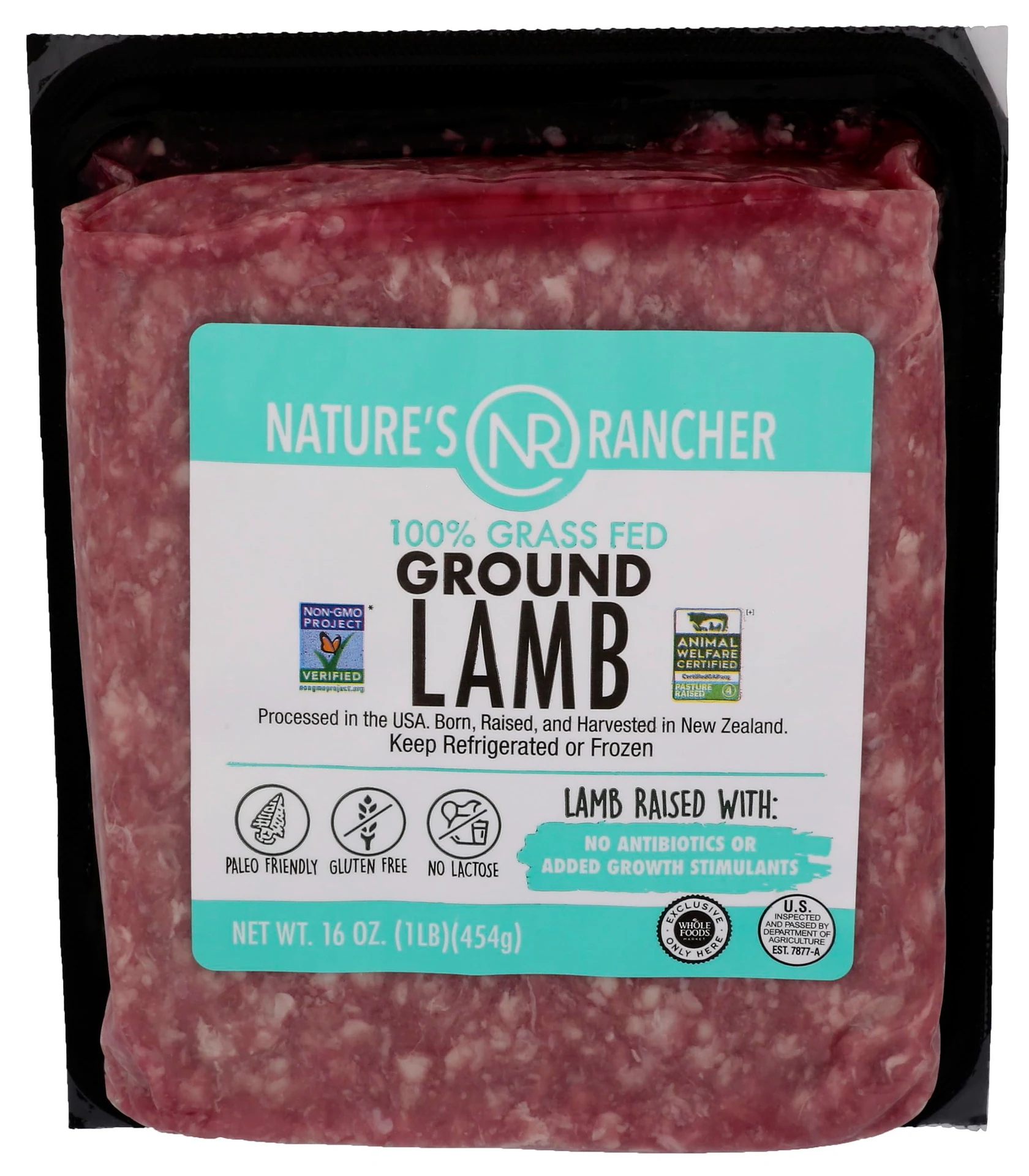
100% grass-fed non-GMO pasture-raised New Zealand lamb. G.A.P. Step 4; U.S. processing.
Feed
100% grass-fed non-GMOCertifications
G.A.P. Animal Welfare Certified — Step 4, Non-GMO Project VerifiedOrigin
New ZealandA CLOSER LOOK
The food facts.
Positives
Feed100% grass-fed non-GMOGood
100% grass-fed non-GMO, including finishing. Permitted forage includes grass, hay, silage, lucerne and non-grain fodder crops.
More info
Good
100% grass-fed non-GMO, including finishing. Permitted forage includes grass, hay, silage, lucerne and non-grain fodder crops.
A lifetime forage diet excludes grain, including during finishing. Grass-fed beef generally has more omega-3 fat and a lower omega-6 to omega-3 ratio than grain-fed beef.
Programme requirements or supplier-network context, not an individual farm or current shipment observation.
A lifetime forage diet excludes grain, including during finishing. Grass-fed beef generally has more omega-3 fat and a lower omega-6 to omega-3 ratio than grain-fed beef.
Forage menu comes from the retained historical on-farm declaration; the 2026/27 programme confirms lifetime no-grain and non-GMO eligibility.
Actual farm ration and forage species are not allocated to this package.
GMO feed
Good
Non-GMO Project Verified feed programme on the pictured label.
A non-GMO feed commitment excludes genetically engineered feed crops. It rules out those crops in the ration.
The label identifies the feed programme. No organic certification or zero-residue claim is selected.
Non-GMO feed excludes genetically engineered crops from the ration.
Undated catalog artwork does not identify an individual current shipment.
Whole Foods Meat standards
Whole Foods Meat-department standards exclude animal by-products in feed.
Retailer feed eligibility; actual farm ration records remain separate.
Retailer department eligibility, not a farm feed log or complete processing-aid inventory.
Sources
Product information
Origin & producer
Related businesses
Born, raised & harvested in · New Zealand
Lamb was born, raised and harvested in New Zealand. This is a label statement for the pictured version; the current lot is not identified.
The label describes the stated stage, not the individual farm or slaughterhouse.
Undated artwork is not an individually received package.
Sources
Processed in · United States
The pictured version was processed in the United States according to its label. The label does not identify the New Zealand slaughterhouse.
The label describes the stated stage, not the individual farm or slaughterhouse.
Undated artwork is not an individually received package.
Sources
Brand · Nature's Rancher
Nature's Rancher
Named supplier examples · Supplier examples: Awapai Horizon Kinburn Kouratahi Rangitoto Glen Eden
Atkins’ named supplier network includes Awapai, Horizon Farming, Kouratahi, Kinburn, Rangitoto and Glen Eden. These are supplier examples, not a farm allocation for this package.
Programme requirements or supplier-network context, not an individual farm or current shipment observation.
Sources
New Zealand lamb, U.S. processing
New Zealand birth, raising and harvest, followed by U.S. processing. It names Atkins Ranch as the produced-for company and carries EST. 7877-A, historically mapped to Rastelli in New Jersey.
The label identifies the stated country stages; the establishment mark identifies processing, not New Zealand slaughter.
Feed
Whole Foods Meat standards
Whole Foods Meat-department standards exclude animal by-products in feed.
Retailer feed eligibility; actual farm ration records remain separate.
Retailer department eligibility, not a farm feed log or complete processing-aid inventory.
Sources
How it's raised
Outdoor access · Year-round outdoor access with severe-weather shelter
Year-round outdoor access without seasonal confinement, with severe-weather shelter under the Atkins lamb programme.
Programme requirements or supplier-network context, not an individual farm or current shipment observation.
Sources
Pre-transport requirements · Fitness checks declarations and four-hour pre-trucking emptying
Supplier requirements: fit-to-travel checks, a pre-arrival Animal Status Declaration and at least four hours to empty out before trucking.
Programme requirements or supplier-network context, not an individual farm or current shipment observation.
G.A.P. Step 4 procedure rules · Step 4 permits castration and tail docking
G.A.P. sheep v1.4 Step 4 bans feedlot finishing and mulesing. Castration and tail docking remain allowed under age/method rules; pain relief for routine castration of young lambs is encouraged. Actual flock procedures are unconfirmed.
The certification’s procedure permissions matter when comparing welfare standards. Permission does not identify treatment of these particular lambs.
Older-age castration and tail-docking exceptions require a veterinarian, local anaesthetic and post-operative analgesia.
Only relevant overview and procedure pages were rechecked; no whole51-page fresh audit or flock records claimed.
Sources
- G.A.P. meat sheep v1.4: Step4 system and procedure rules · Overview, printed page 2; standards 2.4, 2.6 and 2.9, printed pages 19–20; Step 4 columns
Slaughter welfare requirements · Pre-slaughter stunning and third-party welfare audits required
G.A.P.’s v1.4 sheep standard requires stunning before slaughter and a current third-party slaughter-welfare audit. This is the certification requirement; this lamb’s actual plant, stunning method and audit result are unassigned.
Adds actual certification requirements without an administered drug, residue, health conclusion, slaughter-method allocation or new quality rating.
Source version is May 2020; no current farm treatment record or individual slaughter audit was obtained.
Sources
- G.A.P. meat-sheep standard v1.4 · 8.1–8.2; printed p42
Animal transport limit · 18-hour transport cap; collection-point waits excluded
G.A.P.’s v1.4 sheep standard caps Step 4 and Step 5 market-sheep transport at 18 hours. Loading, unloading and waiting at collection points are excluded from that calculation. This is a programme limit, not the actual journey time.
Programme duration calculation, not an 18-hour cap on every part of the total animal journey or this shipment’s measured travel.
Actual loading, holding and travel records remain unassigned.
Sources
- G.A.P. sheep v1.4 transport duration · Section6.6, printed p37
Antibiotics & hormones
No antibiotics
Excellent
No antibiotics
Routine antibiotic use can select for resistant bacteria. A no-antibiotics supply commitment keeps treated animals out of that programme; sick animals still need care.
Raised without antibiotics. Limiting routine antibiotic use helps reduce selection for antibiotic-resistant bacteria. Sick animals can still receive care and be kept out of this supply.
No added hormones
Excellent
No added hormones
Added growth hormones accelerate weight gain. We would choose meat raised without that intervention.
A no-added-hormones commitment excludes hormone treatments used to accelerate weight gain.
Parasite-control rules · Parasite treatments allowed; organophosphates excluded
G.A.P.’s v1.4 sheep standard allows parasite treatments and vaccines, require treatment records and exclude organophosphates. Synthetic pyrethroids are listed as acceptable alternatives. These are programme permissions, not this lamb’s medicine record.
Adds actual certification requirements without an administered drug, residue, health conclusion, slaughter-method allocation or new quality rating.
Source version is May 2020; no current farm treatment record or individual slaughter audit was obtained.
Sources
- G.A.P. meat-sheep standard v1.4 · 1.2–1.3; printed pp13–15
Ingredients
Ingredients · Ground lamb
Excellent
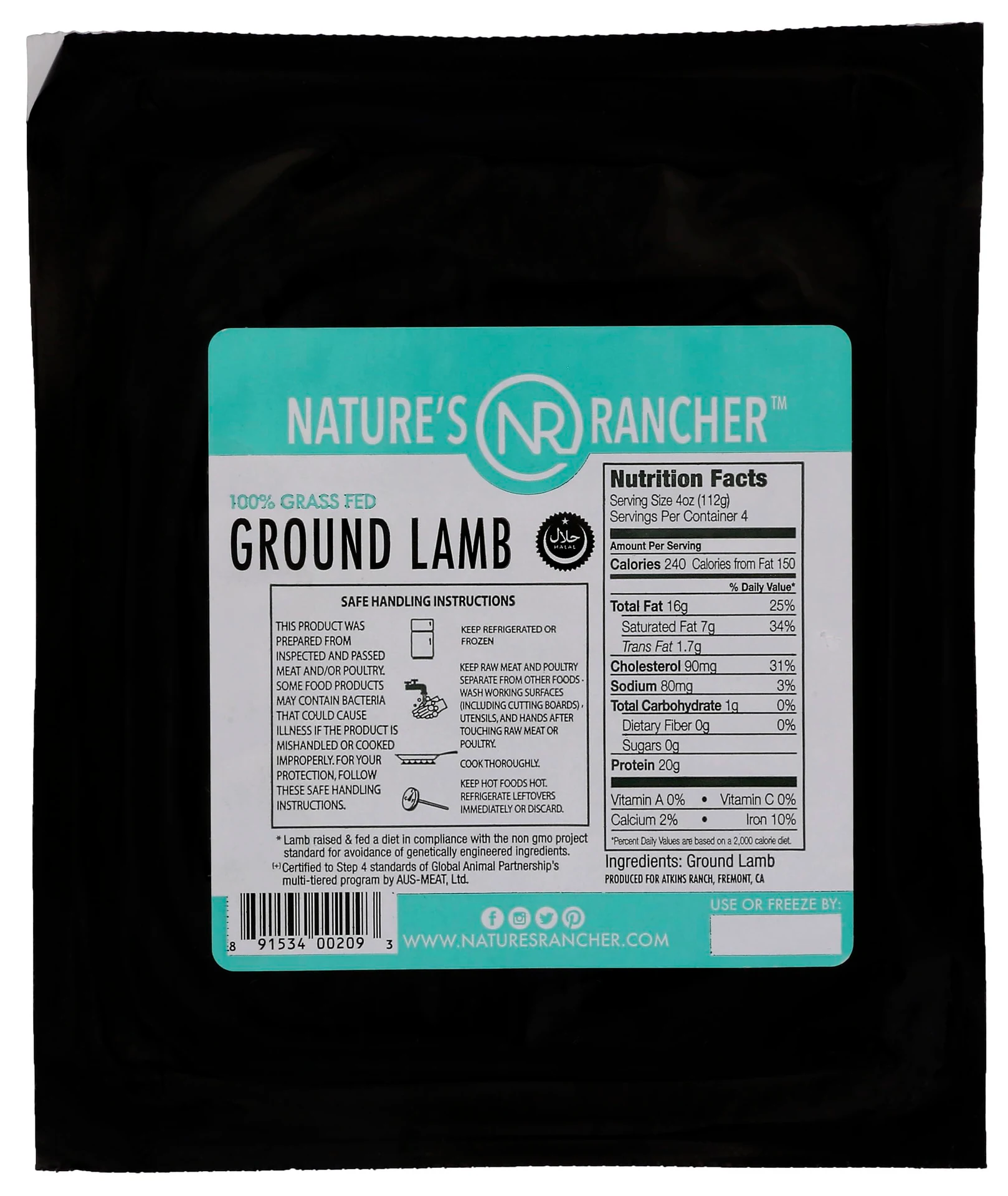
The pictured rear label lists ground lamb as the ingredient. Package versions may differ.
Plain meat best fits our ingredient preference. A simple ingredient list cannot rule out processing aids used earlier.
The ingredient declaration does not describe all processing aids.
Ingredients describe what goes into the food. Processing treatments are covered separately.
Undated artwork is not an individually received package.
Sources
Nutrition label · Per 112 g: 240 calories, 20 g protein, 16 g fat
The retained label lists per 4 oz (112 g): 240 calories, 20 g protein, 16 g fat, 7 g saturated fat, 1.7 g trans fat, 90 mg cholesterol, 80 mg sodium and 1 g carbohydrate. This is a label statement, not a lot assay.
Nutrition values describe the serving on the pictured package.
No farm, current shipment or lot assay is established.
Sources
Certifications
Certifications · G.A.P. Animal Welfare Certified — Step 4, Non-GMO Project Verified
G.A.P. Animal Welfare Certified — Step 4, Non-GMO Project Verified
Pictured certification marks · Step 4 certified by AUS-MEAT; halal mark
The pictured rear names AUS-MEAT Ltd. as its G.A.P. Step 4 certifier and displays a halal mark without naming the halal certifier. This is the retained label version, separate from Atkins’ later certifier statements.
The pictured label identifies a welfare certifier and shows a halal mark.
No farm, current shipment or lot assay is established.
Sources
Processing
Pack and storage · One-pound brick; keep refrigerated or frozen
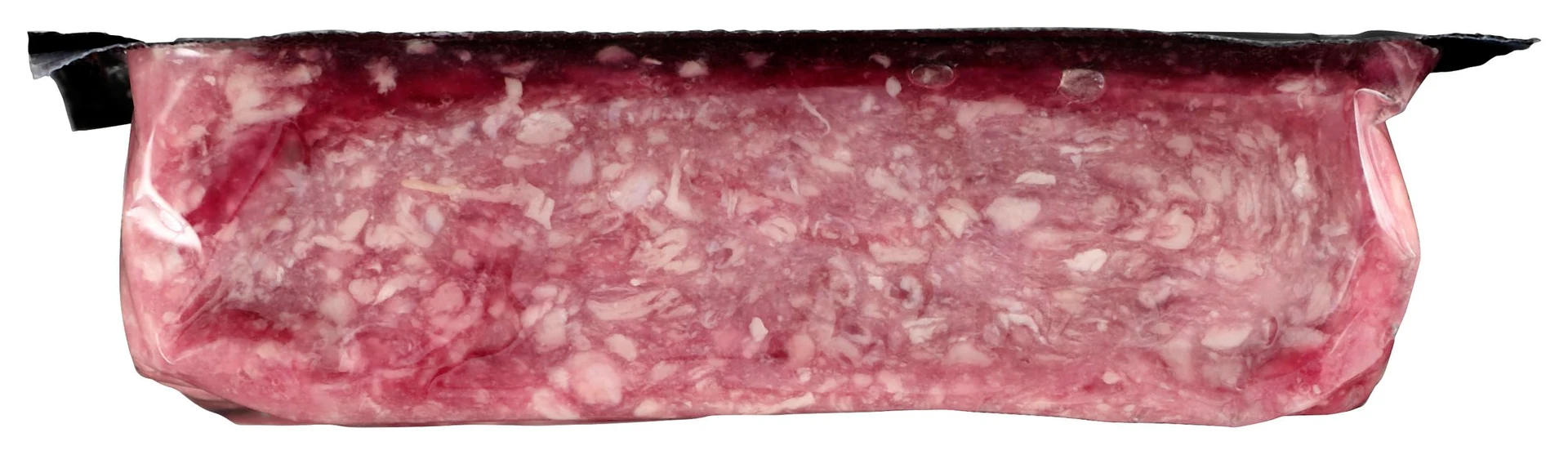
Ground lamb in a 16 oz (454 g) brick, labeled keep refrigerated or frozen. This instruction does not establish whether an individual pack was previously frozen.
Follow storage and handling instructions on the package received.
No farm, current shipment or lot assay is established.
An unknown answer does not mean “none.” Check your package for current details.
KEEP EXPLORING
Also in the meat aisle
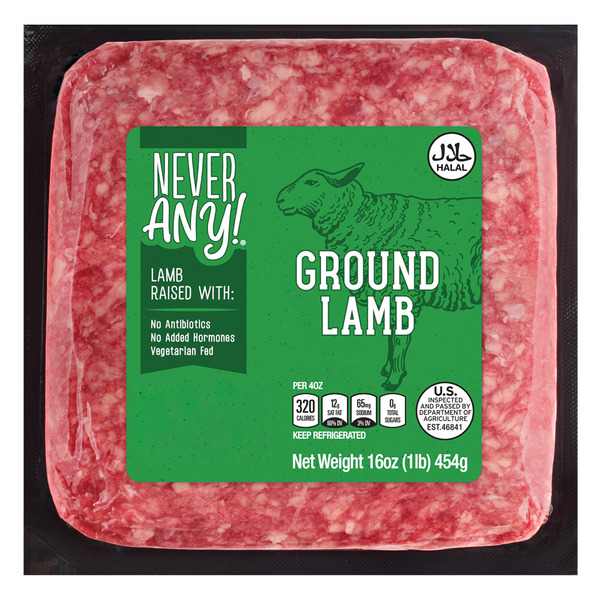
Never Any!
Never Any! Ground Lamb
- Feed
- Vegetarian-fed
- Origin
- Australia
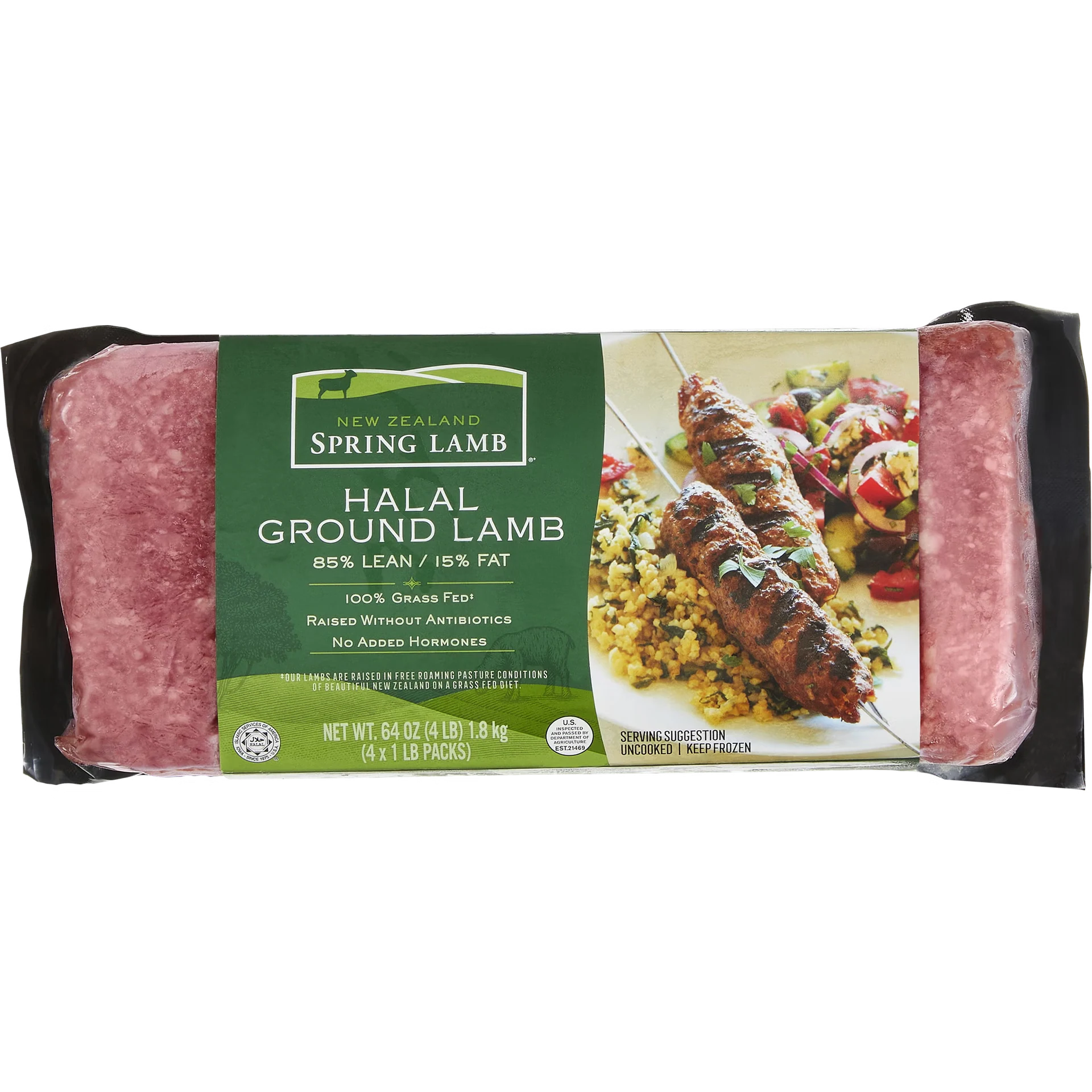
New Zealand Spring Lamb
New Zealand Spring Lamb Halal Ground Lamb, 85% Lean, 4 lbs
- Feed and finishing
- 100% grass-fed
- Origin
- New Zealand
Great Southern
Great Southern Ground Lamb, 16 oz
- Feed
- 100% grass-fed
- Origin
- Australia