
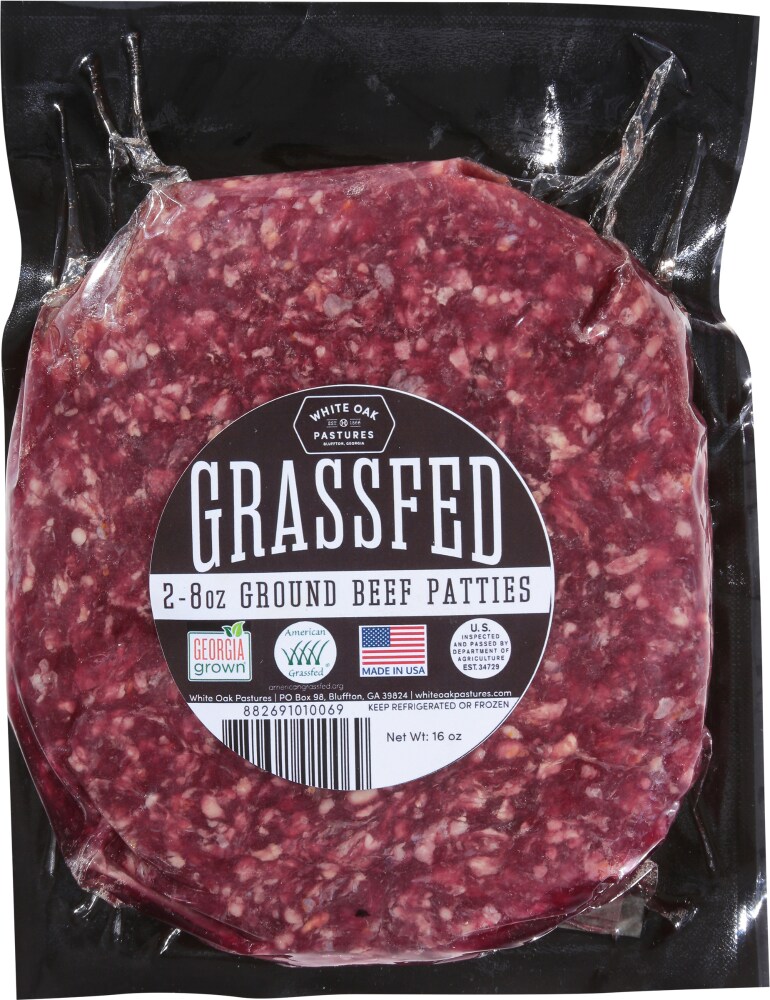
Product images · Packaging may change
White Oak Pastures 90/10 Grass-Fed Beef Patties, Two 8 oz
100% grass-fed non-GMO. Year-round pasture; on-farm slaughter in Bluffton, Georgia.
Feed
100% grass-fed non-GMOTherapeutic care and the no-use claim
Therapeutic care; no-use claimCertifications
American Grassfed AssociationProcessed in
Bluffton, Georgia, United StatesA CLOSER LOOK
The food facts.
Positives
Feed100% grass-fed non-GMOGood
Grass and forage through finishing: bermuda, bahia, johnson, Dallis and rye grasses, plus clovers. A 2018 farm account also documents winter hay/haylage and mineral supplements.
More info
Good
Grass and forage through finishing: bermuda, bahia, johnson, Dallis and rye grasses, plus clovers. A 2018 farm account also documents winter hay/haylage and mineral supplements.
Grass and forage through finishing fit our lifetime-forage preference; hay and minerals are distinct from grain finishing.
A lifetime forage diet excludes grain, including during finishing. Grass-fed beef generally has more omega-3 fat and a lower omega-6 to omega-3 ratio than grain-fed beef.
A programme source does not identify a particular animal or retail lot.
GMO feed
Good
Non-GMO grasses and clovers in White Oak’s cattle programme. This is a forage policy, without an organic certification claim.
A non-GMO feed commitment excludes genetically engineered feed crops. It rules out those crops in the ration.
Actual feed or husbandry practice; no measured nutrition, residue or human-health advantage inferred.
Non-GMO feed excludes genetically engineered crops from the ration.
Programme statements and package artwork do not establish an individual animal history or current independent audit.
Product information
Origin & producer
Related businesses
Harvested & processed in · Bluffton, Georgia, United States
Pictured EST. 34729: White Oak Pastures, Bluffton, Georgia. The January 2026 Georgia directory lists cattle slaughter and processing; this identifies the photographed version rather than every current lot.
Producer practices, own-herd history, partner calves and retail package histories remain separate. No current clinical or ecological result inferred.
Brand · White Oak Pastures
White Oak Pastures
Processor · White Oak Pastures (EST. 34729)
Pictured EST. 34729: White Oak Pastures, Bluffton, Georgia. The January 2026 Georgia directory lists cattle slaughter and processing; this identifies the photographed version rather than every current lot.
Producer practices, own-herd history, partner calves and retail package histories remain separate. No current clinical or ecological result inferred.
Calf suppliers and slaughter · Local partner calves; on-farm slaughter
Some calves are born on local producer-group farms. Programme cattle are harvested at White Oak’s on-farm abattoir in Bluffton, Georgia. This identifies the network and slaughter operation, not each animal’s birth farm.
Actual producer practice, retaining programme and date limits.
A programme source does not identify a particular animal or retail lot.
How it's raised
Conditions · Pasture-based
Pasture-based
Farm environmental study · 2020 study: carbon gains and more land
A 2020 farm model estimated 66% lower emissions than its conventional comparator after counting soil carbon, but used 2.5 times the land per equal carcass output. General Mills funded it; this is not a current package footprint.
Soil-carbon inclusion changes the modeled comparison; land demand remains a tradeoff. A negative beef allocation depends on assigning all modeled soil-carbon credit to cattle.
Single-farm multispecies model, not a current retail SKU climate measurement.
Whole-farm and cattle-only allocation results are distinct.
Pasture and grazing · Year-round pasture grazing
Year-round grazing on open pasture, with planned rotation according to forage and weather.
Actual feed or husbandry practice; no measured nutrition, residue or human-health advantage inferred.
Programme statements and package artwork do not establish an individual animal history or current independent audit.
Own-herd husbandry · Own male cattle: no castration since 2013
White Oak stopped castrating its own male cattle in 2013. This is an own-herd practice; it does not establish the earlier procedure history of calves bought from partner farms.
Producer practices, own-herd history, partner calves and retail package histories remain separate. No current clinical or ecological result inferred.
Antibiotics & hormones
No added hormones
Excellent
Cattle at White Oak’s farm are raised without added growth hormones.
Added growth hormones accelerate weight gain. We would choose meat raised without that intervention.
White Oak says hormones are not used on its farm.
A no-added-hormones commitment excludes hormone treatments used to accelerate weight gain.
The statement does not provide individual animal records from partner farms.
Sources
Therapeutic care and the no-use claim · Therapeutic care; no-use claim
A 2022 account describes antibiotics used to treat sick animals; White Oak’s FAQ says antibiotics are not used on its farm.
Treating sick animals is appropriate. A no-antibiotics beef programme can exclude treated animals, but White Oak’s treatment and supply-eligibility statements have not been reconciled.
The November 2022 interview and the farm’s no-use statement differ; current treatment and diversion practices are unconfirmed.
This is not evidence of residues, label fraud or harm in this package.
Sources
Antibiotics & hormones notes · Cattle receive vaccines against pinkeye, vibrio, lepto and respiratory illnesses. Cattle-specific dewormer use is unclear. The producer’s no-antibiotics claim is distinct from actual treatment and programme-eligibility records.
Cattle receive vaccines against pinkeye, vibrio, lepto and respiratory illnesses. Cattle-specific dewormer use is unclear. The producer’s no-antibiotics claim is distinct from actual treatment and programme-eligibility records.
Certifications
Certifications · American Grassfed Association
The pictured package carries the American Grassfed Association mark; White Oak describes its cattle as certified grassfed.
The producer says its cattle are certified grassfed; product claims and farm-level certification do not provide an individual package audit.
The photographed package and producer programme do not identify the current package’s certificate or audit.
Processing
Freezing history · White Oak blast-freezing
White Oak’s packaged-cut process includes overnight chilling, next-day cutting and blast-freezing. This package’s storage and thawing history are not specified.
The producer’s packaged-cut process is distinct from this individual package’s temperature, storage duration and freeze/thaw cycles.
No package-specific freezing/thawing record recovered.
Programme statement and plant match do not establish an exact temperature, duration or number of freeze/thaw cycles.
Sources
Historical carcass treatments · 2017 carcass treatments: lactic and peracetic acids
2017 cattle-line accounts document lactic acid and peracetic acid used to reduce pathogens. This is historical facility practice; the current treatment recipe and use on this package are unconfirmed.
Historical pathogen-control interventions are relevant processing context, not proof of a current SKU treatment or residue.
Observed in 2017; the council republication in 2023 is not a new observation.
No current formulation, dose or individual package allocation is established.
Sources
Processing notes · Slaughtered and processed in the producer’s on-farm abattoir.
Slaughtered and processed in the producer’s on-farm abattoir.
An unknown answer does not mean “none.” Check your package for current details.
KEEP EXPLORING
Also in the meat aisle
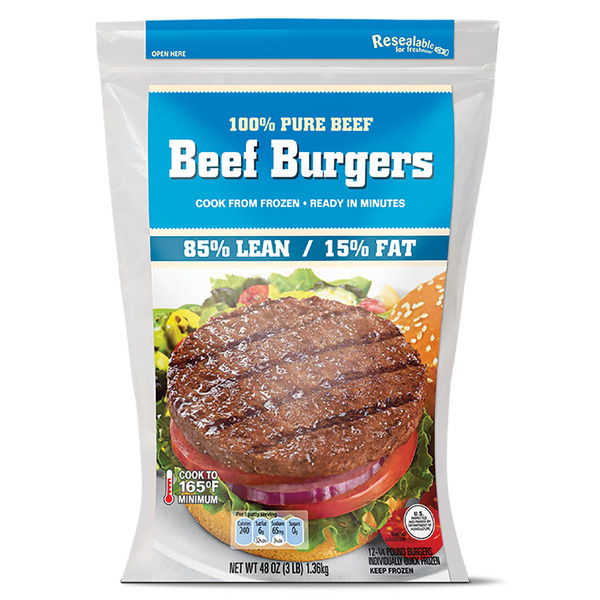
85% Lean / 15% Fat Beef Patties
- Likely some grain-finished beef
- Likely some grain-finished beef
- Origin
- United States
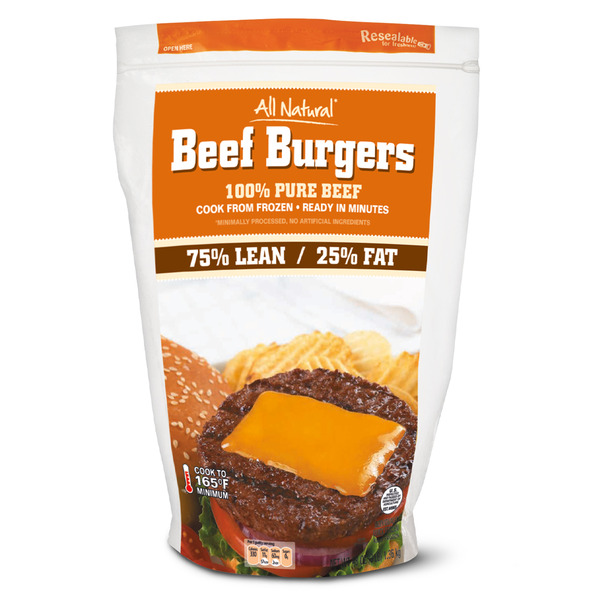
All Naturals
All Naturals 75% Lean / 25% Fat Beef Patties
- Likely some grain-finished beef
- Likely some grain-finished beef
- Origin
- United States
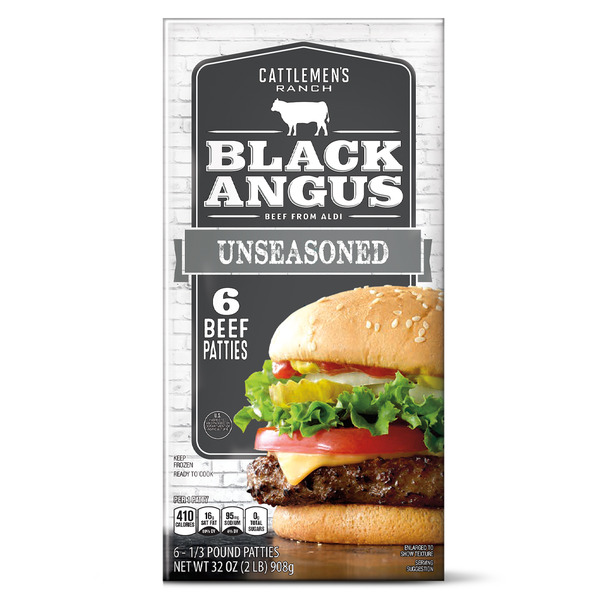
Cattlemen’s Ranch
Cattlemen's Ranch Unseasoned Black Angus Beef Patties, 6 Pack
- Likely some grain-finished beef
- Likely some grain-finished beef
- Origin
- United States