
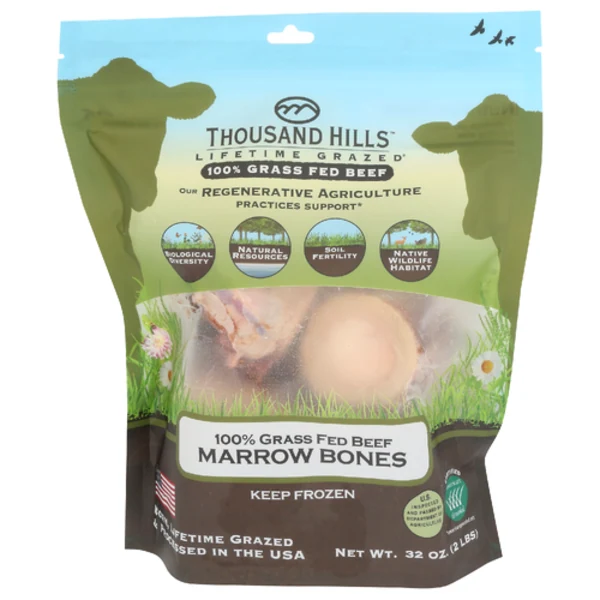
Product images · Packaging may change
100% Grass Fed Beef Marrow Bones
100% grass-fed non-GMO pasture-raised beef marrow bones.
Ingredients
Grass-fed beef marrow bonesFeed
100% grass-fed non-GMOOutdoor access
Outdoor access providedOrigin
United StatesA CLOSER LOOK
The food facts.
Positives
Feed100% grass-fed non-GMOGood
Milk, pasture and stored forage through finishing. The January 2026 protocol excludes grain, grain by-products, soy hulls and mature corn silage; permitted non-GMO vegetative annuals, cane molasses and apple-cider vinegar are programme options, not this animal’s ration.
More info
Good
Milk, pasture and stored forage through finishing. The January 2026 protocol excludes grain, grain by-products, soy hulls and mature corn silage; permitted non-GMO vegetative annuals, cane molasses and apple-cider vinegar are programme options, not this animal’s ration.
A lifetime forage diet excludes grain, including during finishing. Grass-fed beef generally has more omega-3 fat and a lower omega-6 to omega-3 ratio than grain-fed beef.
Supporting source attached to an existing rated practice; no new categorical fact or rating.
A lifetime forage diet excludes grain, including during finishing. Grass-fed beef generally has more omega-3 fat and a lower omega-6 to omega-3 ratio than grain-fed beef.
GMO feed
Good
GMO ingredients are excluded by the January 2026 producer protocol. The Regenerative programme is separate from certified organic products.
A non-GMO feed commitment excludes genetically engineered feed crops. It rules out those crops in the ration.
Supporting source attached to an existing rated practice; no new categorical fact or rating.
Non-GMO feed excludes genetically engineered crops from the ration.
Forage diet and permitted supplements
The 2026 protocol permits milk, pasture and stored forage, non-GMO vegetative annuals, cane molasses and apple-cider vinegar. Grain, grain by-products, soy hulls and mature corn silage are excluded.
Actual raising rules, without invented residue, clinical or ecological outcomes.
Product information
Origin & producer
Related businesses
Country of origin · United States
United States
Born, raised & processed in · United States
United States
Brand · Thousand Hills
Thousand Hills
Origin & producer notes · Born, raised and processed in the United States under the Thousand Hills programme.
Born, raised and processed in the United States under the Thousand Hills programme.
Feed
Forage diet and permitted supplements
The 2026 protocol permits milk, pasture and stored forage, non-GMO vegetative annuals, cane molasses and apple-cider vinegar. Grain, grain by-products, soy hulls and mature corn silage are excluded.
Actual raising rules, without invented residue, clinical or ecological outcomes.
How it's raised
Conditions · Pasture-raised
Pasture-raised
Outdoor access · Yes
Pasture-based raising and planned grazing under the January 2026 protocol. Prolonged confinement is prohibited; severe-weather feeding exceptions retain pasture access.
Supporting source attached to an existing rated practice; no new categorical fact or rating.
At least six months with the dam
Calves receive maternal milk for at least 180 days under the January 2026 producer protocol.
Actual raising rules, without invented residue, clinical or ecological outcomes.
Planned grazing and recovery
Planned grazing leaves plant cover and recovery time, with 30–50% of a plant grazed per pass. Prolonged confinement is prohibited; severe-weather feeding exceptions retain pasture access.
Actual raising rules, without invented residue, clinical or ecological outcomes.
Limited pasture treatments permitted · No glyphosate; limited spot treatments
The January 2026 protocol permits spot treatment of invasive plants and non-grazed fence rows after other options are exhausted. Glyphosate is prohibited; treated areas stay out of grazing until the following season. Permission does not establish use.
Explains actual land-input permissions alongside the grass-fed and non-GMO programme. Separate certified-organic restrictions are not transferred to this product.
Blank producer affidavits use stricter year-round pesticide/herbicide-free wording; operative signed load terms are not established.
No treatment, residue, ecological or health outcome is assigned.
Antibiotics & hormones
No antibiotics
Excellent
No antibiotics
Routine antibiotic use can select for resistant bacteria. A no-antibiotics supply commitment keeps treated animals out of that programme; sick animals still need care.
Raised without antibiotics. Limiting routine antibiotic use helps reduce selection for antibiotic-resistant bacteria. Sick animals can still receive care and be kept out of this supply.
No added hormones
Excellent
No added hormones
Added growth hormones accelerate weight gain. We would choose meat raised without that intervention.
A no-added-hormones commitment excludes hormone treatments used to accelerate weight gain.
Spot parasite treatments permitted
Synthetic wormers and fly-control treatments are discouraged but permitted in extreme or spot-treatment situations. Insecticide ear tags are prohibited and veterinary treatments must be recorded. These are programme permissions, not evidence of use in these cattle.
Actual raising rules, without invented residue, clinical or ecological outcomes.
Ingredients
Ingredients · Grass-fed beef marrow bones
Grass-fed beef marrow bones
Certifications
Program certification claims
American Grassfed Association and Audubon Conservation Ranching certification in its program. These claims do not establish organic status or an audit of this retail lot.
Thousand Hills describes American Grassfed Association and Audubon Conservation Ranching certification in its program. These claims do not establish organic status or an audit of this retail lot.
Attributed producer-program context; product certificate fields remain separately reviewed.
An unknown answer does not mean “none.” Check your package for current details.
KEEP EXPLORING
Also in the meat aisle
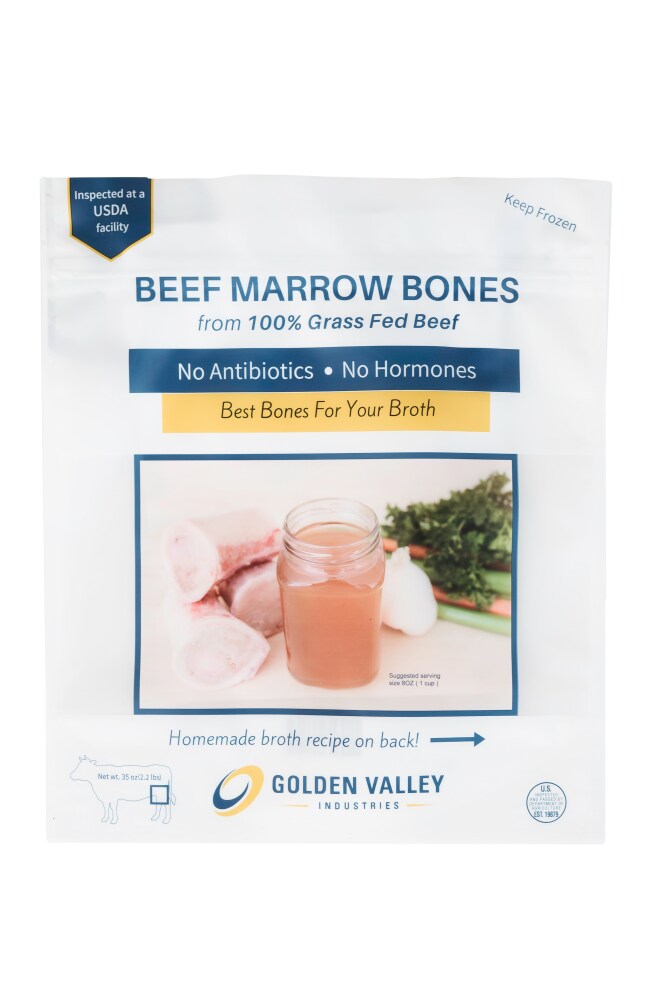
GVI
GVI Grass-Fed Beef Marrow Bones
- 100% grass-fed
- 100% grass-fed
- Processed in
- Modesto, California, United States
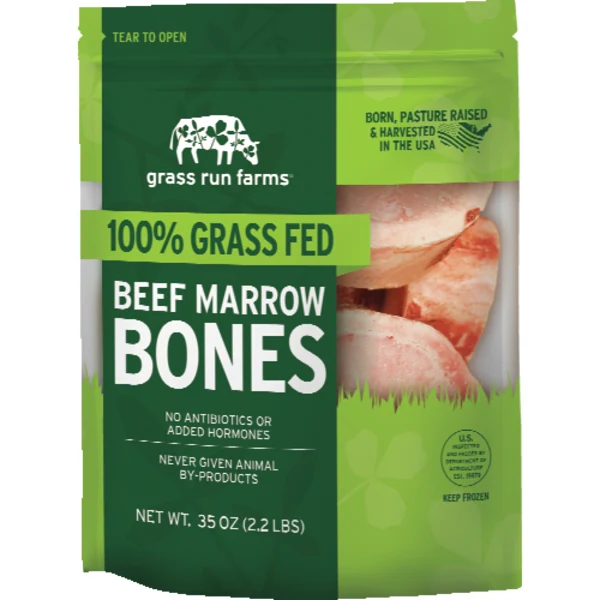
Grass Run Farms
Grass-Fed Frozen Beef Marrow Bones
- Feed
- 100% grass-fed
- Origin
- United States
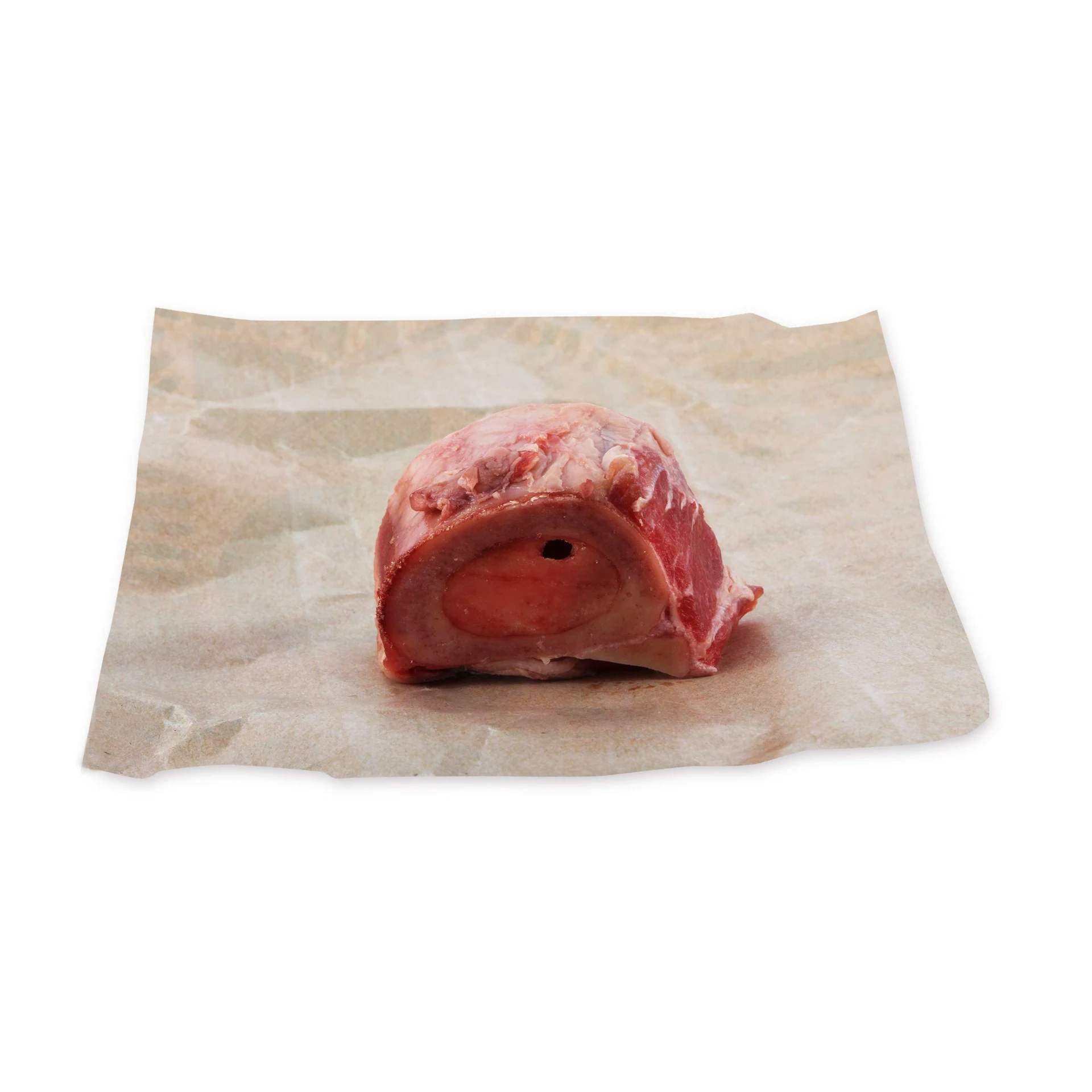
Beef Bones Marrow Frozen Step 4
- Feed and finishing
- Pasture-raised; finishing ration unconfirmed
- Origin
- Not specified