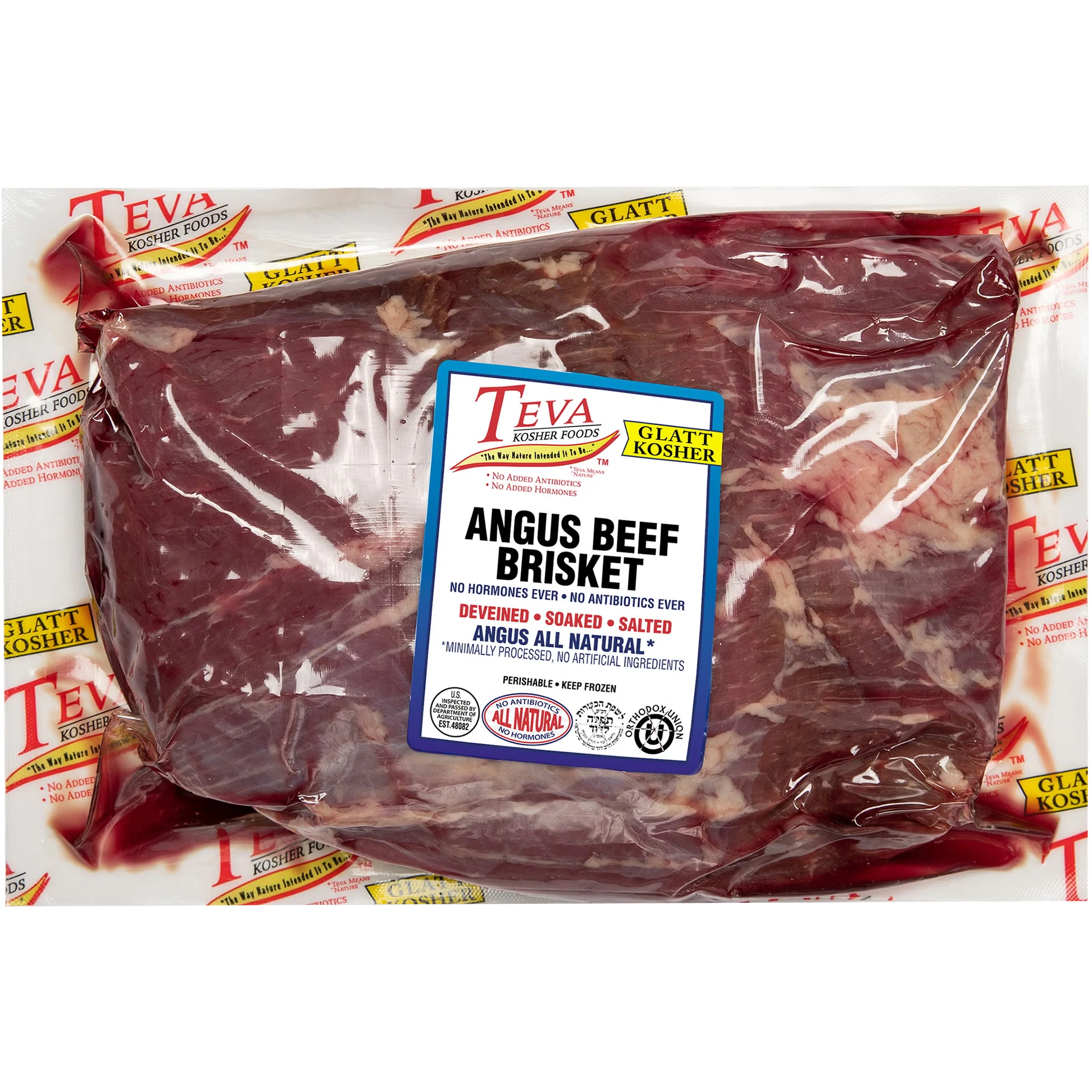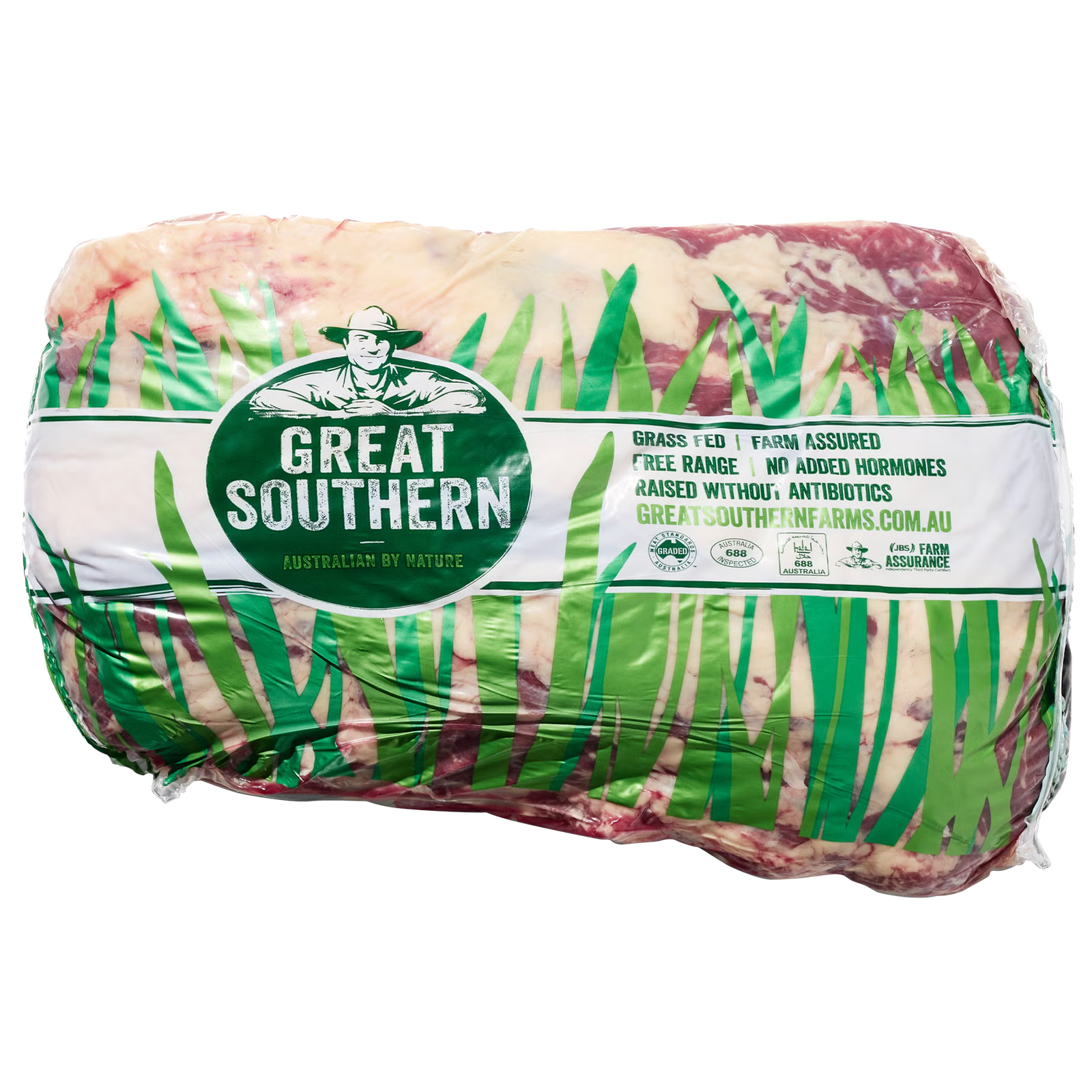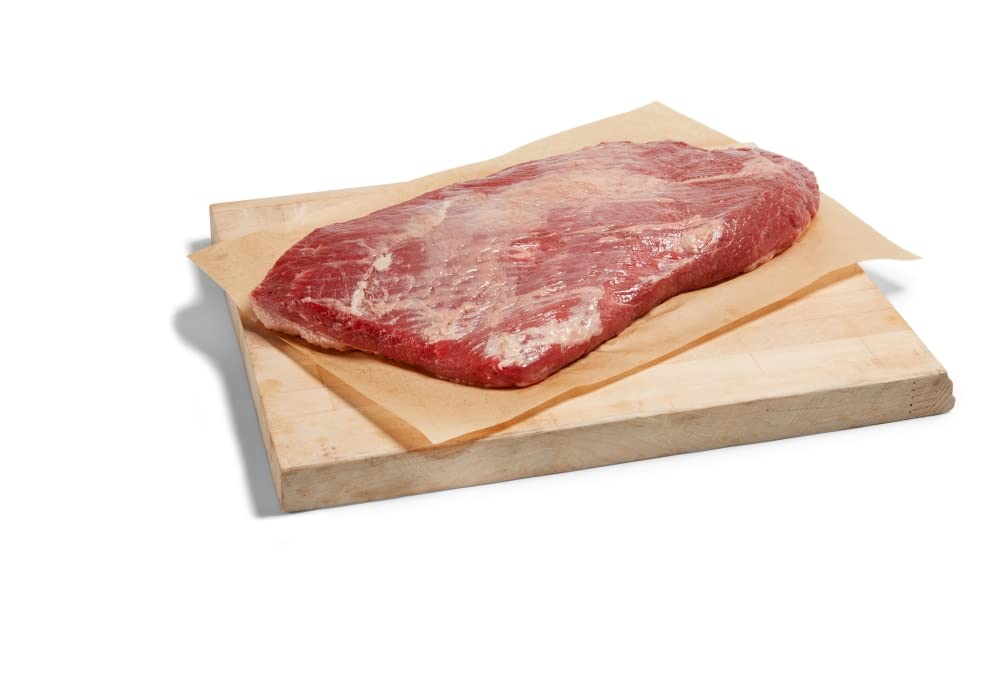
Product images · Packaging may change
Whole Boneless Beef Brisket, Step 1
Pasture required for at least two-thirds of life, conditions permitting. Off-pasture finishing allowed.
A CLOSER LOOK
The food facts.
Negatives
Likely grain finishedMediocre
Likely grain finished. This conventional beef cut fits the usual North American grain-finishing model described by USDA. The product’s actual finishing ration is not disclosed.
More info
Mediocre
Likely grain finished. This conventional beef cut fits the usual North American grain-finishing model described by USDA. The product’s actual finishing ration is not disclosed.
This sourcing preference favors lifetime forage feeding. The product identity and conventional retail market support likely grain inclusion; an industry pattern is not a lot-level observation. No safety or residue conclusion follows.
Grain finishing supplies energy-dense feed for weight gain and marbling before slaughter. We would choose grass and forage for cattle. In beef comparisons, forage feeding generally produces more omega-3 fat and a lower omega-6 to omega-3 ratio.
Actual supplier, ration and grain proportion are unresolved.
Specialty production or a newer package claim could change this inference.
Sources
- USDA cattle production and trade · Cattle feeding; U.S. beef trade
Feed and finishing
G.A.P. beef v1.2 requires continuous access to fibrous feed and an adequate ration. Rations and supplements are allowed; certification alone does not establish grass-only finishing. This product’s actual finishing ration is unconfirmed.
Separates the common fibrous-feed requirement from the product’s separately selected pasture and likely-finishing findings.
Sources
- G.A.P. beef v1.2 feeding requirements · 6.2; printed p14
Product information
Feed
Feed exclusions · No animal by-products
Whole Foods’ Meat-department standards exclude animal by-products in feed. Its processing standards also prohibit irradiation, meat glue and lean finely textured beef.
Retailer department eligibility, not a farm feed log or complete processing-aid inventory.
Sources
Feed and finishing · Fibrous feed required; actual finishing ration unconfirmed
G.A.P. beef v1.2 requires continuous access to fibrous feed and an adequate ration. Rations and supplements are allowed; certification alone does not establish grass-only finishing. This product’s actual finishing ration is unconfirmed.
Separates the common fibrous-feed requirement from the product’s separately selected pasture and likely-finishing findings.
Sources
- G.A.P. beef v1.2 feeding requirements · 6.2; printed p14
How it's raised
Pasture required by G.A.P.
This G.A.P. cattle standard requires at least two-thirds of life on pasture when conditions permit. Finishing away from pasture and seasonal or extreme-weather removal are allowed.
The identified certification establishes a minimum pasture requirement. It does not establish uninterrupted year-round occupancy, grass-only feeding or actual performance beyond the standard.
Certification is a program requirement, not this animal’s attendance log.
Sources
- G.A.P. cattle standard v1.2 · §7.1.1–7.1.2; §7.3
Slaughter welfare audits · Animal-welfare audits required at slaughter
Whole Foods requires animal-welfare audits at slaughter for its beef supply. This is a retailer requirement; the listing does not identify the slaughter plant or provide its audit result.
Separates the required oversight from an observed result or current processing allocation.
Animal transport rules · 25-hour baseline; longer rest-depot routes permitted
G.A.P. beef v1.2 normally limits Step 1 transport to 25 hours. Welfare exceptions and certified rest-depot routes under v2.0 can allow longer journeys. These are programme rules; this product’s actual journey is unconfirmed.
Explains substantive programme permissions and exceptions without inventing a negative rating or an executed practice.
RestDepot overview states48hours for two legs while numbered2.B.1 states40; rare three-leg routes and welfare exceptions are separate. No universal end-to-end16hour guarantee.
Sources
- G.A.P. beef v1.2 · 10.4, printed pp23–24
- G.A.P. Rest Depots v2.0 — October1,2025 · Overview, printed page 1; sections 2.A–2.C, printed page 3
How it's raised notes · G.A.P. Step 1 requires pasture access for at least two-thirds of life when seasonal conditions permit; finishing away from pasture is allowed.
G.A.P. Step 1 requires pasture access for at least two-thirds of life when seasonal conditions permit; finishing away from pasture is allowed.
Antibiotics & hormones
No antibiotics
Excellent
No antibiotics
Routine antibiotic use can select for resistant bacteria. A no-antibiotics supply commitment keeps treated animals out of that programme; sick animals still need care.
Raised without antibiotics. Limiting routine antibiotic use helps reduce selection for antibiotic-resistant bacteria. Sick animals can still receive care and be kept out of this supply.
No added hormones
Excellent
No added hormones
Added growth hormones accelerate weight gain. We would choose meat raised without that intervention.
A no-added-hormones commitment excludes hormone treatments used to accelerate weight gain.
Related businesses
An unknown answer does not mean “none.” Check your package for current details.
KEEP EXPLORING