
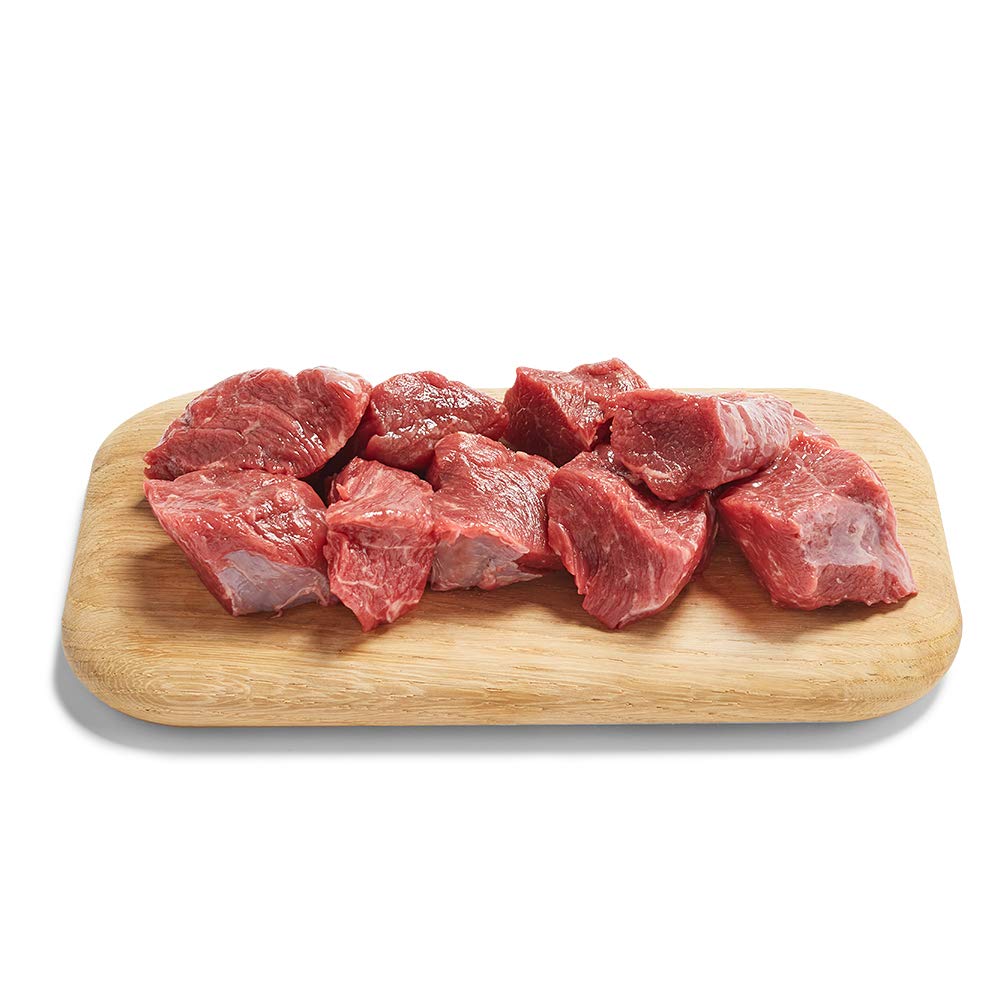
Product images · Packaging may change
Hearst Ranch Beef Round Stew Meat
100% grass-fed and grass-finished beef from Hearst’s San Simeon and Jack Ranch programme in California.
Feed
100% grass-fedCertifications
G.A.P. Animal Welfare Certified — Step 4Origin
California, United StatesA CLOSER LOOK
The food facts.
Positives
Feed100% grass-fedGood
100% grass-fed and grass-finished on Hearst’s California rangeland and pastures. A 2014 ranch account also documented irrigated pasture used for finishing and drought insurance.
More info
Good
100% grass-fed and grass-finished on Hearst’s California rangeland and pastures. A 2014 ranch account also documented irrigated pasture used for finishing and drought insurance.
A lifetime forage diet excludes grain, including during finishing. Grass-fed beef generally has more omega-3 fat and a lower omega-6 to omega-3 ratio than grain-fed beef.
Disclosed forage finishing and dated pasture context. Irrigation does not establish grain feeding, water use per pound, pesticide use or clinical outcomes.
A lifetime forage diet excludes grain, including during finishing. Grass-fed beef generally has more omega-3 fat and a lower omega-6 to omega-3 ratio than grain-fed beef.
The ranch supplying this package is not identified.
The irrigated-pasture account dates to 2014; current pasture inputs and individual rations were not independently verified.
Sources
Product information
Origin & producer
Related businesses
Born & raised in · California, United States
Born and raised on Hearst Ranch in San Simeon or Jack Ranch in Cholame, California.
Hearst names Hearst Ranch in San Simeon and Jack Ranch in Cholame, California. The ranch supplying this particular package is not identified.
This describes the published program; the particular package is not traced to an individual farm or lot.
Sources
Brand · Hearst Ranch
Hearst Ranch
Feed
Feed exclusions · No animal by-products
No animal by-products
How it's raised
Conditions · Pasture-raised
Pasture-raised
Pasture for at least three-quarters of life
G.A.P. Step 4 requires at least three-quarters of life on pasture or range when seasons permit. Removal is allowed only for seasonal or extreme-weather welfare needs, up to four months per year and one-quarter of life; removal for finishing is not allowed.
The identified certification establishes a minimum pasture requirement. It does not establish uninterrupted year-round occupancy, grass-only feeding or actual performance beyond the standard.
Certification is a program requirement, not this animal’s attendance log.
Sources
- G.A.P. cattle standard v1.2 · §7.1.1–7.1.2; §7.3
Antibiotics & hormones
No antibiotics
Excellent
No antibiotics
Routine antibiotic use can select for resistant bacteria. A no-antibiotics supply commitment keeps treated animals out of that programme; sick animals still need care.
Raised without antibiotics. Limiting routine antibiotic use helps reduce selection for antibiotic-resistant bacteria. Sick animals can still receive care and be kept out of this supply.
No added hormones
Excellent
No added hormones
Added growth hormones accelerate weight gain. We would choose meat raised without that intervention.
A no-added-hormones commitment excludes hormone treatments used to accelerate weight gain.
Processing
Meat-department processing standards · Irradiation, meat glue and LFTB prohibited
Whole Foods’ Meat-department standards prohibit irradiation, transglutaminase (meat glue) and lean finely textured beef. These restrictions do not rule out antimicrobial washes or other processing aids.
The retailer excludes these processing methods and beef input; the requirement does not establish all upstream treatments.
Sources
- Whole Foods Meat Department Quality Standards · Our Baseline Standards; retained October 16, 2026
An unknown answer does not mean “none.” Check your package for current details.
KEEP EXPLORING
Also in the meat aisle
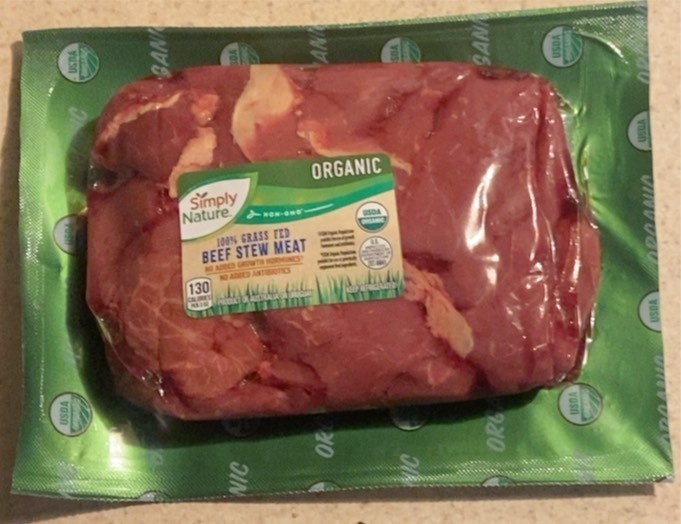
Simply Nature
Simply Nature Organic Grass-Fed Beef Stew Meat
- 100% grass-fed
- 100% grass-fed
- Processed in
- Swedesboro, New Jersey, United States
Kroger
Kroger Natural Fresh Choice Beef for Stew
- Likely grain finished
- Likely grain finished
- Processed in
- Kansas City, Kansas, United States
Kroger
Kroger Natural Fresh Choice Beef for Stew BIG DEAL
- Likely grain finished
- Likely grain finished
- Processed in
- Kansas City, Kansas, United States