Product images · Packaging may change
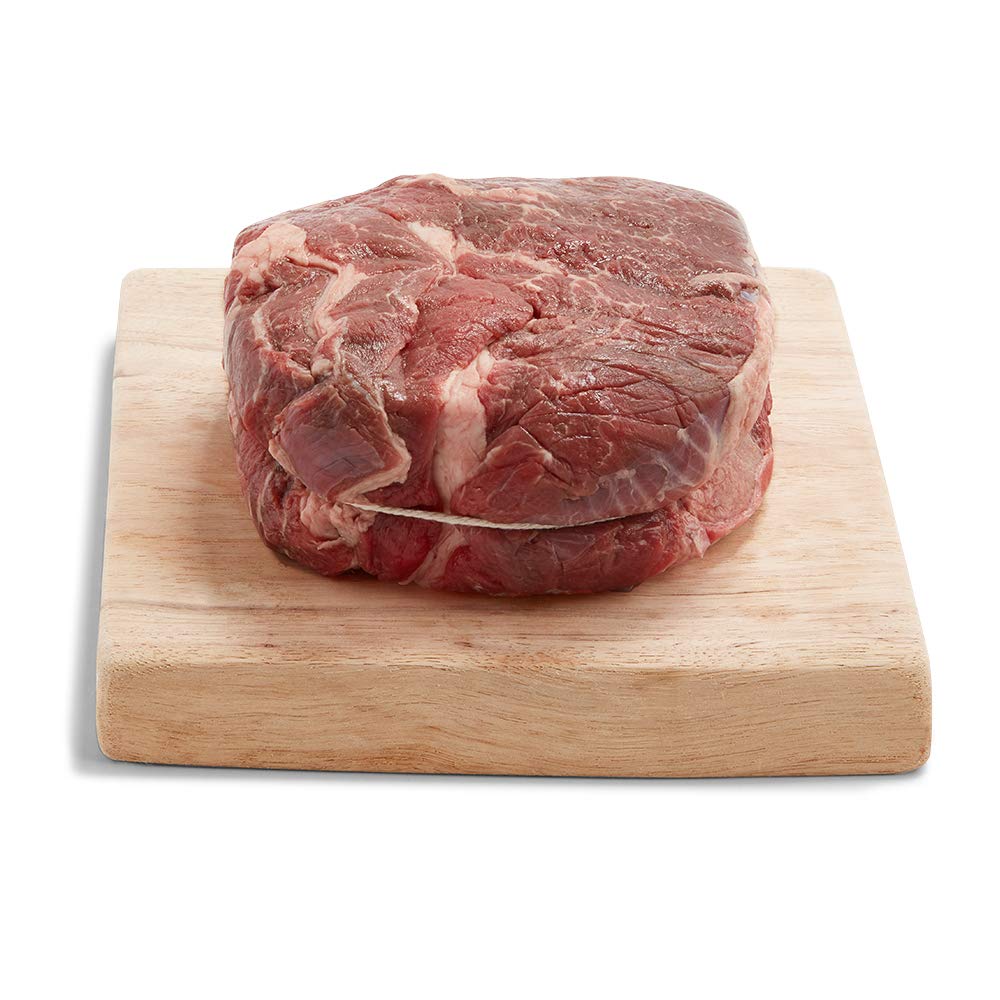
Baldwin Farms Boneless Beef Chuck Roast
Grass-fed, grain-free finishing; sweet-potato and fruit-pulp supplements when pasture is poor.
Outdoor access
Lifelong pasture; no feedlotsFeed
Non-GMO feedCertifications
G.A.P. Animal Welfare Certified — Step 4Origin
North Carolina, United StatesA CLOSER LOOK
The food facts.
Positives
Outdoor accessLifelong pasture; no feedlotsGood
Year-round rotational grazing under the Baldwin beef programme. Temporary removal for weather or animal welfare remains permitted by the welfare standard.
More info
Good
Year-round rotational grazing under the Baldwin beef programme. Temporary removal for weather or animal welfare remains permitted by the welfare standard.
The programme’s year-round grazing and no-feedlot account supports the existing pasture-access assessment beyond a certification minimum. No exclusive-forage or measured environmental benefit is inferred.
Lifelong pasture or range, without feedlot finishing, gives animals freedom to graze and move throughout raising. A pasture start, seasonal grazing or access to an outdoor yard does not establish that commitment.
Programme practice; weather and welfare exceptions remain possible.
Transport to processing
Finished cattle travel in Baldwin’s own trucks for no more than one hour to one of two USDA-inspected facilities.
Specific journey and vehicle practice, retained as neutral context without assigning a plant or a welfare-outcome rating.
The two facilities are unnamed; exact journey, destination and slaughter method remain unverified.
FeedNon-GMO feedGood
Grass finishing without grain: ryegrass and clovers in cooler seasons, crabgrass in warmer seasons. Sweet-potato byproducts and fruit pulp are offered during drought or poor pasture conditions.
More info
Good
Non-GMO feed under the Baldwin beef programme. The claimed certification’s issuer is unconfirmed.
A non-GMO feed commitment excludes genetically engineered feed crops. It rules out those crops in the ration.
Source the existing GMO-exclusion answer to the actual producer account while preserving its unresolved certifier. AGW animal-welfare certification is not an AGW non-GMO certificate.
Non-GMO feed excludes genetically engineered crops from the ration.
The issuer, applicable certificate and individual lot feed records are unverified.
Finishing feed
Grass finishing without grain: ryegrass and clovers in cooler seasons, crabgrass in warmer seasons. Sweet-potato byproducts and fruit pulp are offered during drought or poor pasture conditions.
The disclosed non-grain plant by-products qualify an exclusive-forage interpretation. Retain the grass-fed marketing claim, but withhold an unqualified lifetime-forage positive while its fit with supplementation is unresolved. No labeling violation or harmful feed is established.
Amounts, actual feeding to a specific animal and the applicable grass-fed certificate are unresolved.
The historical 2005 soy/peanut-hull account is not a current ration.
Sources
Pasture fertilizer
Baldwin pastures are enriched with composted poultry litter and legumes. The litter is fertilizer, not cattle feed.
The farm describes pasture enrichment; it does not establish exact application rates, field conditions or residue measurements.
No specific pasture, application rate or lot-level measurement is identified.
Feed ingredient standard
Whole Foods’ Meat-department standard prohibits animal by-products such as feather meal and rendered fat in feed. This is a supplier requirement, not a complete ration or a test of this lot.
A scoped retailer feed requirement, separate from actual ration measurement or complete ingredient disclosure.
The standard separately allows cow’s milk for veal; this finding does not assert all animal-derived nutrition is prohibited.
Sources
- Whole Foods Meat Department Quality Standards · Our Baseline Standards; retained October 16, 2026
Product information
Origin & producer
Related businesses
Raised in · North Carolina, United States
North Carolina-raised Charolais cattle under Baldwin’s birth-through-finishing programme. The supplying farm and animal for this package are unconfirmed.
The producer’s cattle-raising and birth-through-finishing statements support programme origin; a business address alone would not. A separate retailer’s broader North Carolina/southern Virginia profile is undated and does not identify this Whole Foods lot.
This describes the published program; the particular package is not traced to an individual farm or lot.
Sources
Brand · Baldwin Farms
Baldwin Farms
Feed
Finishing feed · Grass finishing with drought supplements
Grass finishing without grain: ryegrass and clovers in cooler seasons, crabgrass in warmer seasons. Sweet-potato byproducts and fruit pulp are offered during drought or poor pasture conditions.
The disclosed non-grain plant by-products qualify an exclusive-forage interpretation. Retain the grass-fed marketing claim, but withhold an unqualified lifetime-forage positive while its fit with supplementation is unresolved. No labeling violation or harmful feed is established.
Amounts, actual feeding to a specific animal and the applicable grass-fed certificate are unresolved.
The historical 2005 soy/peanut-hull account is not a current ration.
Sources
Pasture fertilizer · Composted poultry litter and legumes
Baldwin pastures are enriched with composted poultry litter and legumes. The litter is fertilizer, not cattle feed.
The farm describes pasture enrichment; it does not establish exact application rates, field conditions or residue measurements.
No specific pasture, application rate or lot-level measurement is identified.
Feed ingredient standard · Animal by-products excluded by retailer policy
Whole Foods’ Meat-department standard prohibits animal by-products such as feather meal and rendered fat in feed. This is a supplier requirement, not a complete ration or a test of this lot.
A scoped retailer feed requirement, separate from actual ration measurement or complete ingredient disclosure.
The standard separately allows cow’s milk for veal; this finding does not assert all animal-derived nutrition is prohibited.
Sources
- Whole Foods Meat Department Quality Standards · Our Baseline Standards; retained October 16, 2026
How it's raised
Conditions · Pasture-raised
Pasture-raised
Finishing location · Pasture
Pasture
Transport to processing · Own trucks, no more than one hour
Finished cattle travel in Baldwin’s own trucks for no more than one hour to one of two USDA-inspected facilities.
Specific journey and vehicle practice, retained as neutral context without assigning a plant or a welfare-outcome rating.
The two facilities are unnamed; exact journey, destination and slaughter method remain unverified.
Antibiotics & hormones
No antibiotics
Excellent
No antibiotics
Routine antibiotic use can select for resistant bacteria. A no-antibiotics supply commitment keeps treated animals out of that programme; sick animals still need care.
Raised without antibiotics. Limiting routine antibiotic use helps reduce selection for antibiotic-resistant bacteria. Sick animals can still receive care and be kept out of this supply.
No added hormones
Excellent
No added hormones
Added growth hormones accelerate weight gain. We would choose meat raised without that intervention.
A no-added-hormones commitment excludes hormone treatments used to accelerate weight gain.
Certifications
Certifications · G.A.P. Animal Welfare Certified — Step 4
G.A.P. Step 4 requires at least three-quarters of life on pasture or range when seasons permit. Removal is allowed only for seasonal or extreme-weather welfare needs, up to four months per year and one-quarter of life; removal for finishing is not allowed.
The identified certification establishes a minimum pasture requirement. It does not establish uninterrupted year-round occupancy, grass-only feeding or actual performance beyond the standard.
Certification is a program requirement, not this animal’s attendance log.
Sources
- G.A.P. cattle standard v1.2 · §7.1.1–7.1.2; §7.3
Processing
Meat-department processing standards · Irradiation, meat glue and LFTB prohibited
Whole Foods’ Meat-department standards prohibit irradiation, transglutaminase (meat glue) and lean finely textured beef. These restrictions do not rule out antimicrobial washes or other processing aids.
The retailer excludes these processing methods and beef input; the requirement does not establish all upstream treatments.
Sources
- Whole Foods Meat Department Quality Standards · Our Baseline Standards; retained October 16, 2026
An unknown answer does not mean “none.” Check your package for current details.
KEEP EXPLORING