Product images · Packaging may change
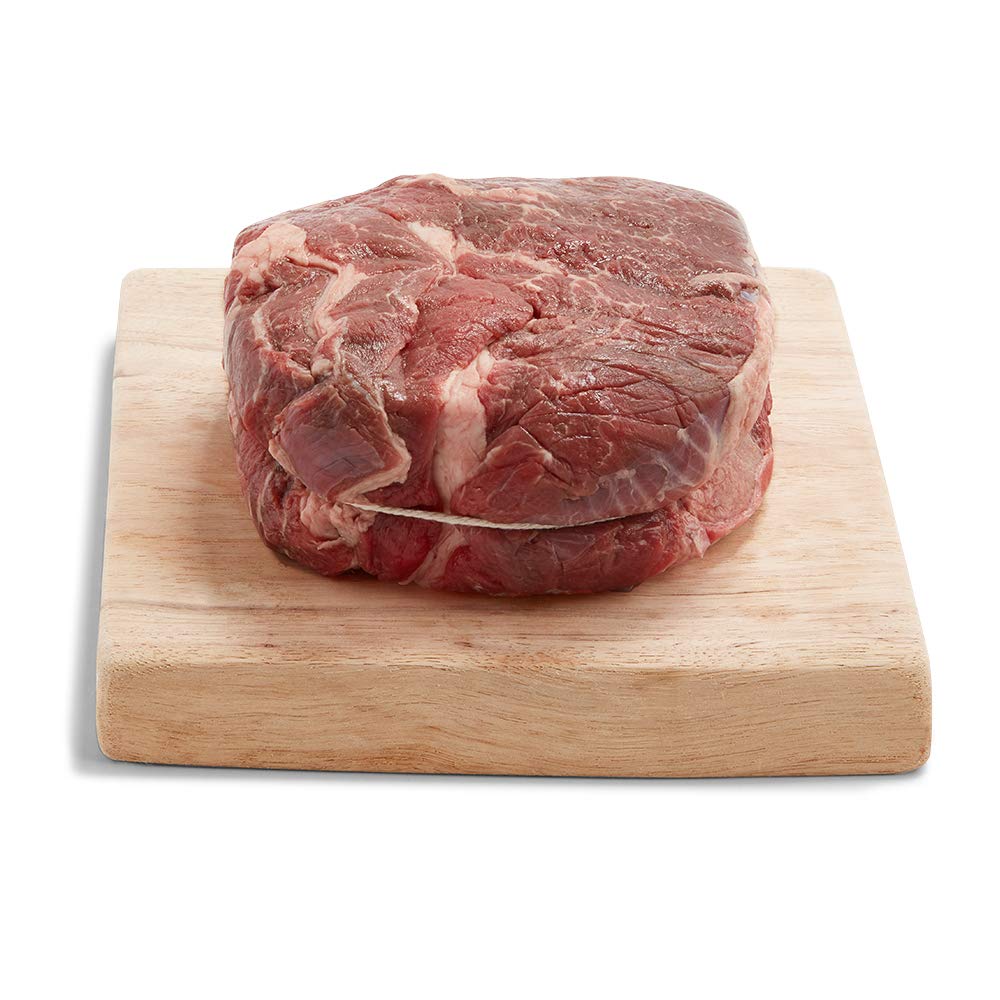
Hickory Nut Gap Boneless Beef Chuck Roast
100% grass-fed and grass-finished U.S. beef from HNG’s regional farm programme.
Outdoor access
Lifelong pasture; no feedlotsFeed
100% grass-fedCertifications
G.A.P. Animal Welfare Certified — Step 4Origin
United StatesA CLOSER LOOK
The food facts.
Positives
Outdoor accessLifelong pasture; no feedlotsGood
Year-round outdoor pasture, with emergency or extreme-weather exceptions and no feedlots under the Hickory Nut Gap beef programme.
More info
Good
Year-round outdoor pasture, with emergency or extreme-weather exceptions and no feedlots under the Hickory Nut Gap beef programme.
The programme calls for year-round pasture with emergency weather exceptions.
Lifelong pasture or range, without feedlot finishing, gives animals freedom to graze and move throughout raising. A pasture start, seasonal grazing or access to an outdoor yard does not establish that commitment.
Programme evidence, not an individual animal or farm audit.
Feed100% grass-fedGood
At least 180 days nursing, then grasses, legumes and stored forage through finishing. Approved non-starch supplements are allowed during drought or extreme weather.
More info
Good
At least 180 days nursing, then grasses, legumes and stored forage through finishing. Approved non-starch supplements are allowed during drought or extreme weather.
A lifetime forage diet excludes grain, including during finishing. Grass-fed beef generally has more omega-3 fat and a lower omega-6 to omega-3 ratio than grain-fed beef.
After nursing, the programme specifies forage and permits approved non-starch supplements during drought or extreme weather.
A lifetime forage diet excludes grain, including during finishing. Grass-fed beef generally has more omega-3 fat and a lower omega-6 to omega-3 ratio than grain-fed beef.
Approved non-starch emergency supplements are part of the programme.
Non-GMO assurance is affidavit-based; the older-cattle checklist and incorporated requirements are internally inconsistent.
Product information
Origin & producer
Related businesses
Born, raised & harvested in · United States
Born, raised and harvested in the United States under the Hickory Nut Gap beef programme.
This is the company’s beef programme claim; the supplying animal is not identified.
The named farm network does not allocate the animal or farm behind this package.
Brand · Hickory Nut Gap
Hickory Nut Gap
Processor · Marksbury Farm
Marksbury Farm
Brand cattle network · Named partner farms include Caney Fork and Hyatt; package farm unconfirmed
Cattle partners include Farmer’s United, Lazy H, Four Winds, Caney Fork, Senah, Kee Hill and Hyatt. The network also uses contract graziers. These are programme relationships, not this package’s farm allocation.
Hickory Nut Gap’s cattle network includes Farmer’s United, Lazy H, Four Winds, Caney Fork, Senah and Hyatt farms. These are cattle-program examples, not the supplying farm for this package.
Package versions and supplier allocation remain distinct; this does not identify the current purchased lot.
Company processing route · HNG currently names Marksbury
The current Hickory Nut Gap beef processing route is Marksbury Farm in Lancaster, Kentucky, according to the company. The listing does not identify the establishment or lot for this item.
A company processing route does not identify this package’s lot or supplying farm.
No current package establishment mark or lot record was established.
Sources
How it's raised
Conditions · Pasture-raised
Pasture-raised
Finishing location · Pasture
Pasture
Antibiotics & hormones
No antibiotics
Excellent
No antibiotics
Routine antibiotic use can select for resistant bacteria. A no-antibiotics supply commitment keeps treated animals out of that programme; sick animals still need care.
Raised without antibiotics. Limiting routine antibiotic use helps reduce selection for antibiotic-resistant bacteria. Sick animals can still receive care and be kept out of this supply.
No added hormones
Excellent
No added hormones
Added growth hormones accelerate weight gain. We would choose meat raised without that intervention.
A no-added-hormones commitment excludes hormone treatments used to accelerate weight gain.
Certifications
Certifications · G.A.P. Animal Welfare Certified — Step 4
Step 4 cattle standards require pasture or range for at least three-quarters of life when conditions permit, with seasonal or extreme-weather welfare exceptions. The listing claims Step 4; the supplying farm’s current certification was not independently verified.
The standard sets a pasture minimum; the listing does not identify the supplying animal or establish the farm’s current certification.
Certification is a program requirement, not this animal’s attendance log.
Sources
- G.A.P. cattle standard v1.2 · §7.1.1–7.1.2; §7.3
Processing
Lancaster worker history — 2023 · Marksbury Lancaster: child-labor finding in 2023
At Marksbury’s Lancaster, Kentucky plant, DOL reported eight minors in prohibited work or hours in February 2023 and an $8,893 penalty. Marksbury later reported removing minors from hazardous work and ending under-18 production hiring.
Dated worker-protection finding at the named processor. DOL reported eight affected minors; the company discussed seven hazardous-work violations and attributed them to misunderstanding the rules. Its corrective account is a company statement, not independent verification of current conditions.
Historical worker case, not a meat-contamination finding or evidence of current child labor.
This product’s actual purchased package has not been matched to a production date at the plant.
Sources
Lancaster worker-safety history · 2025 serious workplace-floor citation
Marksbury’s Lancaster plant received a serious workplace-floor citation in December 2025 with a $6,300 assessed penalty. The case closed January 26, 2026; these records do not confirm payment or completed correction.
The cited rule covers workroom floors, drainage and dry standing places during wet processes.
The citation code alone does not establish a specific floor scenario or injury.
Administrative closure does not establish payment, completed correction or current clearance.
This is workplace-safety history, not a food-contamination or retail-lot finding.
The purchased package has not been matched to a production date at this plant.
Sources
- OSHA — Marksbury inspection record · October 7, 2026 snapshot; activity 348479932, exact Lancaster employer/address; case closed January 26, 2026
- OSHA — Marksbury citation record · October 7, 2026 snapshot; activity 348479932, citation 01001; serious 1910.22(a)(2), issued December 15, 2025; $6,300 assessed
- OSHA — workroom floor requirements · 1910.22(a)(2)
Sow stood during bleeding — July 2025
At Marksbury, HNG’s named beef processor, a July 2025 USDA record describes a sow standing during bleeding after multiple stun attempts. A supervisor applied another captive-bolt stun, and FSIS rejected the swine chute.
Effective stunning should keep an animal insensible through slaughter. This documented failure matters to our preference for accountable animal care at suppliers and processors. It does not establish how HNG cattle were handled or how often failures occur.
This was a swine event, not a demonstrated cattle-handling event or meat-contamination finding.
The historical record does not establish current conditions, recurrence or the outcome of any appeal.
HNG names the current programme processor; the purchased package and production lot are untraced.
Sources
- USDA FSIS — FY2025 Q4 humane-handling inspection records · July 9, 2025; M40041+P40041; NR NRW5714073509N-1; worksheet FY2025Q4 LHH Ext 2026 Mar 17, row 4518
- Hickory Nut Gap — current beef processor
An unknown answer does not mean “none.” Check your package for current details.
KEEP EXPLORING