
Product images · Packaging may change
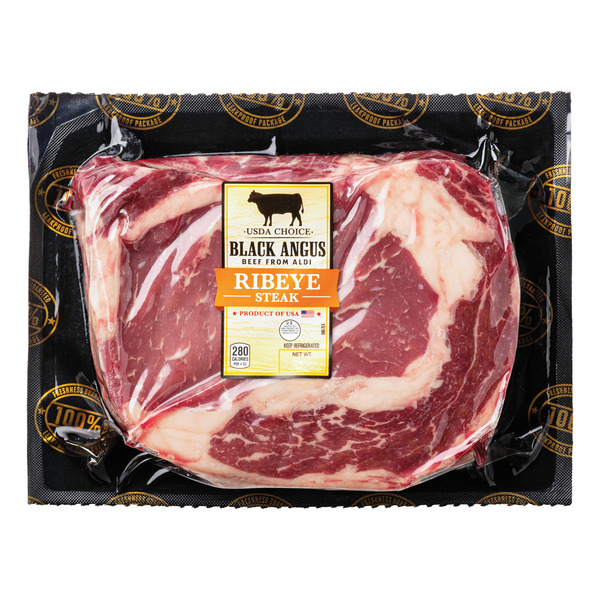
USDA Choice Black Angus Ribeye Steak
U.S. Black Angus ribeye. USDA Choice. Never frozen. Likely grain finished.
A CLOSER LOOK
The food facts.
Negatives
Likely grain finishedMediocre
Likely grain finished. This conventional beef cut fits the usual North American grain-finishing model described by USDA. The product’s actual finishing ration is not disclosed.
More info
Mediocre
Likely grain finished. This conventional beef cut fits the usual North American grain-finishing model described by USDA. The product’s actual finishing ration is not disclosed.
This sourcing preference favors lifetime forage feeding. The product identity and conventional retail market support likely grain inclusion; an industry pattern is not a lot-level observation. No safety or residue conclusion follows.
Grain finishing supplies energy-dense feed for weight gain and marbling before slaughter. We would choose grass and forage for cattle. In beef comparisons, forage feeding generally produces more omega-3 fat and a lower omega-6 to omega-3 ratio.
Actual supplier, ration and grain proportion are unresolved.
Specialty production or a newer package claim could change this inference.
Sources
- USDA cattle production and trade · Cattle feeding; U.S. beef trade
Product information
Origin & producer
Related businesses
Country of origin · United States (dated source)
Where the animals or meat come from. Product of USA appears on advertised artwork and earlier package photographs.
Pictured processing versions · Pictured processors: Tennessee or Iowa
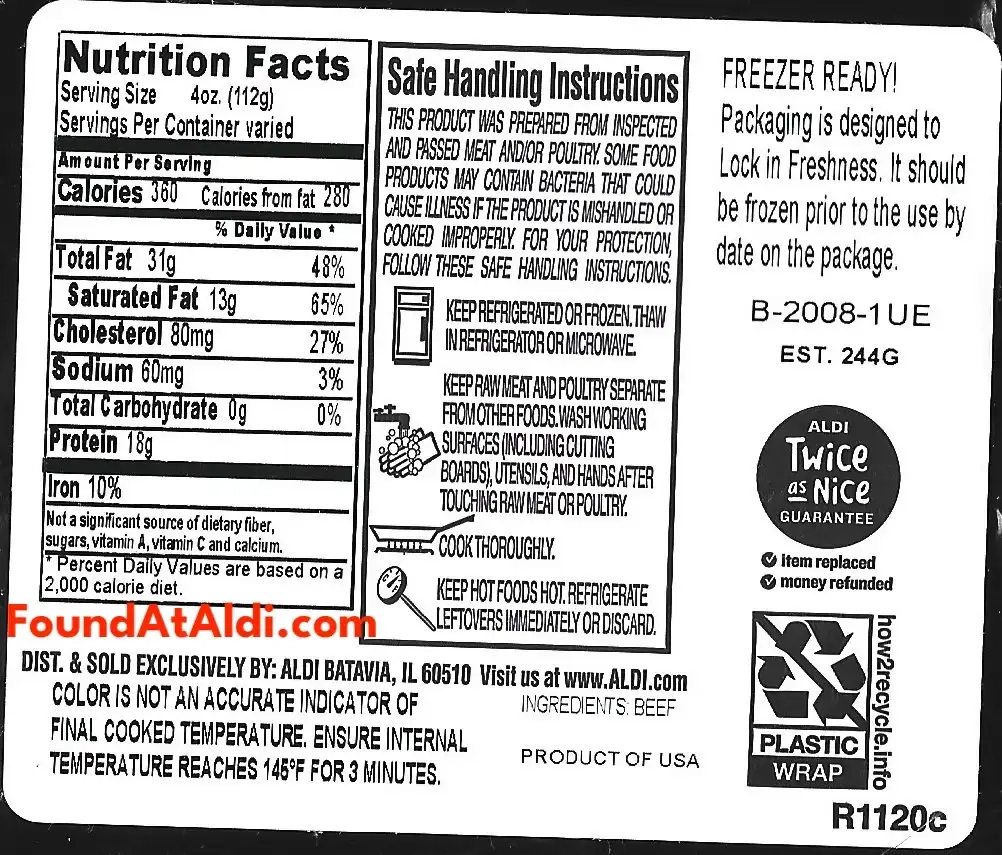
Pictured ribeye packs identify Tyson’s Goodlettsville, Tennessee plant (EST. 244G, undated) and Council Bluffs, Iowa plant (EST. 244C, June 2025 use/freeze date). These are separate processing versions, not cattle farms or slaughter locations.
A processing mark identifies the pictured further processor, not animal origin.
Processing
Freezing history · Never frozen
Never frozen
No added solution
Excellent
No added solution
Added solution introduces water and other ingredients into meat, changing what you are buying by weight.
Added solution introduces water and other ingredients into meat, changing what you are buying by weight.
ALDI fresh-meat slaughter standard · Stunning required for fresh-meat suppliers
For fresh meat, ALDI requires suppliers to stun animals before slaughter and keep them unconscious through death. This is a supplier standard; the method and audit results for this package are unconfirmed.
The supplier requirement supports a scoped answer about the retailer standard; no specific stunning technique, independent welfare outcome or measured compliance follows.
The policy requirement does not itself verify compliance for the particular package.
Sources
- ALDI US 2025 Animal Welfare Policy · Page2 private-label scope; page6 Humane Slaughter
Processing notes · Tyson’s 2026 case-ready programme requires antimicrobial treatment of subprimals at 244C and 244G. The chemical and this package’s actual treatment are unconfirmed.
Tyson’s 2026 case-ready programme requires antimicrobial treatment of subprimals at 244C and 244G. The chemical and this package’s actual treatment are unconfirmed.
Ingredients
Ingredients · Beef (dated source)
Excellent
An undated Goodlettsville pack and a Council Bluffs pack with a June 2025 use-or-freeze date list beef only; other packages may differ.
Plain meat best fits our ingredient preference. A simple ingredient list cannot rule out processing aids used earlier.
The ingredient list describes the pictured package; it does not identify processing aids.
Ingredients describe what goes into the food. Processing treatments are covered separately.
Certifications
Grade · USDA Choice
USDA Choice
Certifications notes · USDA Choice. Goodlettsville’s dated BRCGS food-safety certificate expires November 27, 2026; it covers processing, not cattle raising.
USDA Choice. Goodlettsville’s dated BRCGS food-safety certificate expires November 27, 2026; it covers processing, not cattle raising.
How it's raised
Likely a pasture start
Likely pasture-raised early in life, before finishing.
Early grazing is a positive under the pasture-access preference. It can coexist with grain or confined finishing; this finding does not establish pasture finishing or an audited welfare outcome.
Actual birth herd and pasture duration are not identified.
Dairy-derived cattle or a different supplier system could change this inference.
Sources
- USDA cattle production · Cow-calf and stocker production
An unknown answer does not mean “none.” Check your package for current details.
KEEP EXPLORING
Also in the meat aisle
Steak-umm
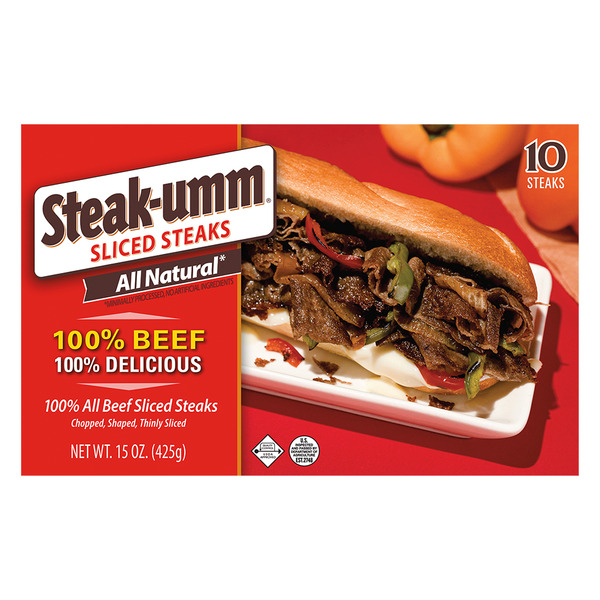
Steak-umm 100% Beef Sliced Steaks, 10 Steaks, 15 oz
- Feed
- Not specified
- Origin
- Not specified
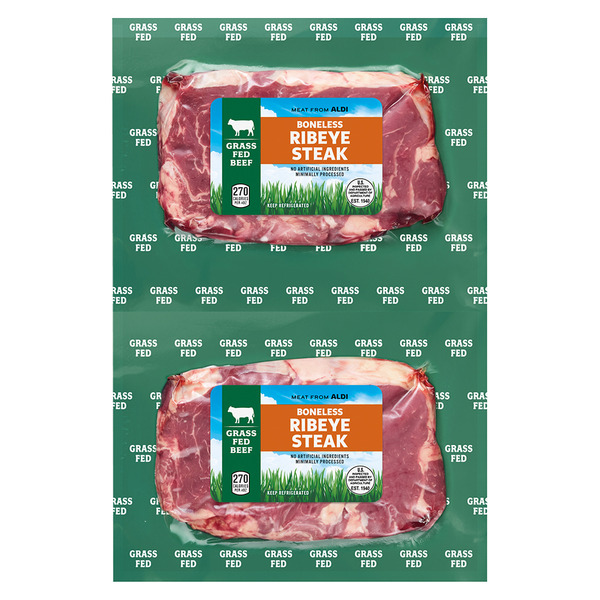
Grass-Fed Boneless Ribeye Steak
- 100% grass-fed
- 100% grass-fed
- Origin
- United States
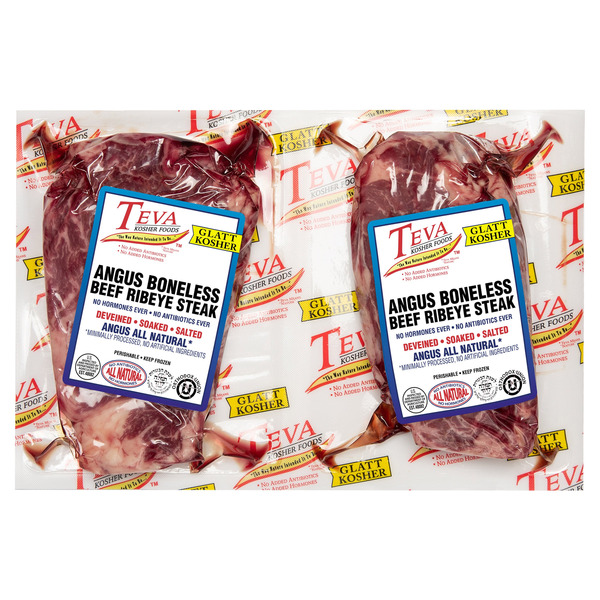
Teva
Teva Glatt Kosher Angus Boneless Ribeye Steak, 2-count
- Feed
- Not specified
- Origin
- Not specified