
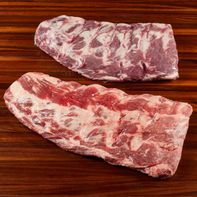
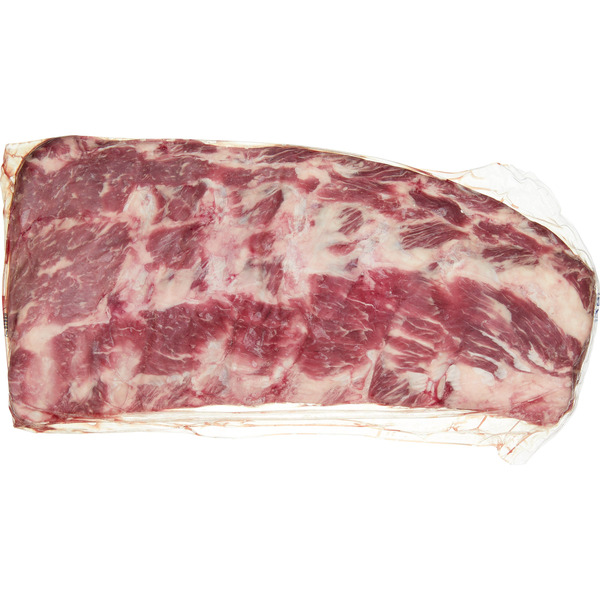
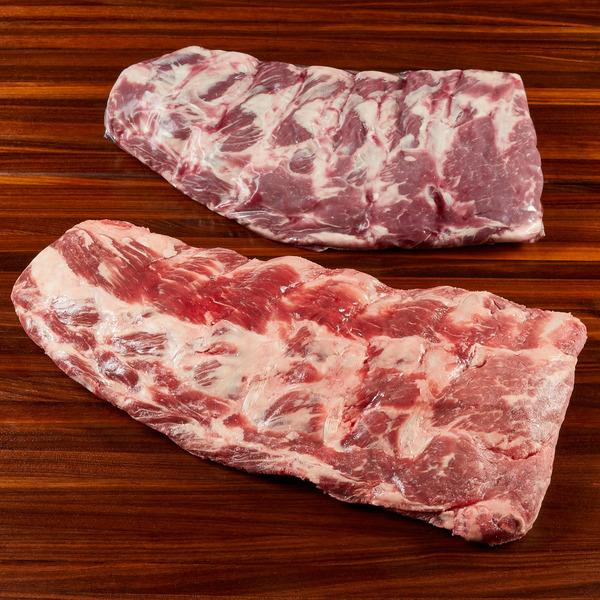
Product images · Packaging may change
Kirkland Signature USDA Choice Beef Back Ribs
USDA Choice bone-in beef back ribs.
Antibiotic policy
Veterinary treatment permitted: 2025 policyProcessed in
Green Bay, Wisconsin, United StatesLikely grain finished
Likely grain finishedA CLOSER LOOK
The food facts.
Negatives
Likely grain finishedMediocre
Likely grain finished. This conventional beef cut fits the usual North American grain-finishing model described by USDA. The product’s actual finishing ration is not disclosed.
More info
Mediocre
Likely grain finished. This conventional beef cut fits the usual North American grain-finishing model described by USDA. The product’s actual finishing ration is not disclosed.
This sourcing preference favors lifetime forage feeding. The product identity and conventional retail market support likely grain inclusion; an industry pattern is not a lot-level observation. No safety or residue conclusion follows.
Grain finishing supplies energy-dense feed for weight gain and marbling before slaughter. We would choose grass and forage for cattle. In beef comparisons, forage feeding generally produces more omega-3 fat and a lower omega-6 to omega-3 ratio.
Actual supplier, ration and grain proportion are unresolved.
Specialty production or a newer package claim could change this inference.
Sources
- USDA cattle production and trade · Cattle feeding; U.S. beef trade
Product information
Origin & producer
Related businesses
Processed in · Green Bay, Wisconsin, United States
EST. 562 on Costco’s package artwork identifies JBS Green Bay in Green Bay, Wisconsin. This is the pictured processor; current lots may differ. It does not identify cattle origin or the supplying farm.
Processing location is distinct from cattle birth, raising and farm origin.
No current received physical package inspected; supplier can vary.
Brand · Kirkland Signature
Kirkland Signature
Processor · JBS Green Bay, Inc.
JBS Green Bay, Inc.
Certifications
Grade · USDA Choice
USDA Choice
How it's raised
Likely a pasture start
Likely pasture-raised early in life, before finishing.
Early grazing is a positive under the pasture-access preference. It can coexist with grain or confined finishing; this finding does not establish pasture finishing or an audited welfare outcome.
Actual birth herd and pasture duration are not identified.
Dairy-derived cattle or a different supplier system could change this inference.
Sources
- USDA cattle production · Cow-calf and stocker production
Welfare audit requirements · North American slaughter-audit requirement
Costco’s January 2026 North American policy requires annual slaughter audits. Farm-audit frequency varies, and Costco reports incomplete coverage. This is a retailer requirement, not this package’s audit result.
Retailer programme context; no new practice score or actual animal-treatment or audit-result claim.
Antibiotics & hormones
Antibiotic policy · Veterinary treatment permitted: 2025 policy
Costco’s 2025 policy permits medically important antibiotics for disease prevention, control and treatment under veterinary supervision. This is retailer policy; actual treatment of these cattle is unconfirmed.
Retailer programme context; no new practice score or actual animal-treatment or audit-result claim.
Processing
JBS beef-processing programme · JBS programme: pasteurization and organic acids (FY2025)
Double carcass pasteurization before chilling and organic-acid treatment before cutting — JBS’s FY2025 beef programme. Context for the pictured JBS-supplied version; exact package treatments are unconfirmed.
Pasteurization and acid treatment are disclosed microbial-control steps. This does not establish an acid identity, concentration, residue, chemical-free process or clinical outcome for the product.
Current retail lots may use other plants; the establishment connection is to reviewed package artwork.
Exact product-specific treatment sequence, agent and measured outcomes remain unresolved.
Sources
- JBS FY2025 filing — Beef North America MultiCheck disclosure · Beef North America, operations/food-safety passage
An unknown answer does not mean “none.” Check your package for current details.
KEEP EXPLORING
Also in the meat aisle
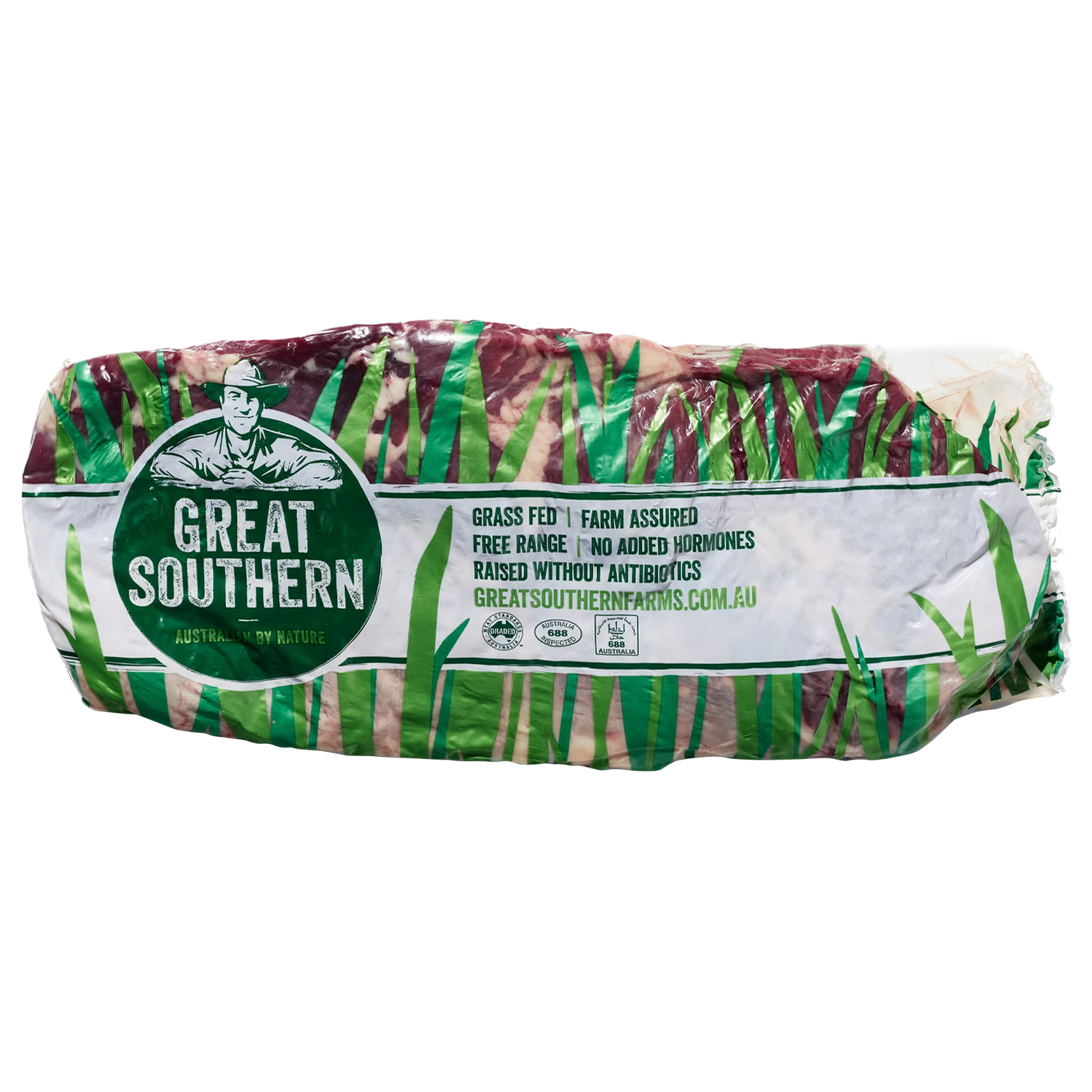
Great Southern
Halal Beef Flap Meat, 14 lb avg wt
- Feed
- 100% grass-fed
- Origin
- Australia
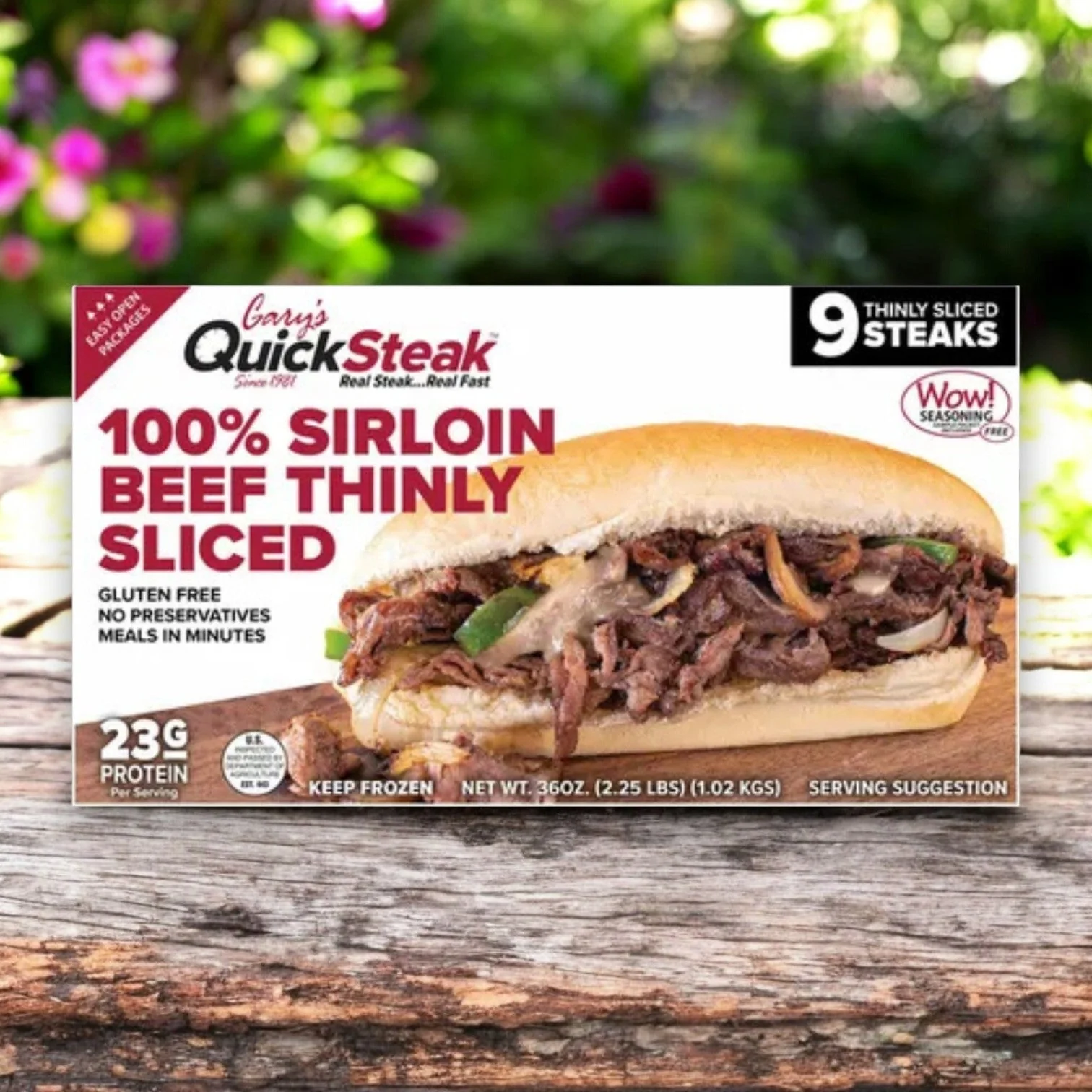
Gary’s Quick Steak
Gary's Quick Steak, 36 oz
- Likely grain-fed source cattle
- Likely grain-fed source cattle
- Processed in
- Omaha, Nebraska, United States
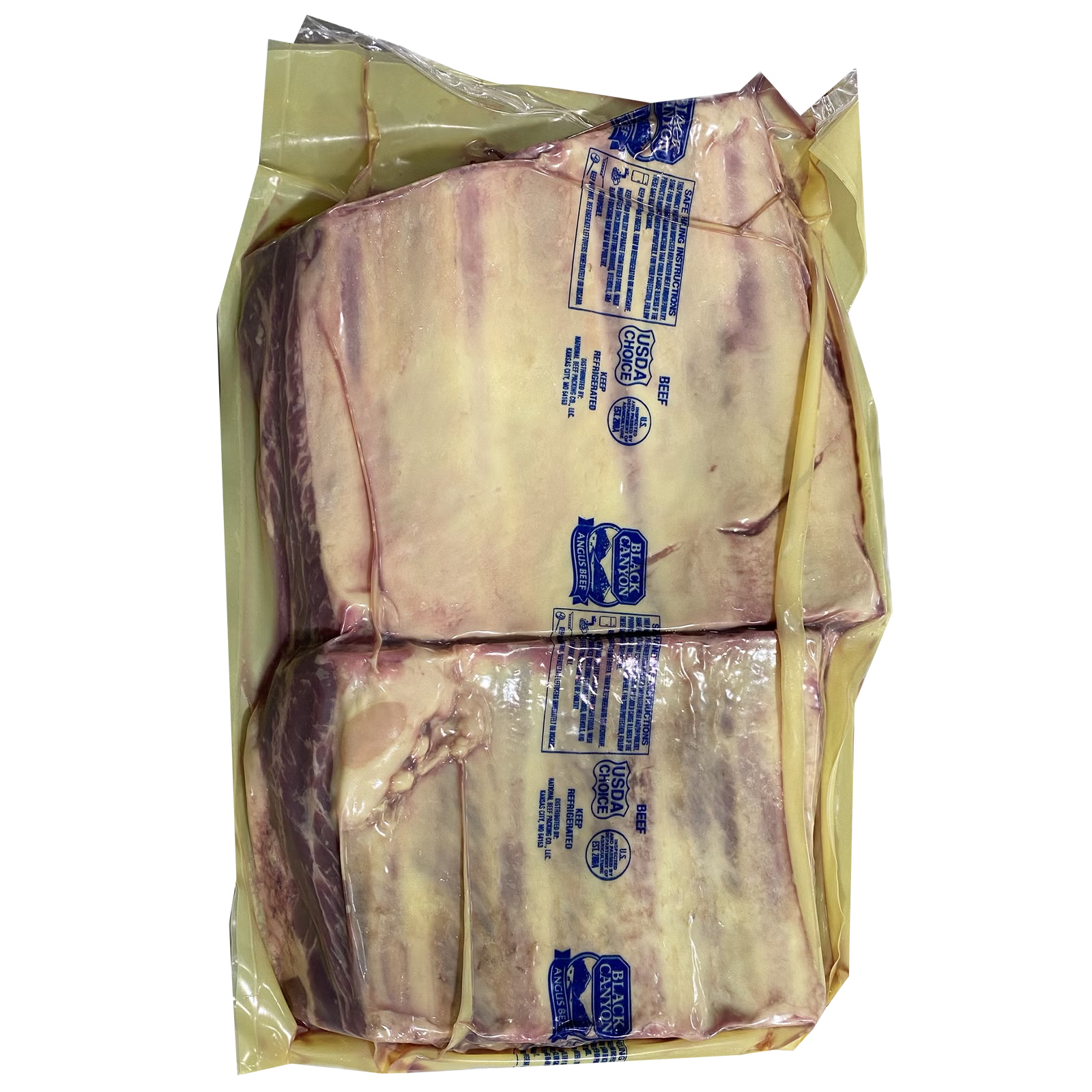
Black Canyon Angus Beef
USDA Choice Beef Short Ribs, 16 lb avg wt
- Feed
- Grain-finished
- Processed in
- Liberal, Kansas, United States