
Product images · Packaging may change
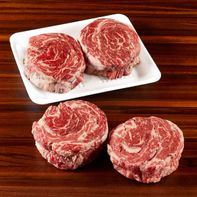
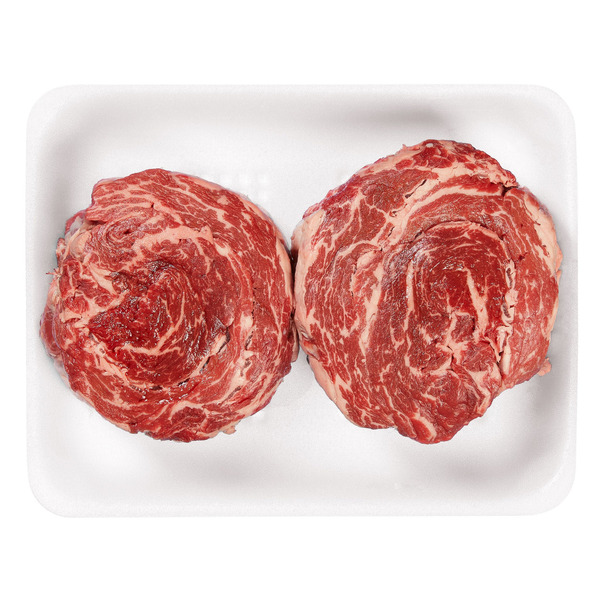
Kirkland Signature USDA Prime Beef Boneless Ribeye Cap Steak
USDA Prime boneless ribeye cap steaks.
Antibiotic policy
Veterinary treatment permitted: 2025 policyLikely grain finished
Likely grain finishedA CLOSER LOOK
The food facts.
Negatives
Likely grain finishedMediocre
Likely grain finished. This conventional beef cut fits the usual North American grain-finishing model described by USDA. The product’s actual finishing ration is not disclosed.
More info
Mediocre
Likely grain finished. This conventional beef cut fits the usual North American grain-finishing model described by USDA. The product’s actual finishing ration is not disclosed.
This sourcing preference favors lifetime forage feeding. The product identity and conventional retail market support likely grain inclusion; an industry pattern is not a lot-level observation. No safety or residue conclusion follows.
Grain finishing supplies energy-dense feed for weight gain and marbling before slaughter. We would choose grass and forage for cattle. In beef comparisons, forage feeding generally produces more omega-3 fat and a lower omega-6 to omega-3 ratio.
Actual supplier, ration and grain proportion are unresolved.
Specialty production or a newer package claim could change this inference.
Sources
- USDA cattle production and trade · Cattle feeding; U.S. beef trade
Product information
Origin & producer
Related businesses
Brand · Kirkland Signature
Kirkland Signature
Ingredients
Ingredients · Beef
Excellent
Beef
Plain meat best fits our ingredient preference. A simple ingredient list cannot rule out processing aids used earlier.
Ingredients describe what goes into the food. Processing treatments are covered separately.
Certifications
Grade · USDA Prime
USDA Prime
How it's raised
Likely a pasture start
Likely pasture-raised early in life, before finishing.
Early grazing is a positive under the pasture-access preference. It can coexist with grain or confined finishing; this finding does not establish pasture finishing or an audited welfare outcome.
Actual birth herd and pasture duration are not identified.
Dairy-derived cattle or a different supplier system could change this inference.
Sources
- USDA cattle production · Cow-calf and stocker production
Welfare audit requirements · North American slaughter-audit requirement
Costco’s January 2026 North American policy requires annual slaughter audits. Farm-audit frequency varies, and Costco reports incomplete coverage. This is a retailer requirement, not this package’s audit result.
Retailer programme context; no new practice score or actual animal-treatment or audit-result claim.
Antibiotics & hormones
Antibiotic policy · Veterinary treatment permitted: 2025 policy
Costco’s 2025 policy permits medically important antibiotics for disease prevention, control and treatment under veterinary supervision. This is retailer policy; actual treatment of these cattle is unconfirmed.
Retailer programme context; no new practice score or actual animal-treatment or audit-result claim.
Processing
Preparation · Separated ribeye cap formed into round steaks
The outer ribeye cap is sold separately and formed into round steaks, item 15151. This is distinct from whole ribeye steaks and does not identify a binding ingredient.
Scoped product context; no unobserved cattle origin, current treatment, medicine, formulation, food exposure or welfare outcome inferred.
Historical tenderization label · Blade tenderized: March 2022 package
The item 15151 package packed March 1, 2022 states blade tenderized and prints 145°F with a three-minute rest. This dated Bellingham package does not establish the current treatment.
Scoped product context; no unobserved cattle origin, current treatment, medicine, formulation, food exposure or welfare outcome inferred.
An unknown answer does not mean “none.” Check your package for current details.
KEEP EXPLORING
Also in the meat aisle
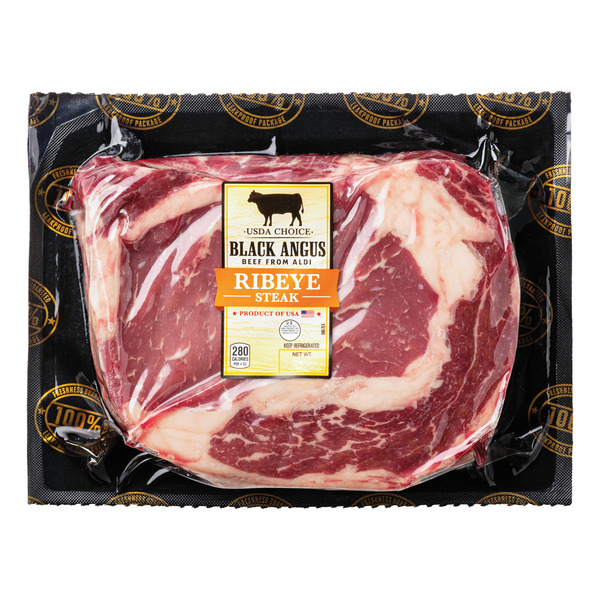
USDA Choice Black Angus Ribeye Steak
- Likely grain finished
- Likely grain finished
- Origin
- United States
Steak-umm
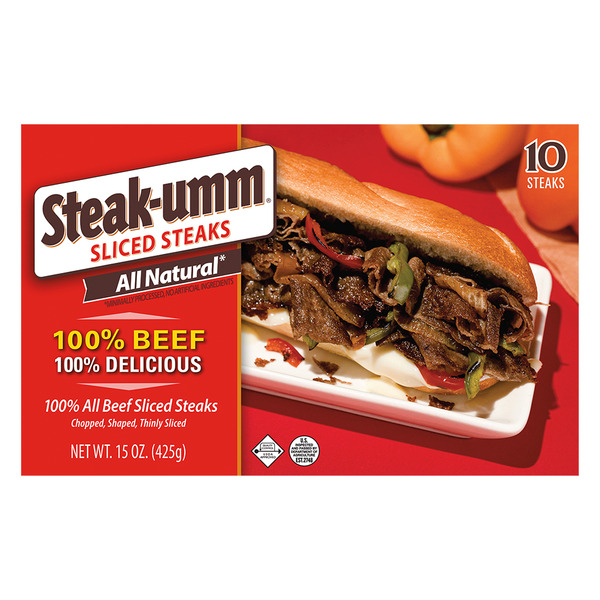
Steak-umm 100% Beef Sliced Steaks, 10 Steaks, 15 oz
- Feed
- Not specified
- Origin
- Not specified
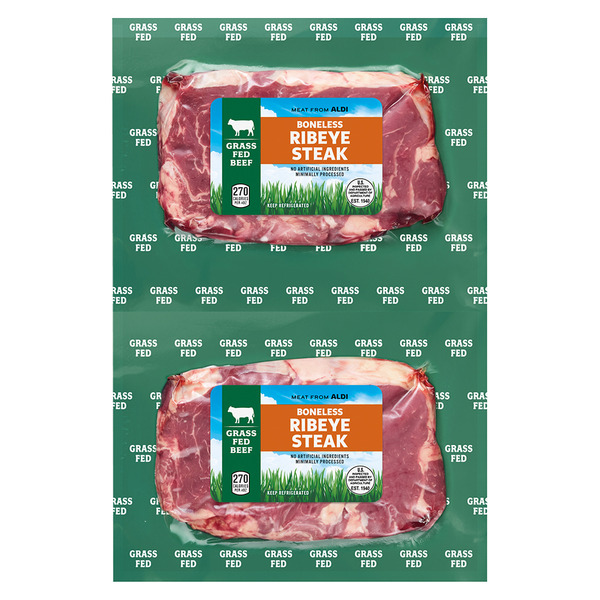
Grass-Fed Boneless Ribeye Steak
- 100% grass-fed
- 100% grass-fed
- Origin
- United States