
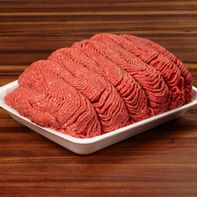
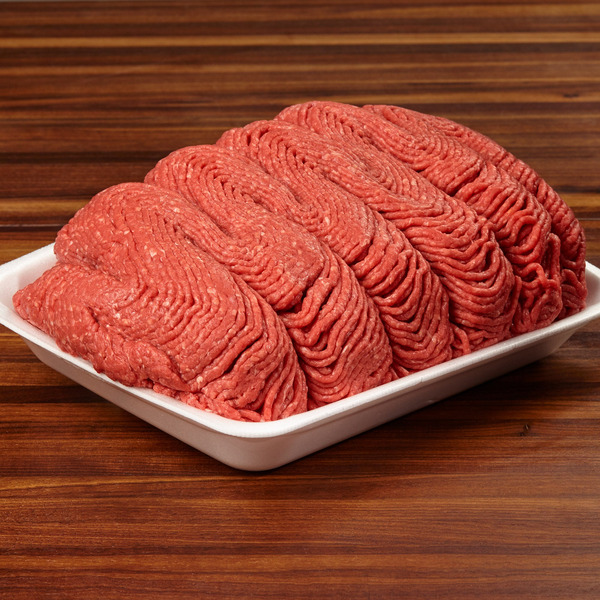
Product images · Packaging may change
Kirkland Signature Ground Beef 88% Lean / 12% Fat
Kirkland Signature 88% lean / 12% fat ground beef.
Antimicrobial wash
Antimicrobial washGrain-finished
Grain-finishedRaised with antibiotics
Raised with antibioticsRaised with added growth hormones
Raised with added growth hormonesA CLOSER LOOK
The food facts.
Negatives
Antimicrobial washMediocre
An antimicrobial surface treatment is used during commercial beef processing.
More info
Mediocre
An antimicrobial surface treatment is used during commercial beef processing.
The wash reduces bacteria. We prefer fewer chemical processing interventions.
Antimicrobial washes reduce bacteria during processing. We prefer a supply with fewer chemical processing interventions.
The exact processor, substance and dose are undisclosed.
Sources
- Cargill beef HACCP statement, January 2026 · Harvest-facility interventions; supports conventional-chain prior without assigning Cargill to this product
Grain-finishedMediocre
Includes beef from cattle fed grain during the final finishing stage before slaughter.
More info
Mediocre
Includes beef from cattle fed grain during the final finishing stage before slaughter.
Grain finishing differs from lifetime forage feeding. We favor meat raised on forage throughout life.
Grain finishing supplies energy-dense feed for weight gain and marbling before slaughter. We would choose grass and forage for cattle. In beef comparisons, forage feeding generally produces more omega-3 fat and a lower omega-6 to omega-3 ratio.
Actual supplier, ration and grain proportion are unresolved.
Ground blends may include grass-fed trim; the inference does not apply to every animal.
Sources
- USDA cattle production and trade · Cattle feeding; U.S. beef trade
- USDA assessment of beef imports — July 2023 · Special article, p. 31: retail ground-beef trim
Blended beef
Ground beef blended to an 88% lean / 12% fat specification.
Commercial ground beef combines leaner and fattier beef to reach a target fat ratio. The current supplier mix, countries, animal count and component proportions are not specified.
The directly documented same-item blend is a historical 2013 Minnesota lot; it does not establish the current recipe or supplier allocation.
Current suppliers, countries and animal count are unconfirmed.
Raised with antibioticsMediocre
The blend includes beef from cattle given antibiotics.
More info
Mediocre
The blend includes beef from cattle given antibiotics.
Routine antibiotic use can contribute to antibiotic resistance. Animals needing treatment should still receive care. This concerns contributing beef rather than every animal in the blend.
Routine antibiotic use can select for resistant bacteria. A no-antibiotics supply commitment keeps treated animals out of that programme; sick animals still need care.
Individual treatment histories and the share of treated animals are undisclosed.
Sources
- USDA Feedlot 2021 Report II · 2020 cattle placements; ionophores and other antibiotic use
- USDA cattle production system
Raised with added growth hormonesBad
The blend includes beef from cattle given growth-promoting hormone implants.
More info
Bad
The blend includes beef from cattle given growth-promoting hormone implants.
Growth-promoting implants increase weight gain. We favor beef raised without added growth hormones. This concerns contributing beef rather than every animal in the blend.
Added growth hormones accelerate weight gain. We would choose meat raised without that intervention.
Individual treatment histories and the share of treated animals are undisclosed.
Sources
- USDA Feedlot 2011 Part IV · Tables F.1.b/F.2.b; large-feedlot cattle implant use
- USDA cattle production system
Product information
Origin & producer
Related businesses
Brand · Kirkland Signature
Kirkland Signature
Processing
No added solution
Excellent
No added solution
Added solution introduces water and other ingredients into meat, changing what you are buying by weight.
Added solution introduces water and other ingredients into meat, changing what you are buying by weight.
Supplier testing standard · Supplier rule: E. coli test-and-hold
Costco’s 2025 supplier standard requires finished ground beef to remain at the production facility until sample tests for E. coli O157:H7 are negative. This is a supplier requirement, not a test result for this package.
Supplier testing requirements describe release controls, not measured results for this package. Processor identity is a separate question from the cattle’s farm and slaughter source.
The published standard is effective September 1, 2025.
Finished-product supplier testing differs from raw-beef-component N60 addenda and warehouse preparation.
No lot-specific results or compliance audit were inspected; sampling does not guarantee pathogen-free meat.
Pictured cooking instructions · 160°F with a food thermometer
The February 1, 2025 package directs cooking to 160°F, measured with a food thermometer. The package observation is dated; follow the instructions on your actual pack.
Source-scoped food, handling, supply-pattern and dated policy/history context; no current farm, cattle country, processor, intervention or lot-test result assigned.
Current purchased lot and exact source chain unassigned. Package declarations and supplier requirements are not measured outcomes.
Pictured storage instructions · Keep refrigerated or frozen
The February 2025 package says Keep Refrigerated or Frozen. This permits either storage condition and does not establish whether a supplied pack was previously frozen.
Source-scoped food, handling, supply-pattern and dated policy/history context; no current farm, cattle country, processor, intervention or lot-test result assigned.
Current purchased lot and exact source chain unassigned. Package declarations and supplier requirements are not measured outcomes.
Historical local recall · 2013 Coon Rapids recall
A 2013 recall covered item 33724 sold September 4–7 at Coon Rapids, Minnesota, after one linked E. coli O157:H7 illness. This is a historical local recall, not evidence that current stock is affected.
Source-scoped food, handling, supply-pattern and dated policy/history context; no current farm, cattle country, processor, intervention or lot-test result assigned.
Notice reports purchaser-contact steps, not verified successful contact/recovery of every purchase or a final effectiveness outcome. Its continuing investigation belongs to2013.
Feed
Blended beef
Ground beef blended to an 88% lean / 12% fat specification.
Commercial ground beef combines leaner and fattier beef to reach a target fat ratio. The current supplier mix, countries, animal count and component proportions are not specified.
The directly documented same-item blend is a historical 2013 Minnesota lot; it does not establish the current recipe or supplier allocation.
Current suppliers, countries and animal count are unconfirmed.
How it's raised
Likely early pasture access
Some cattle likely had pasture access early in life; individual histories and time outdoors are undisclosed.
Early pasture access is ordinary background information. It does not earn a lifelong-pasture positive.
Actual cattle mix, ranches and individual animal pasture histories remain unconfirmed.
Dairy-derived or other imported/specialty cattle can differ; this is not a grass-finished, year-round-outdoor or US-raising claim.
Sources
- USDA cattle production: cow-calf and stocker phases · UpdatedMay22 2025; cow-calf operations and cattle feeding: grazing before finishing
- Exact conventional beef product identity
- MLA Regional feedlot investment study: pasture before grain finishing · Section2.1,printedp9/physical11. Industry account, not this product farm/lot.
Retailer antibiotic policy · Veterinary antibiotics permitted under 2025 policy
Costco’s 2025 policy permits veterinary-supervised medically important antibiotics for disease prevention, control and treatment. Actual use in this beef is unconfirmed.
Source-scoped food, handling, supply-pattern and dated policy/history context; no current farm, cattle country, processor, intervention or lot-test result assigned.
Current purchased lot and exact source chain unassigned. Package declarations and supplier requirements are not measured outcomes.
Retailer welfare-audit requirements · Annual slaughter audits required under 2026 North American policy
Costco’s 2026 North American policy requires annual slaughter-plant audits; farm-audit frequency varies. Its risk-based system does not obtain audits for every facility. This is a requirement, not this beef’s audit result.
Source-scoped food, handling, supply-pattern and dated policy/history context; no current farm, cattle country, processor, intervention or lot-test result assigned.
Current purchased lot and exact source chain unassigned. Package declarations and supplier requirements are not measured outcomes.
Ingredients
Ground beef
Raw 88% lean / 12% fat ground beef, sold by weight.
The product identity establishes ground beef and its stated lean-to-fat ratio. A complete current ingredient declaration has not been established; the name and fat ratio do not by themselves establish an unseasoned beef-only formulation or the absence of upstream processing aids.
Complete current ingredient declaration and formulation remain unconfirmed.
Current purchased lot and exact source chain are unassigned; product identity is not a processing-aid exclusion.
Pictured nutrition panel · 210 calories 13 g fat 22 g protein per 4 oz (112 g)
Per 4 oz (112 g) raw as packaged: 210 calories, 13 g fat, 5 g saturated fat, 0.5 g trans fat, 22 g protein, 75 mg sodium, 75 mg cholesterol and 0 g carbohydrate. These are February 2025 label declarations.
Source-scoped food, handling, supply-pattern and dated policy/history context; no current farm, cattle country, processor, intervention or lot-test result assigned.
Current purchased lot and exact source chain unassigned. Package declarations and supplier requirements are not measured outcomes.
An unknown answer does not mean “none.” Check your package for current details.
KEEP EXPLORING
Also in the meat aisle
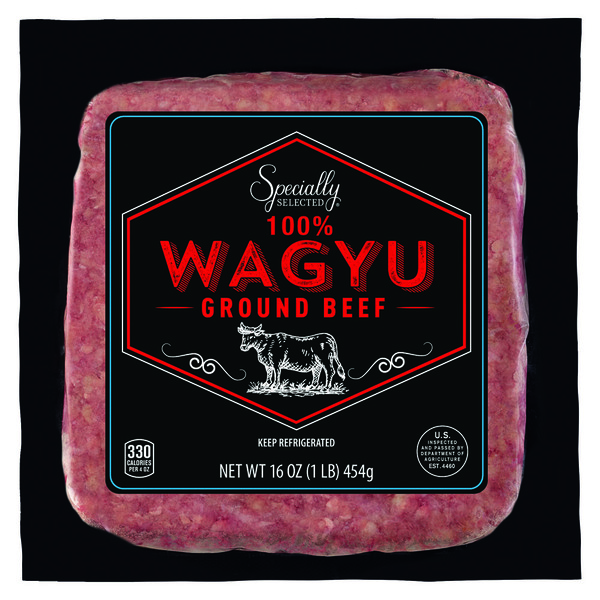
Specially Selected
Specially Selected 75% Lean/25% Fat Wagyu Ground Beef
- Likely grain finishing
- Likely grain-finished
- Origin
- Not specified
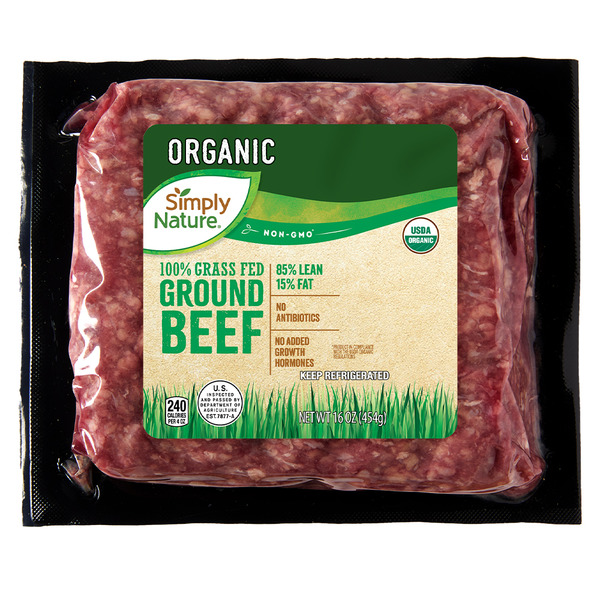
Simply Nature
Simply Nature Organic Grass Fed 85% Lean Ground Beef
- Feed
- 100% grass-fed
- Origin
- Australia, Uruguay, United States
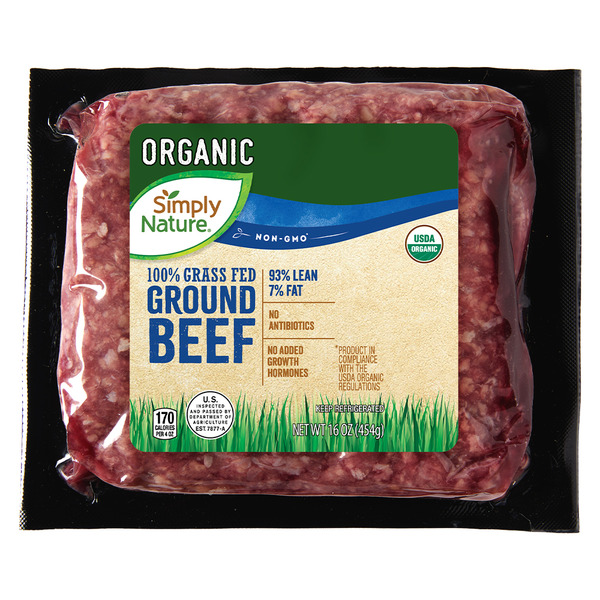
Simply Nature
Simply Nature Organic 100% Grass-Fed 93% Lean Ground Beef
- Feed and finishing
- 100% grass-fed organic non-GMO
- Origin
- Australia, Uruguay, United States