
Product images · Packaging may change
USDA Choice Beef Top Sirloin Steak, Boneless
Individually packed USDA Choice steaks, explicitly labeled mechanically tenderized.
Mechanical tenderization
Used — type not specifiedProcessed in
Kansas City, Kansas, United StatesLikely grain finished
Likely grain finishedA CLOSER LOOK
The food facts.
Negatives
Mechanical tenderizationUsed — type not specifiedMediocre
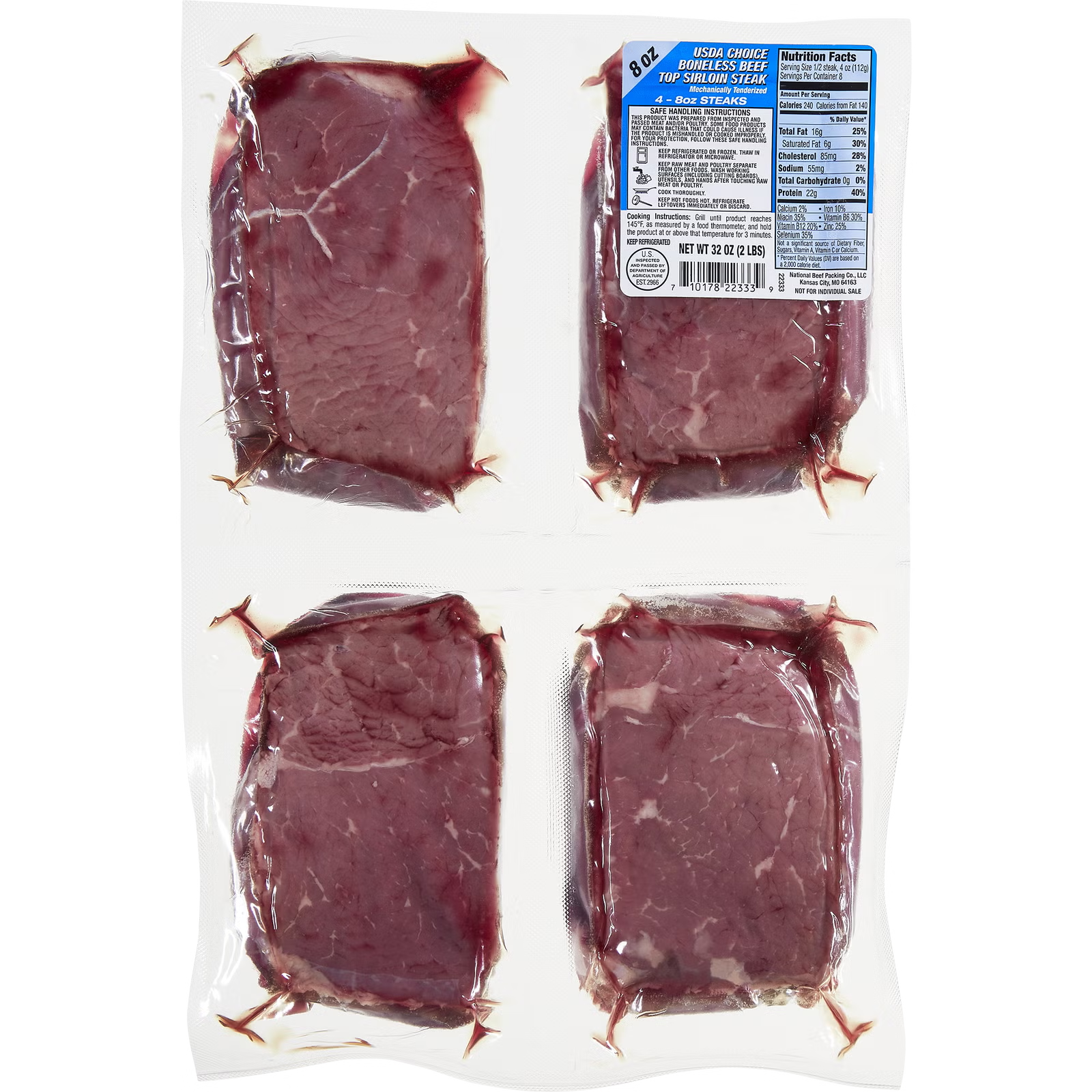
Mechanically tenderized, as stated on the pictured Costco package. The needle or blade method is not specified.
More info
Mediocre
Mechanically tenderized, as stated on the pictured Costco package. The needle or blade method is not specified.
Blades and needles can carry surface bacteria into the centre of a cut. An intact steak avoids that extra route of contamination.
Attaches the actual label source to the existing mechanical-tenderization answer and rating; no new method, food contamination or current-lot validation inferred.
Blades and needles can carry surface bacteria into the centre of a cut. An intact steak avoids that extra route of contamination.
Advertised package version; current purchased package may differ.
Likely grain finishedMediocre
Likely grain finished. This conventional beef cut fits the usual North American grain-finishing model described by USDA. The product’s actual finishing ration is not disclosed.
More info
Mediocre
Likely grain finished. This conventional beef cut fits the usual North American grain-finishing model described by USDA. The product’s actual finishing ration is not disclosed.
This sourcing preference favors lifetime forage feeding. The product identity and conventional retail market support likely grain inclusion; an industry pattern is not a lot-level observation. No safety or residue conclusion follows.
Grain finishing supplies energy-dense feed for weight gain and marbling before slaughter. We would choose grass and forage for cattle. In beef comparisons, forage feeding generally produces more omega-3 fat and a lower omega-6 to omega-3 ratio.
Actual supplier, ration and grain proportion are unresolved.
Specialty production or a newer package claim could change this inference.
Sources
- USDA cattle production and trade · Cattle feeding; U.S. beef trade
Product information
Origin & producer
Related businesses
Processed in · Kansas City, Kansas, United States
Establishment 2966 on the pictured package identifies National Beef’s Osage processing plant in Kansas City, Kansas. It does not identify cattle raising or slaughter; current packages may use a different route.
This identifies further processing separately from cattle origin, corporate office and slaughter location.
The pictured EST does not establish current retail-lot custody or upstream farms.
Sources
Processor · National Beef Packing Co., LLC (dated source)
Establishment 2966 on the pictured package identifies National Beef’s Osage processing plant in Kansas City, Kansas. It does not identify cattle raising or slaughter; current packages may use a different route. Pictured package
This identifies further processing separately from cattle origin, corporate office and slaughter location.
The pictured EST does not establish current retail-lot custody or upstream farms.
Sources
Catalogue company · Kansas City Steak Co.: catalogue company
Costco lists Kansas City Steak Co. LLC as the catalogue company. The pictured label names National Beef as processor; these are separate roles, and neither identifies the cattle’s ranch.
Exact label or visibly qualified food/business-role context. Mechanical tenderization and cooking hold retain their existing supported answers; no new food hazard or assessment inferred.
Label-version information; no current-lot assay, animal origin or ranch assignment.
Processing
Packaging · Four individually sealed 8 oz steaks
Four individually sealed 8 oz steaks (2 lb on the pictured label), labeled keep refrigerated. Packaging gases, film materials and previous freezing are not established.
Separate packs allow portions to remain sealed. No shelf-life, food-safety or chemical-migration outcome is inferred.
Exact gas, polymer and lot temperature history remain unresolved.
Package cooking instructions · 145°F minimum, then hold at 145°F for 3 minutes
The pictured label instructs cooking to at least 145°F and holding the steak at or above 145°F for at least 3 minutes. Check your package for its instructions.
The pictured instruction specifies a temperature hold, rather than only resting after removal from heat.
Label-version instructions; current package may differ.
Ingredients
Ingredients · Beef
Excellent
Mechanically tenderized raw top sirloin steaks. The full ingredient declaration, added solution and processing aids are not specified.
Plain meat best fits our ingredient preference. A simple ingredient list cannot rule out processing aids used earlier.
Exact label or visibly qualified food/business-role context. Mechanical tenderization and cooking hold retain their existing supported answers; no new food hazard or assessment inferred.
Ingredients describe what goes into the food. Processing treatments are covered separately.
Label-version information; no current-lot assay, animal origin or ranch assignment.
Pictured nutrition panel · Per 4 oz: 240 calories 22 g protein
Per half-steak (4 oz/112 g), the pictured panel lists 240 calories, 16 g fat, 6 g saturated fat, 85 mg cholesterol, 55 mg sodium, 0 g carbohydrate and 22 g protein. Eight servings per pack; this is label-version information.
Exact label or visibly qualified food/business-role context. Mechanical tenderization and cooking hold retain their existing supported answers; no new food hazard or assessment inferred.
Label-version information; no current-lot assay, animal origin or ranch assignment.
Certifications
Grade · USDA Choice
USDA Choice
How it's raised
Likely a pasture start
Likely pasture-raised early in life, before finishing.
Early grazing is a positive under the pasture-access preference. It can coexist with grain or confined finishing; this finding does not establish pasture finishing or an audited welfare outcome.
Actual birth herd and pasture duration are not identified.
Dairy-derived cattle or a different supplier system could change this inference.
Sources
- USDA cattle production · Cow-calf and stocker production
An unknown answer does not mean “none.” Check your package for current details.
KEEP EXPLORING
Also in the meat aisle
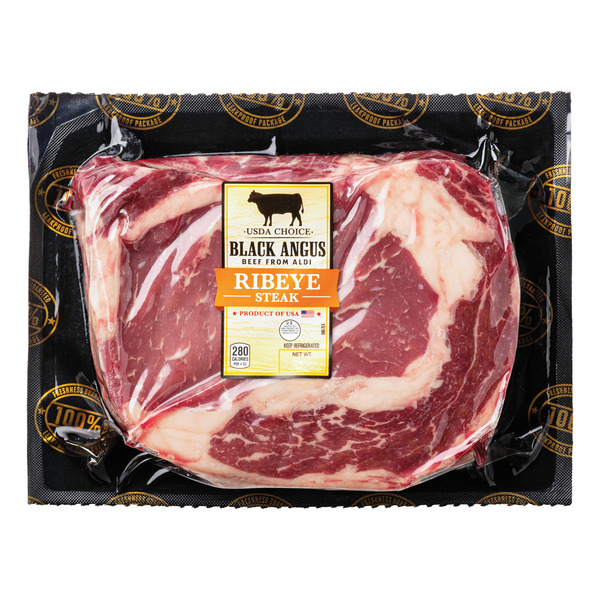
USDA Choice Black Angus Ribeye Steak
- Likely grain finished
- Likely grain finished
- Origin
- United States
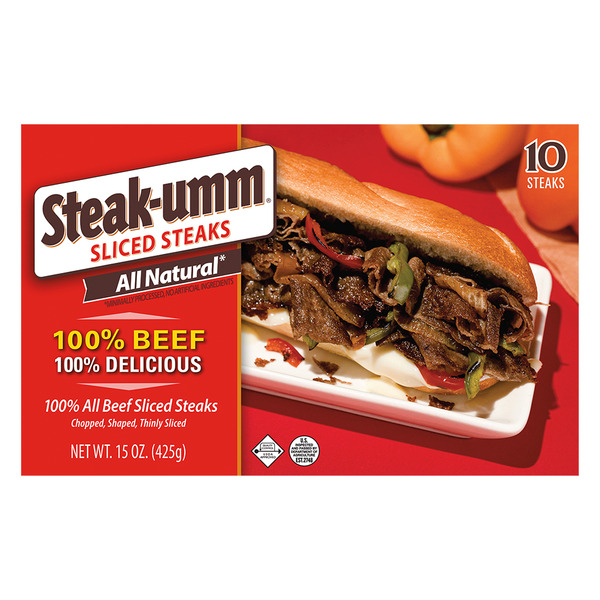
Steak-umm
Steak-umm 100% Beef Sliced Steaks, 10 Steaks, 15 oz
- Feed
- Not specified
- Origin
- Not specified
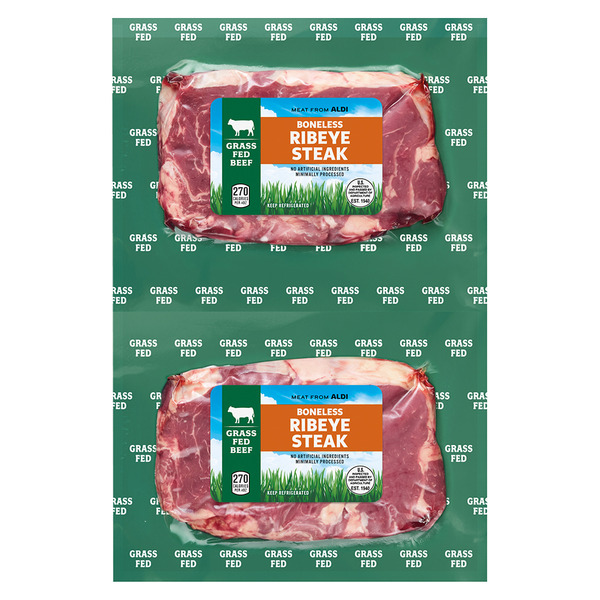
Grass-Fed Boneless Ribeye Steak
- 100% grass-fed
- 100% grass-fed
- Origin
- United States