
Product images · Packaging may change
OrganicVerde® Organic Grass-Fed 93/7 Ground Beef
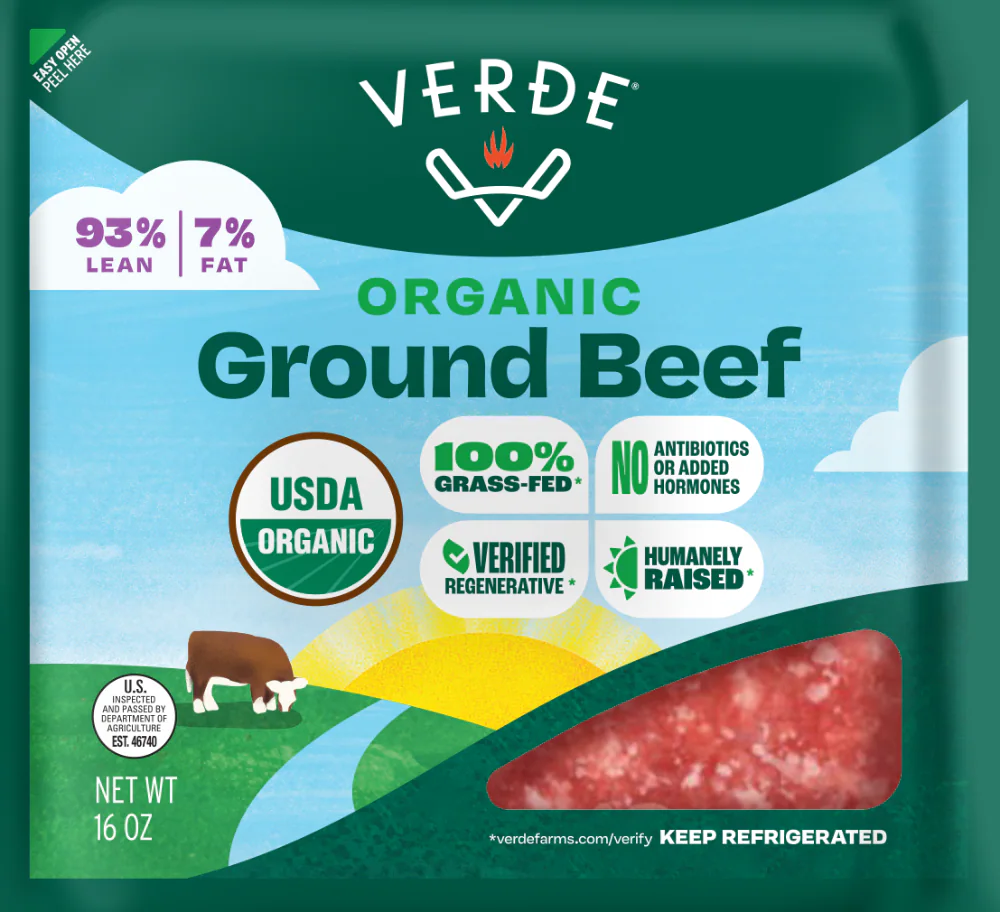
93/7 ground beef. 100% grass-fed organic non-GMO, with rotational pasture grazing and no feedlots.
Feed
Grass-fed & regenerative organic non-GMOOutdoor access
Lifelong pasture; no feedlotsOrigin
Uruguay, Australia, North AmericaCertifications
USDA Organic, Verified RegenerativeA CLOSER LOOK
The food facts.
Positives
FeedGrass-fed & regenerative organic non-GMOExcellent
Grass and forage through finishing, sourced from Land to Market verified regenerative farms.
More info
Good
100% grass-fed organic non-GMO. Grass and forage after weaning through finishing; permitted vitamin and mineral supplements are allowed.
Concrete practice at its documented scope; no health, ecological or contamination conclusion.
A lifetime forage diet excludes grain, including during finishing. Grass-fed beef generally has more omega-3 fat and a lower omega-6 to omega-3 ratio than grain-fed beef.
Source/report dates remain intact; no new external, physical-package or farm audit is claimed.
Sources
Grass-fed & regenerative
Excellent
Grass and forage through finishing, sourced from Land to Market verified regenerative farms.
We favor lifetime forage feeding paired with independent monitoring of the land that raises the cattle. Verification does not establish carbon-negative beef, nutrient superiority, zero residues or absence of processing washes.
Lifetime grass and forage feeding is paired with independently verified regenerative sourcing. The named programme defines the land-management practices or ecological outcomes it verifies.
No named supplying ranch or individual purchased lot assigned.
The 2023 land-base count is historical and is not a current measured result.
The February 8, 2027 deadline is 2table’s next review date, not a certificate expiration.
Sources
Outdoor accessLifelong pasture; no feedlotsGood
Year-round pasture without feedlots. Cattle move between paddocks so pasture can rest and regrow.
More info
Good
Year-round pasture without feedlots. Cattle move between paddocks so pasture can rest and regrow.
Concrete practice at its documented scope; no health, ecological or contamination conclusion.
Lifelong pasture or range, without feedlot finishing, gives animals freedom to graze and move throughout raising. A pasture start, seasonal grazing or access to an outdoor yard does not establish that commitment.
Sources
Product information
Origin & producer
Related businesses
Processed in · Pedricktown, New Jersey, United States
Pedricktown, New Jersey, United States
Brand · Verde
Verde
Processor · Verde Farms LLC — EST. 46740
Verde Farms LLC — EST. 46740
Brand sourcing · Sourcing network: Uruguay, Australia and North America
Family-farm sourcing in Uruguay, Australia and North America, using Hereford and Angus cattle. This is the brand’s network, not a country allocation for this package.
Verde describes family-farm sourcing primarily from Uruguay, Australia and North America. A New Jersey processing address does not identify where the cattle lived.
This describes the published program; the particular package is not traced to an individual farm or lot.
Sources
Feed
Misleading omega-3 comparison · Total omega-3 is not the same as EPA+DHA
Verde’s omega-3 percentage compares total omega-3 with an EPA+DHA target. Total omega-3 includes other fatty acids, so the advertised 152% does not establish that much EPA+DHA.
The comparison uses different nutrient measures. A total omega-3 amount cannot establish the contribution to an EPA+DHA-specific target. This is a marketing caveat, not evidence of a harmful production practice.
The cited nutrition example concerns ribeye; the percentages are not assigned to ground beef or every cut.
No new EPA+DHA amount or health outcome is inferred for this package.
Sources
- Verde nutrition claims and footnote · 379 mg omega-3, 152%, and EPA+DHA reference footnote
- NIH omega-3 factsheet · Introduction and Recommended Intakes: ALA versus EPA and DHA
Antibiotics & hormones
No antibiotics
Excellent
No antibiotics
Routine antibiotic use can select for resistant bacteria. A no-antibiotics supply commitment keeps treated animals out of that programme; sick animals still need care.
Raised without antibiotics. Limiting routine antibiotic use helps reduce selection for antibiotic-resistant bacteria. Sick animals can still receive care and be kept out of this supply.
No added hormones
Excellent
No added hormones
Added growth hormones accelerate weight gain. We would choose meat raised without that intervention.
A no-added-hormones commitment excludes hormone treatments used to accelerate weight gain.
Processing
No added solution
Excellent
No added solution
Added solution introduces water and other ingredients into meat, changing what you are buying by weight.
Added solution introduces water and other ingredients into meat, changing what you are buying by weight.
Worker injury history — 2025 · Pedricktown reported 11 worker injuries in 2025
For packages processed at Verde’s Pedricktown plant: its 2025 employer report records 11 worker injuries, including 8 cases with days away from work. Causes are unresolved; this is not a food-safety finding.
The annual employer report establishes worker injuries and time-away cases at the named plant. It does not establish injury causes, a regulatory violation, current conditions or a meat-safety problem.
Self-reported 2025 totals; causes and present-day conditions are unresolved.
No injury or exposure is assigned to this particular product line or purchased lot.
Sources
- OSHA employer injury summaries — 2025 through August 31, 2026 · Verde Farms LLC, 3 Gateway Boulevard, Pedricktown NJ; filing year 2025
- OSHA establishment data and reporting definitions
Cooking advice · Use a thermometer, not colour alone
Colour-only cooking cue on the 93/7 webpage: stop when the pink is gone. Use a thermometer for 160°F; colour alone cannot establish safe doneness.
The published colour cue is unreliable as a safety endpoint; no contaminated meat, actual undercooking or illness is established.
This concerns the maker webpage’s advice; it does not establish how a shopper cooked the meat.
Sources
- Verde — 93% lean ground beef · Cooking section: disappearance of pink
- USDA AskFSIS — Can you tell if meat is safely done by its color? · Updated January 29, 2025; thermometer and ground-beef 160°F guidance
Certifications
Certifications · USDA Organic, Verified Regenerative
USDA Organic, Verified Regenerative
Organic is not a zero-exposure guarantee · The organic seal does not prove zero pesticide exposure
Verde advertises no pesticide-exposure risk. Organic restricts inputs, but the certification does not prove zero pesticide exposure in every cut. This is a limit of the marketing claim, not a finding of residues in this meat.
A restricted-input certification cannot establish an absolute exposure-risk claim. Organic regulations address detectable residues and environmental contamination; the seal alone is not evidence of zero exposure.
No pesticide residue or harm is established for this product.
This does not challenge the validity of the selected organic certification.
Sources
- Verde nutrition and exposure claims · Nutritional Benefits: pesticide exposure-risk statement
- USDA organic residue rule · Exclusion from organic sale: prohibited residues and environmental contamination
- USDA allowed and prohibited organic crop inputs
Organic certifier · Baystate and NFC label versions
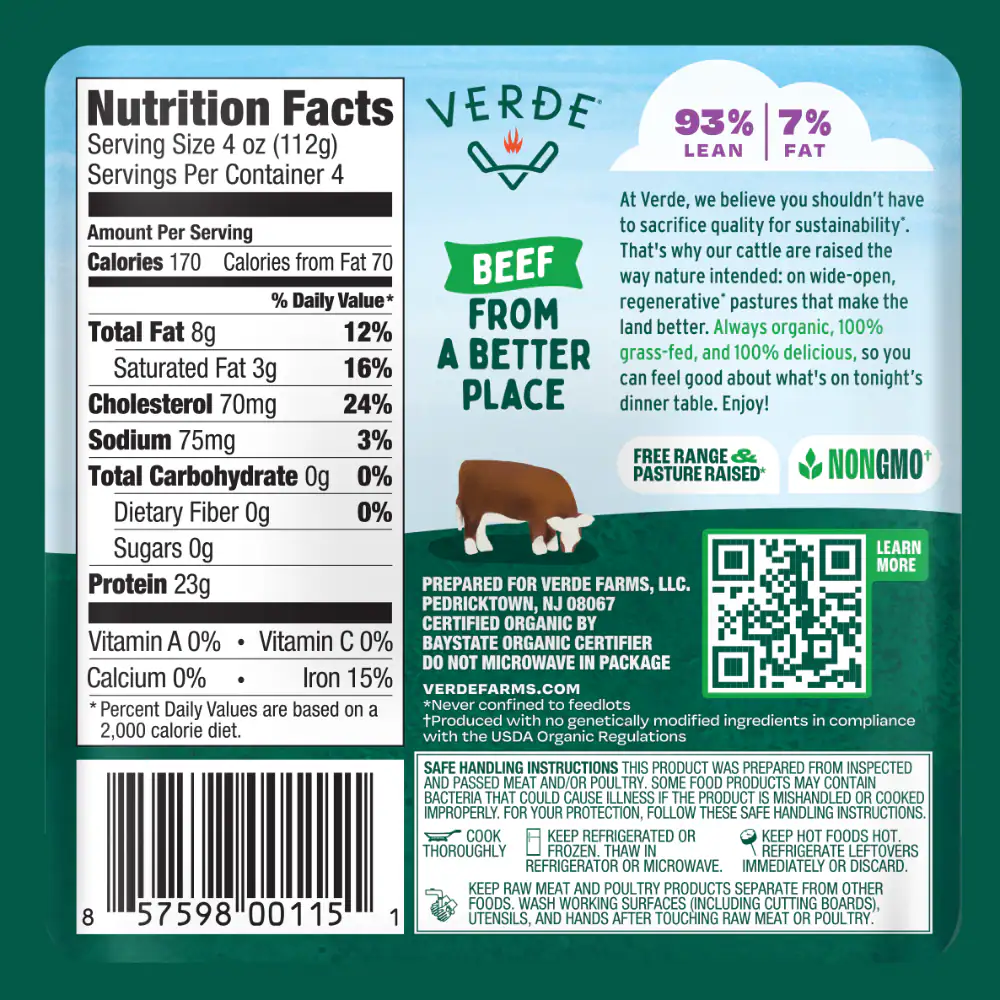
Baystate Organic Certifier on Harris Teeter and maker artwork; Natural Food Certifiers on Stop & Shop artwork for the same 93/7 UPC. The label versions are undated, so their sequence and current stock are unconfirmed.
Different pictured certifiers do not establish a dated certifier switch, withdrawal or invalid organic status.
Undated artwork does not identify the current certifier for every retail package.
An unknown answer does not mean “none.” Check your package for current details.
KEEP EXPLORING
Also in the meat aisle
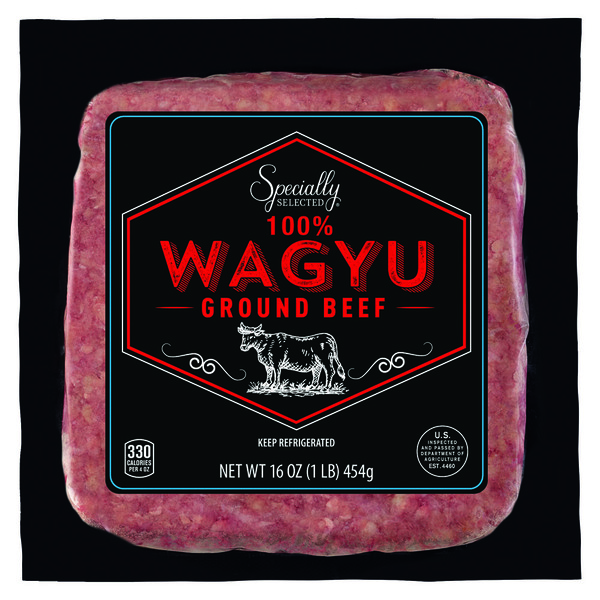
Specially Selected
Specially Selected 75% Lean/25% Fat Wagyu Ground Beef
- Likely grain finishing
- Likely grain-finished
- Origin
- Not specified
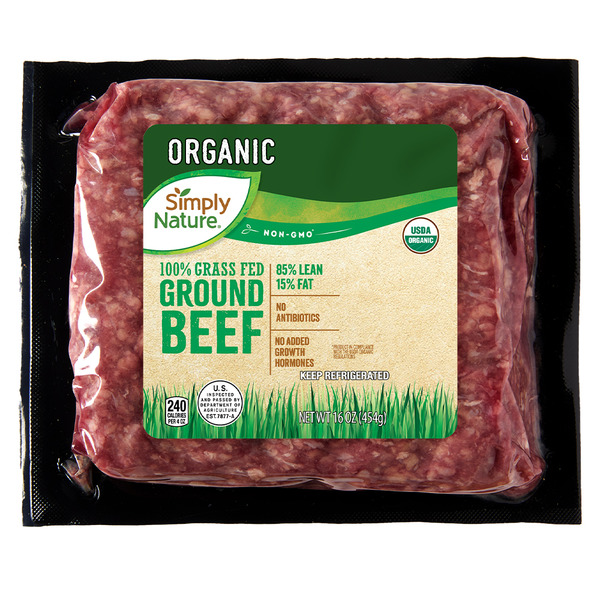
Simply Nature
Simply Nature Organic Grass Fed 85% Lean Ground Beef
- Feed
- 100% grass-fed
- Origin
- Australia, Uruguay, United States
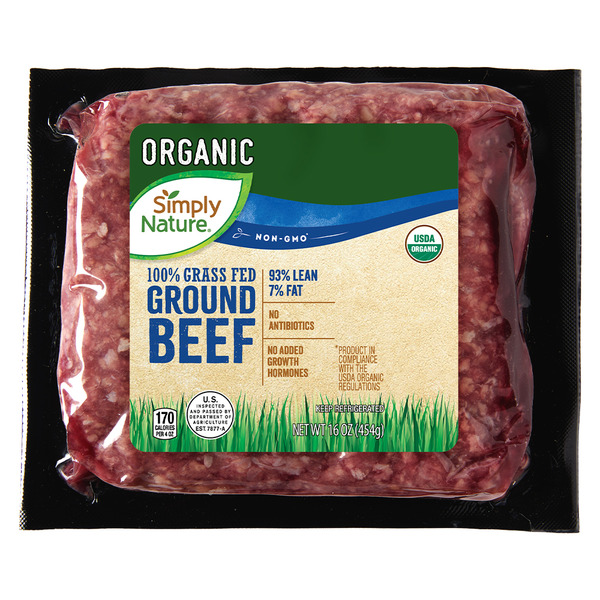
Simply Nature
Simply Nature Organic 100% Grass-Fed 93% Lean Ground Beef
- Feed and finishing
- 100% grass-fed organic non-GMO
- Origin
- Australia, Uruguay, United States