
Product images · Packaging may change
Kroger Beef Shaved Steak, 14 oz
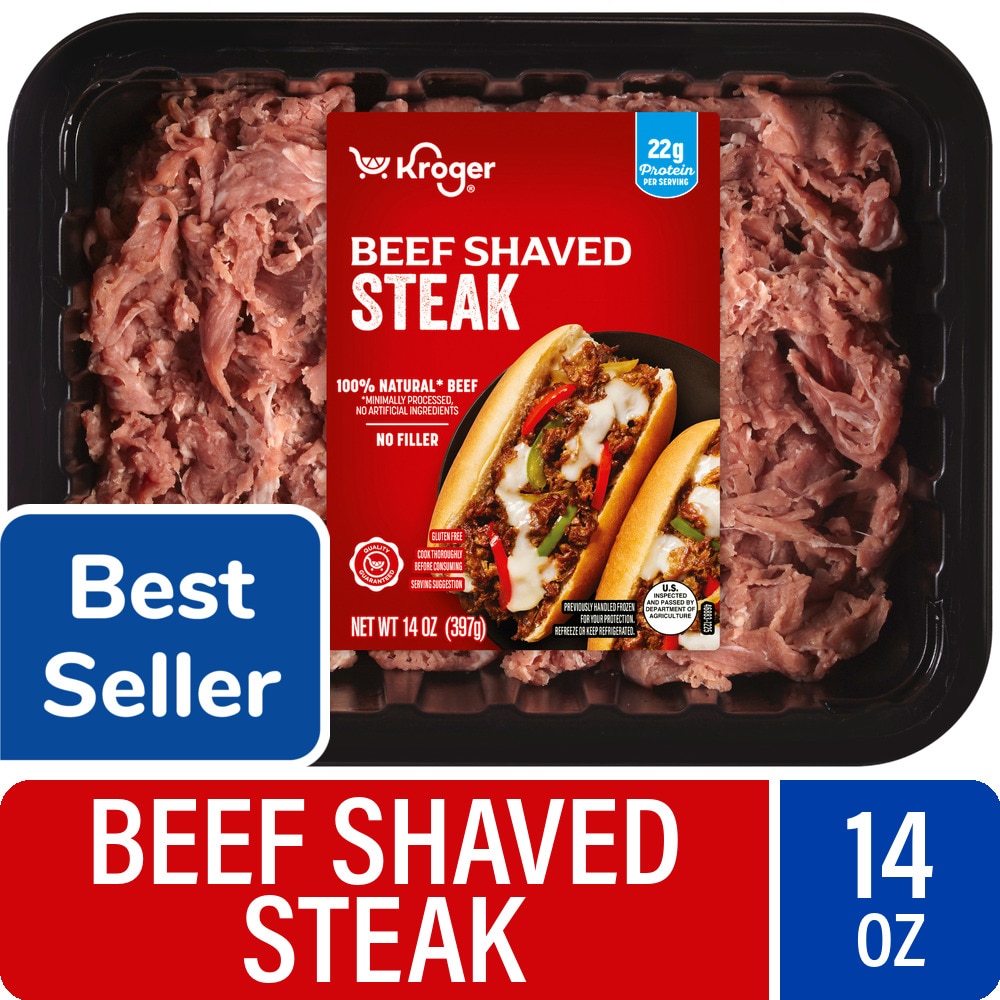
14-ounce shaved beef, previously handled frozen. Likely grain finished.
A CLOSER LOOK
The food facts.
Negatives
Likely grain finishedMediocre
Likely grain finished. This conventional beef cut fits the usual North American grain-finishing model described by USDA. The product’s actual finishing ration is not disclosed.
More info
Mediocre
Likely grain finished. This conventional beef cut fits the usual North American grain-finishing model described by USDA. The product’s actual finishing ration is not disclosed.
This sourcing preference favors lifetime forage feeding. The product identity and conventional retail market support likely grain inclusion; an industry pattern is not a lot-level observation. No safety or residue conclusion follows.
Grain finishing supplies energy-dense feed for weight gain and marbling before slaughter. We would choose grass and forage for cattle. In beef comparisons, forage feeding generally produces more omega-3 fat and a lower omega-6 to omega-3 ratio.
Actual supplier, ration and grain proportion are unresolved.
Specialty production or a newer package claim could change this inference.
Sources
- USDA cattle production and trade · Cattle feeding; U.S. beef trade
- Exact conventional product identity
Product information
Origin & producer
Related businesses
Brand · Kroger
Kroger
Supplier sourcing · Demakes U.S. family-farm sourcing
Demakes purchases raw materials from U.S. family farms and lists shaved meats and Kroger among its private-label partnerships. This is company sourcing context; it does not identify this package’s farm or cattle birth and raising countries.
Actual sourced practice or scoped company context; no measured health outcome assigned.
Company purchasing geography is not an exact cattle-origin or current-lot allocation.
The dated Lynn package and partial Danvers code do not establish a current processor for all packages.
Photographed processors · Lynn in 2019; likely Danvers in 2025
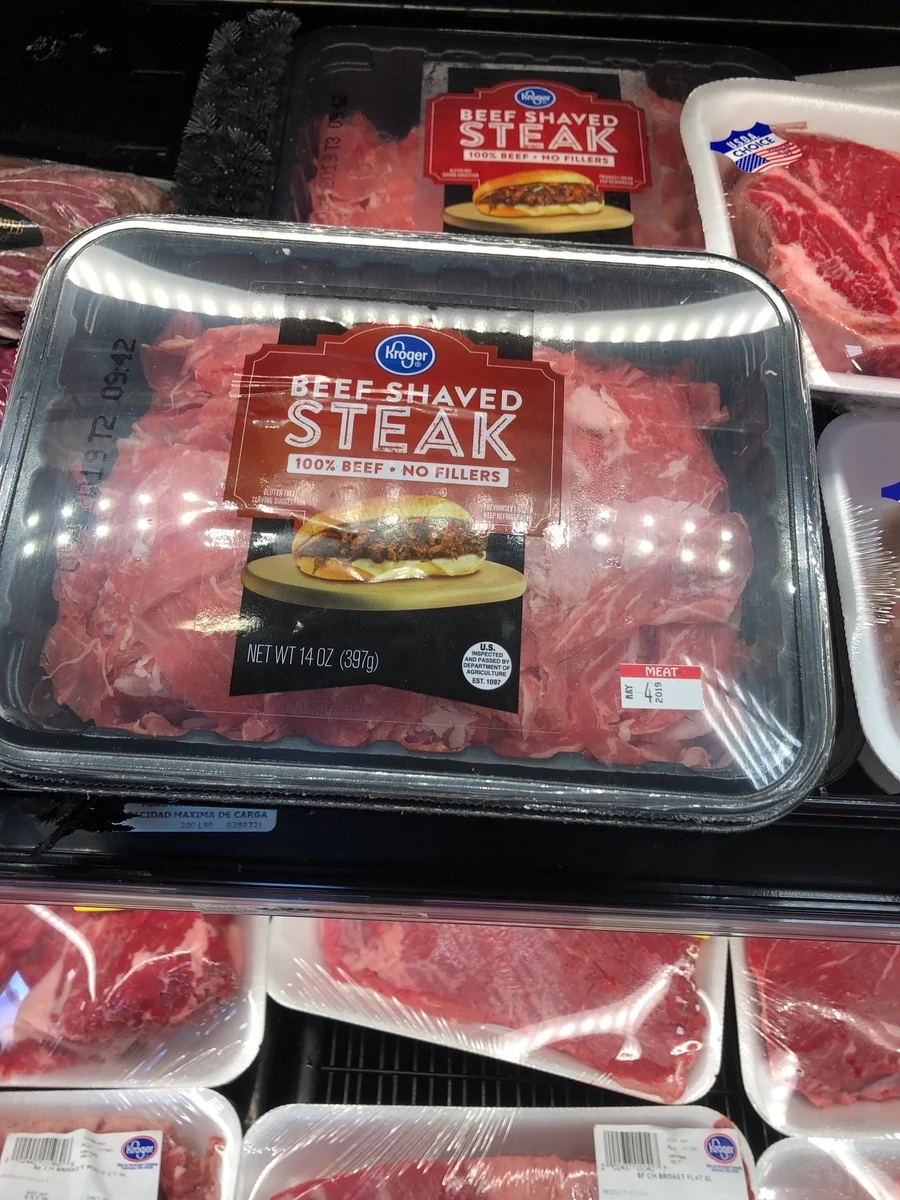
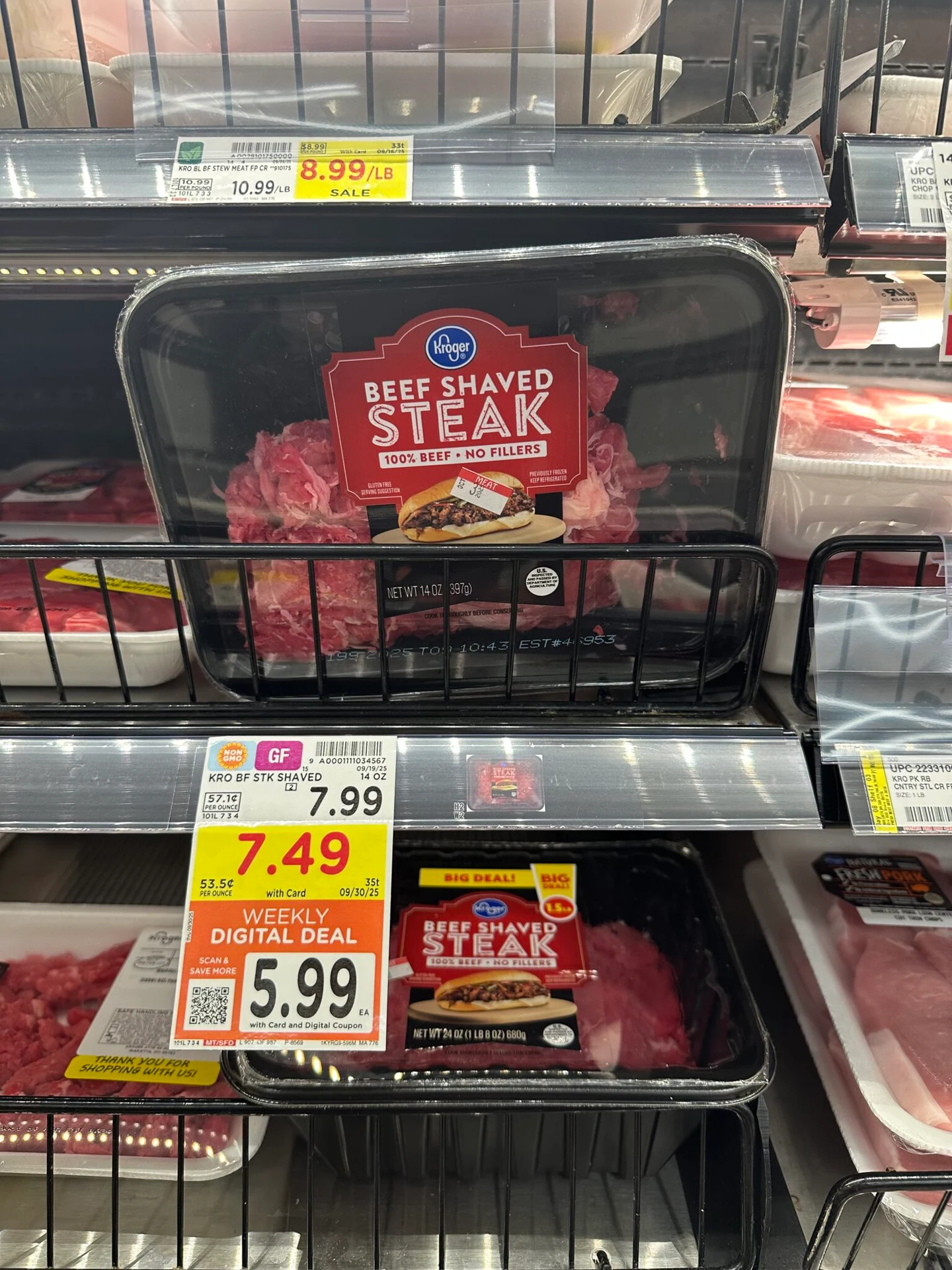
A May 2019 pack shows EST.1097, linked to Demakes in Lynn, Massachusetts. A September 2025 photo has a partly obscured mark most consistent with Fresh Advantage in Danvers. These dated packs do not identify today’s plant or establish HPP treatment.
Historical processing context. The partly hidden mark supports a likely Danvers connection, without assigning the current plant, cattle origin or HPP treatment.
The September 2025 code has an obscured digit. Danvers is the best-supported match in the retained dated directory.
Neither pictured processing establishment establishes cattle slaughter, ranch or raising country.
Sources
- May 2019 Kroger 14 oz package, EST.1097 · Whole front: 14 oz / 397 g and EST.1097 in the inspection legend
- September 2025 Kroger 14 oz shelf photograph · Front dot code 4?953, one digit obscured; exact shelf item 0001111034567
- FSIS establishment directory · Retained September 20, 2026 directory: Demakes Lynn M1097/P8891; Fresh Advantage Danvers M46953/P46953
Processing
Freezing history · Previously frozen
Previously handled frozen, as stated on the exact shaved-beef package.
Actual sourced practice or scoped company context; no measured health outcome assigned.
Artwork date and current purchased lot remain unconfirmed.
Sources
Pressure processing · Likely HPP-treated (published company policy)
Likely high-pressure processed under Demakes’ published company-wide policy, which lists shaved meats. HPP applies pressure to sealed packs to reduce susceptible microbes; the individual shaved-beef specifications do not confirm treatment.
The current blanket HPP assertion plus an expressly included shaved-meat range supports a visibly likely answer. Older named cooked/marinated examples do not refute that broader claim, but they do not confirm these plain products either.
The individual plain shaved-beef specifications do not establish HPP treatment, parameters, validation or measured outcomes.
The broad page also advertises over100-day shelf life; that duration is not assigned to these products.
No sterilization, nutrition-preservation, chemical-residue, health-harm or exact Danvers-site conclusion follows.
Sources
Ingredients
Ingredients · Beef
Excellent
Beef
Plain meat best fits our ingredient preference. A simple ingredient list cannot rule out processing aids used earlier.
Ingredients describe what goes into the food. Processing treatments are covered separately.
How it's raised
Likely a pasture start
Likely pasture-raised early in life, before finishing.
Early grazing is a positive under the pasture-access preference. It can coexist with grain or confined finishing; this finding does not establish pasture finishing or an audited welfare outcome.
Actual birth herd and pasture duration are not identified.
Dairy-derived cattle or a different supplier system could change this inference.
Sources
- USDA cattle production · Cow-calf and stocker production
- Exact conventional product identity
An unknown answer does not mean “none.” Check your package for current details.
KEEP EXPLORING
Also in the meat aisle
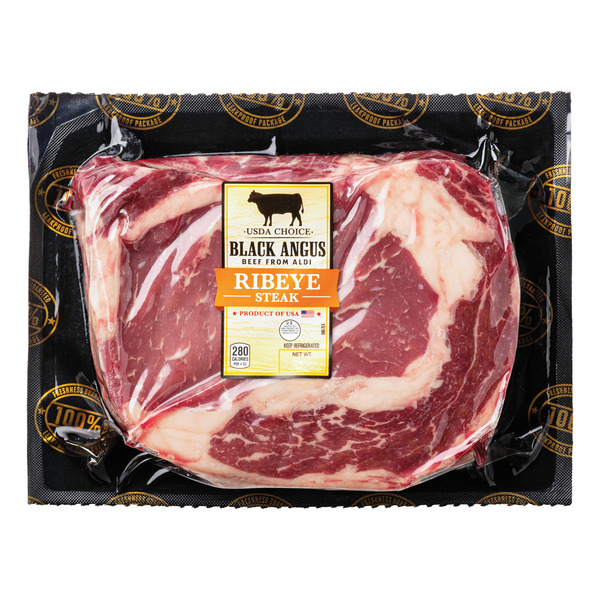
USDA Choice Black Angus Ribeye Steak
- Likely grain finished
- Likely grain finished
- Origin
- United States
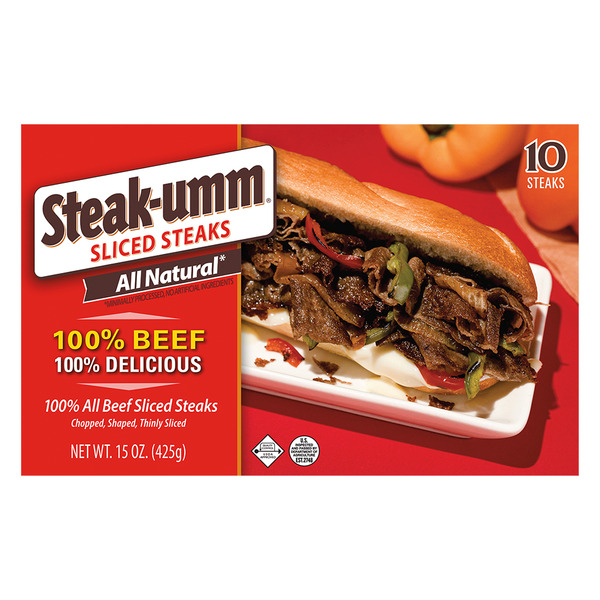
Steak-umm
Steak-umm 100% Beef Sliced Steaks, 10 Steaks, 15 oz
- Feed
- Not specified
- Origin
- Not specified
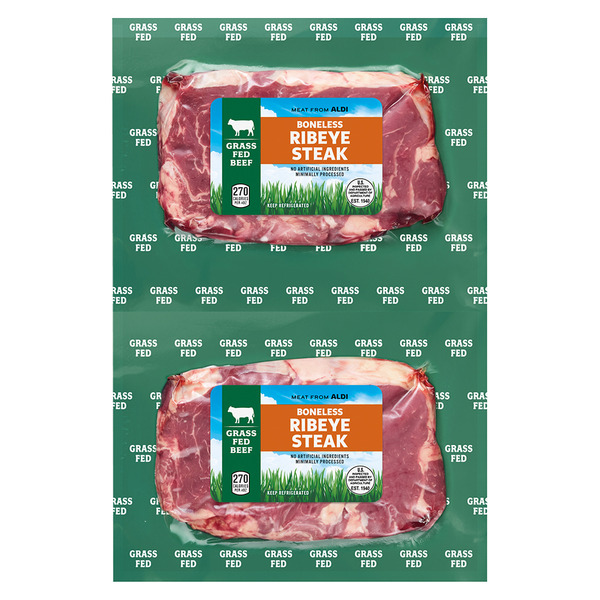
Grass-Fed Boneless Ribeye Steak
- 100% grass-fed
- 100% grass-fed
- Origin
- United States