
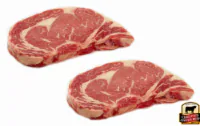
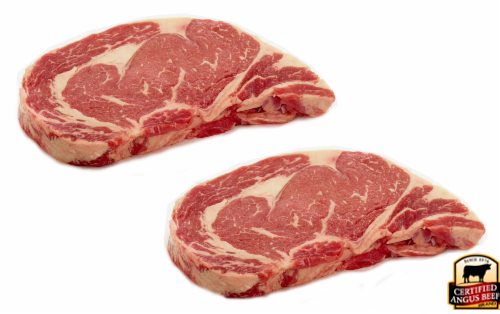
Product images · Packaging may change
Certified Angus Beef Boneless Ribeye Steak Value Pack (About 2 per Package)
Certified Angus Beef boneless ribeye steaks in a value pack.
Certifications
Certified Angus BeefOrigin
United States, CanadaLikely grain-fed source cattle
Likely grain-fed source cattleA CLOSER LOOK
The food facts.
Negatives
Likely grain-fed source cattleMediocre
Likely grain finished. Standard CAB identity, its 2014 grass-then-grain account and conventional North American supply support this inference. The current quality specification does not prescribe an exact ration.
More info
Mediocre
Grain finishing is inferred from this product’s conventional Certified Angus Beef identity. The separate CAB Grass-Fed line is 100% grass-fed and grass-finished.
The current FAQ explains general beef production, and G1 certifies carcass quality rather than a uniform ration or pasture schedule. Brand identity, historical account and market context support a visibly qualified inference.
Grain feeding supplies energy-dense feed for weight gain. We would choose grass and forage for cattle. In beef comparisons, forage feeding generally produces more omega-3 fat and a lower omega-6 to omega-3 ratio.
The 2014 brand reply predates the separate Grass Fed line; it is not a current mandatory diet specification.
Grass Fed and Natural extension restrictions are not transferred. Exact feedlot, ration, farm and current lot remain unassigned.
Different imported, dairy-derived or specialty inputs could change the expected pattern.
Sources
Product information
Origin & producer
Related businesses
Country of origin · United States, Canada
Over 95% of Certified Angus Beef sold in the U.S. comes from cattle born, raised and harvested in the U.S.; the remaining North American supply includes Canada.
Actual stated practice or source-specific context; no measured health or environmental outcome.
Artwork and programme sources do not identify every current retail unit.
Brand · Certified Angus Beef
Certified Angus Beef
Brand owner · Certified Angus Beef LLC
Certified Angus Beef LLC
Origin & producer notes · Predominantly U.S. cattle, with a small North American share including Canada, under CAB’s U.S.-market programme. Exact lot unconfirmed.
Predominantly U.S. cattle, with a small North American share including Canada, under CAB’s U.S.-market programme. Exact lot unconfirmed.
Certifications
Certifications · Certified Angus Beef
Certified Angus Beef
CAB marbling and maturity requirements · At least Modest marbling; under 30 months (U.S. CAB)
CAB’s U.S. specification requires Prime or Choice carcasses, at least Modest marbling, and cattle under 30 months. These are carcass-quality rules; they do not establish feed, medicine use or farm welfare.
The March 4, 2025 USDA G-1 specification establishes concrete programme requirements. Eligibility for Prime or Choice does not assign an exact USDA grade to a product whose label does not show one. Natural and Grass-Fed remain separate programmes.
A quality badge does not by itself certify feed, medicine use or animal welfare.
Sources
- Published supporting source
- USDA AMS CAB G-1 specification — March 4, 2025 · Pages 1–2, requirements and certification
How it's raised
Cattle care baseline · BQA is the brand’s care baseline
In its 2025 brand update, Certified Angus Beef says it considers Beef Quality Assurance certification its baseline for cattle care.
The brand describes its care baseline separately from its carcass-quality specification. A baseline statement does not establish every supplier’s certification or the outcome of an audit.
Individual cattle, supplier certification and actual care or audit results are not established.
Sources
- Certified Angus Beef 2025 brand update · For Generations to Come: Caring for Cattle
Likely early pasture access
Likely pasture access early in life before finishing. CAB’s general production account and the usual North American beef pattern support this; the actual herd, pasture duration and finishing location remain unconfirmed.
The current FAQ explains general beef production, and G1 certifies carcass quality rather than a uniform ration or pasture schedule. Brand identity, historical account and market context support a visibly qualified inference.
The 2014 brand reply predates the separate Grass Fed line; it is not a current mandatory diet specification.
Grass Fed and Natural extension restrictions are not transferred. Exact feedlot, ration, farm and current lot remain unassigned.
Different imported, dairy-derived or specialty inputs could change the expected pattern.
Sources
An unknown answer does not mean “none.” Check your package for current details.
KEEP EXPLORING
Also in the meat aisle
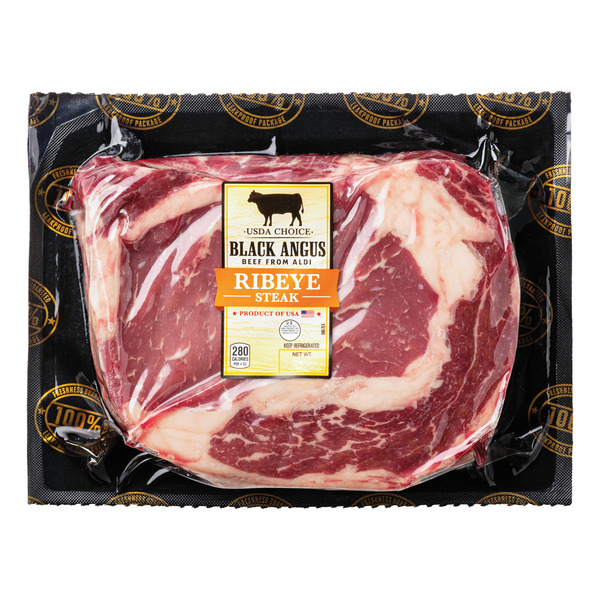
USDA Choice Black Angus Ribeye Steak
- Likely grain finished
- Likely grain finished
- Origin
- United States
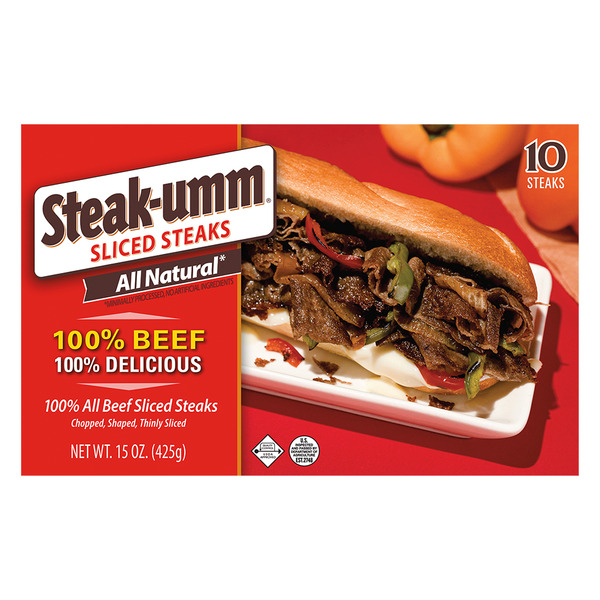
Steak-umm
Steak-umm 100% Beef Sliced Steaks, 10 Steaks, 15 oz
- Feed
- Not specified
- Origin
- Not specified
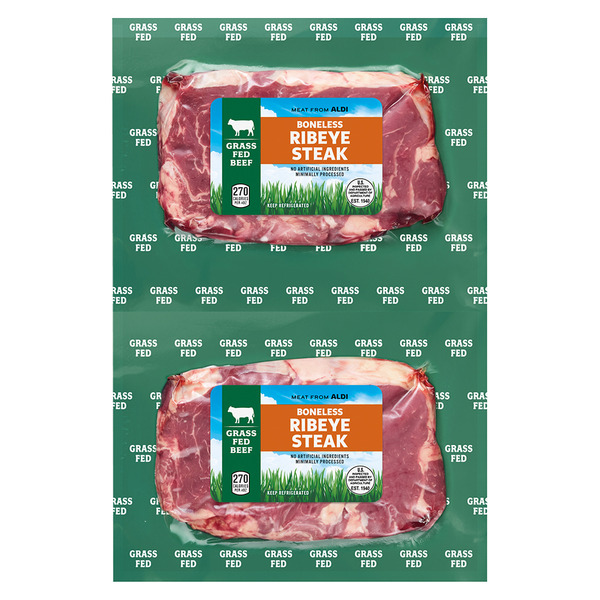
Grass-Fed Boneless Ribeye Steak
- 100% grass-fed
- 100% grass-fed
- Origin
- United States