
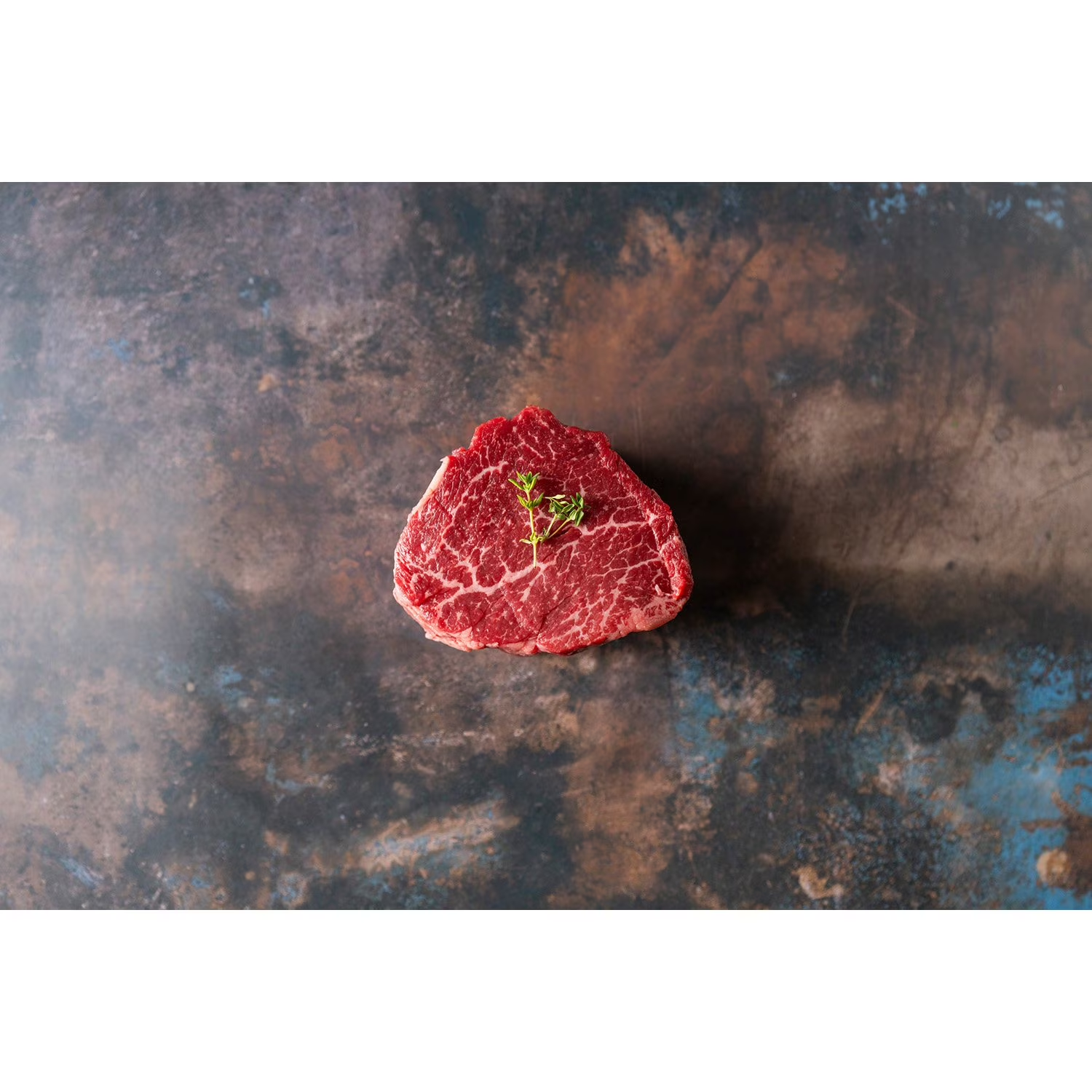
Product images · Packaging may change
Snake River Farms American Wagyu Tenderloin Medallions
U.S.-raised American Wagyu with pasture grazing followed by grain finishing on forage, grain, potato by-products and supplements.
American Wagyu feeding
Pasture then grain forage and potato by-productsSick-cattle treatment policy
Treatment allowed; preventive antibiotics excluded (2023)Finishing
Feedlot-finishedOrigin
United StatesA CLOSER LOOK
The food facts.
Negatives
American Wagyu feedingPasture then grain forage and potato by-productsMediocre
Pasture grazing first, then grain, forage, potato by-products and supplements in starter, grower and finishing rations. Ingredients vary by season and growth stage; the exact package ration is unconfirmed.
More info
Mediocre
Pasture grazing first, then grain, forage, potato by-products and supplements in starter, grower and finishing rations. Ingredients vary by season and growth stage; the exact package ration is unconfirmed.
The programme combines early grazing with grain finishing for marbling and consistent eating quality. This does not establish a clinical benefit or a fixed feedlot duration.
Grain feeding supplies energy-dense feed for weight gain. We would choose grass and forage for cattle. In beef comparisons, forage feeding generally produces more omega-3 fat and a lower omega-6 to omega-3 ratio.
The source’s lifecycle wording does not establish 500 days in a feedlot.
No particular feedyard, exact ration percentages or GMO policy is assigned.
FinishingFeedlot-finishedBad
Pasture then grain finishing. One SRF route buys F1 cattle at weaning or as yearlings, finishes at Snake River Cattle Feeders in American Falls, Idaho, then harvests at Washington Beef in Toppenish. This package’s yard and slaughter plant remain unassigned.
More info
Bad
Pasture then grain finishing. One SRF route buys F1 cattle at weaning or as yearlings, finishes at Snake River Cattle Feeders in American Falls, Idaho, then harvests at Washington Beef in Toppenish. This package’s yard and slaughter plant remain unassigned.
Feedlot finishing concentrates animals in pens around supplied feed, limiting their freedom to graze and range. The placement is Bad whether the finishing ration contains grass, grain or both.
The published route adds named procurement, feeding and harvest roles while retaining unknown package allocation; it does not replace the separately identified retail packing plant or apply every Agri Beef programme to SRF.
Feedlot finishing concentrates animals in pens around supplied feed, limiting their freedom to graze and range. The placement is Bad whether the finishing ration contains grass, grain or both.
The source describes a500day lifecycle, not500days in a feedlot.
One published programme route, not every SRF animal or this package’s assigned yard/slaughter plant.
The livestock-page source has no publication date.
Sources
- SRF pasture-to-feedyard programme account
- Agri Beef SRF livestock route · American Falls, Idaho: F1 cattle purchased at weaning/yearling, feedlot and Toppenish harvest
Early pasture access
Pasture grazing before cattle enter the finishing programme. The dated care account describes a transition at roughly 450–700 pounds; this does not establish pasture finishing or lifetime outdoor access.
Grazing provides pasture access early in life and can coexist with later feedlot finishing.
Finishing-yard outdoor access, stocking density and the individual cattle’s history are not established.
Product information
Origin & producer
Related businesses
Raised in · United States
SRF’s American Wagyu programme specifies U.S. raising. It does not identify the supplying ranch, individual animal or slaughter plant.
Source-bound raising country, distinct from birthplace, slaughter location and lot traceability.
Retained programme source, not a received dated package or current farm audit.
Brand · Snake River Farms
Snake River Farms
Breeding program · Double R Ranch Washington breeding programme
Double R Ranch in Washington’s Okanogan region is a breeding foundation for Snake River Farms. This programme relationship does not identify the ranch or finishing yard supplying this package.
Snake River Farms describes a breeding program at Double R Ranch in Washington’s Okanogan region. That does not identify the supplying ranch or finishing yard for this package.
May 2026 producer account; breeding-program context only.
Sources
Supply-chain and breeding programme · AB Genetics: SRF supply chain and breeding (2024)
AB Genetics’ director was identified in the 2024 American Wagyu Association booklet as responsible for Snake River Farms’ supply chain and genetic advancement. This is a programme connection, not this package’s ranch or animal assignment.
Names an organisation responsible for the programme without assigning the 2013 trial ration, generic group treatment policies or a corporate office as product origin.
Current exact animal/ranch/custody and current role execution are not independently established.
Sources
- American Wagyu Association 2024 conference booklet · Physical page 41, Jordan Sparrowk biography
Processing network · Toppenish, Washington and Jerome, Idaho
Snake River Farms’ published processing network names Washington Beef in Toppenish, Washington, and True West Beef in Jerome, Idaho. These are programme facilities; the current plant for this Sam’s product remains unassigned.
Named programme facilities add useful processing context while leaving the supplying ranch and retail-lot plant unassigned.
The article displays a2021 date but includes newer facility information; Jerome opened2023.
No current package inspection mark, exact processing aid or lot-specific recall involvement inferred.
How it's raised
Early pasture access · Pasture before finishing
Pasture grazing before cattle enter the finishing programme. The dated care account describes a transition at roughly 450–700 pounds; this does not establish pasture finishing or lifetime outdoor access.
Grazing provides pasture access early in life and can coexist with later feedlot finishing.
Finishing-yard outdoor access, stocking density and the individual cattle’s history are not established.
Antibiotics & hormones
No added hormones
Excellent
Growth-promoting hormones are excluded under SRF’s American Wagyu programme, as stated in its July 2021 care account. This is a programme rule, not an individual animal’s treatment record.
Added growth hormones accelerate weight gain. We would choose meat raised without that intervention.
Programme exclusion, without assigning individual treatments or a measured residue or clinical outcome.
A no-added-hormones commitment excludes hormone treatments used to accelerate weight gain.
Existing programme dates retained; no individual cattle record or new audit.
Sick-cattle treatment policy · Treatment allowed; preventive antibiotics excluded (2023)
Sick cattle may receive veterinary antibiotic treatment and return to the programme after drug-specific withdrawal periods. The February 2023 policy excludes preventive antibiotics; it is not a never-antibiotics programme.
Treating illness is animal care; withdrawal periods manage drug residues. Permission does not establish that the cattle in this package received antibiotics.
No individual cattle treatment or drug-use record is assigned.
An unknown answer does not mean “none.” Check your package for current details.
KEEP EXPLORING
Also in the meat aisle
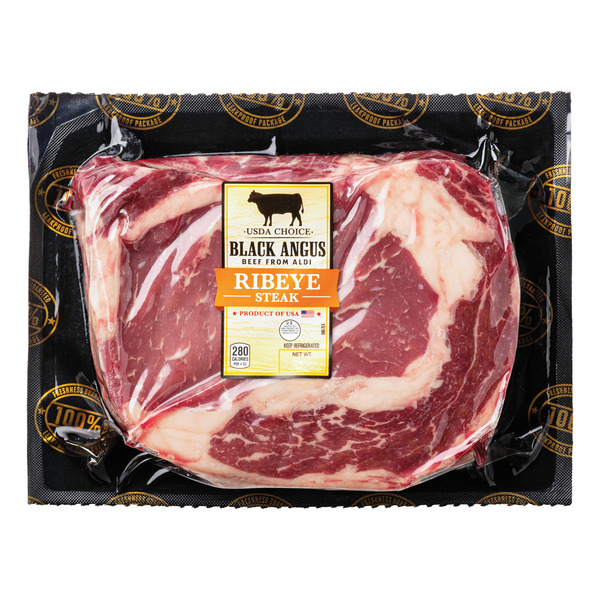
USDA Choice Black Angus Ribeye Steak
- Likely grain finished
- Likely grain finished
- Origin
- United States
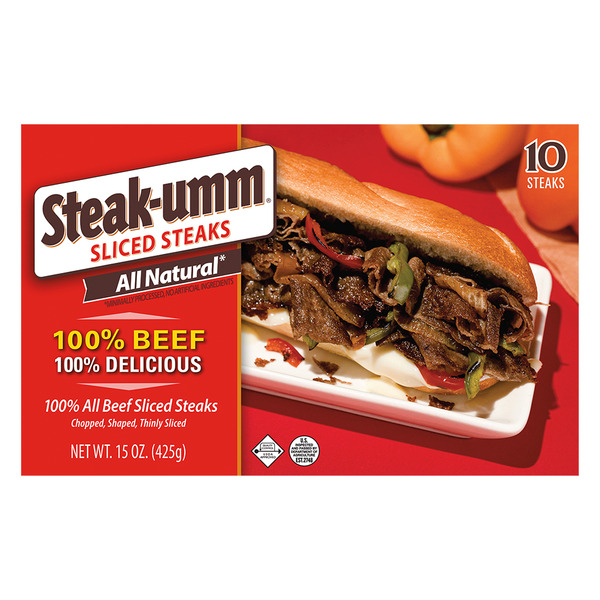
Steak-umm
Steak-umm 100% Beef Sliced Steaks, 10 Steaks, 15 oz
- Feed
- Not specified
- Origin
- Not specified
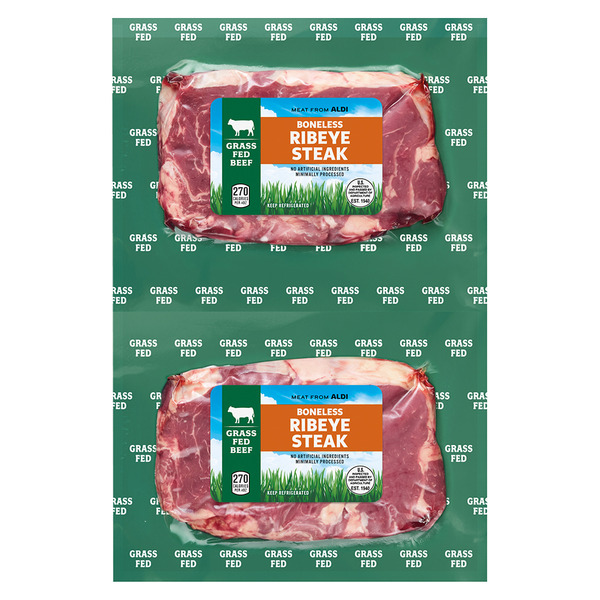
Grass-Fed Boneless Ribeye Steak
- 100% grass-fed
- 100% grass-fed
- Origin
- United States