
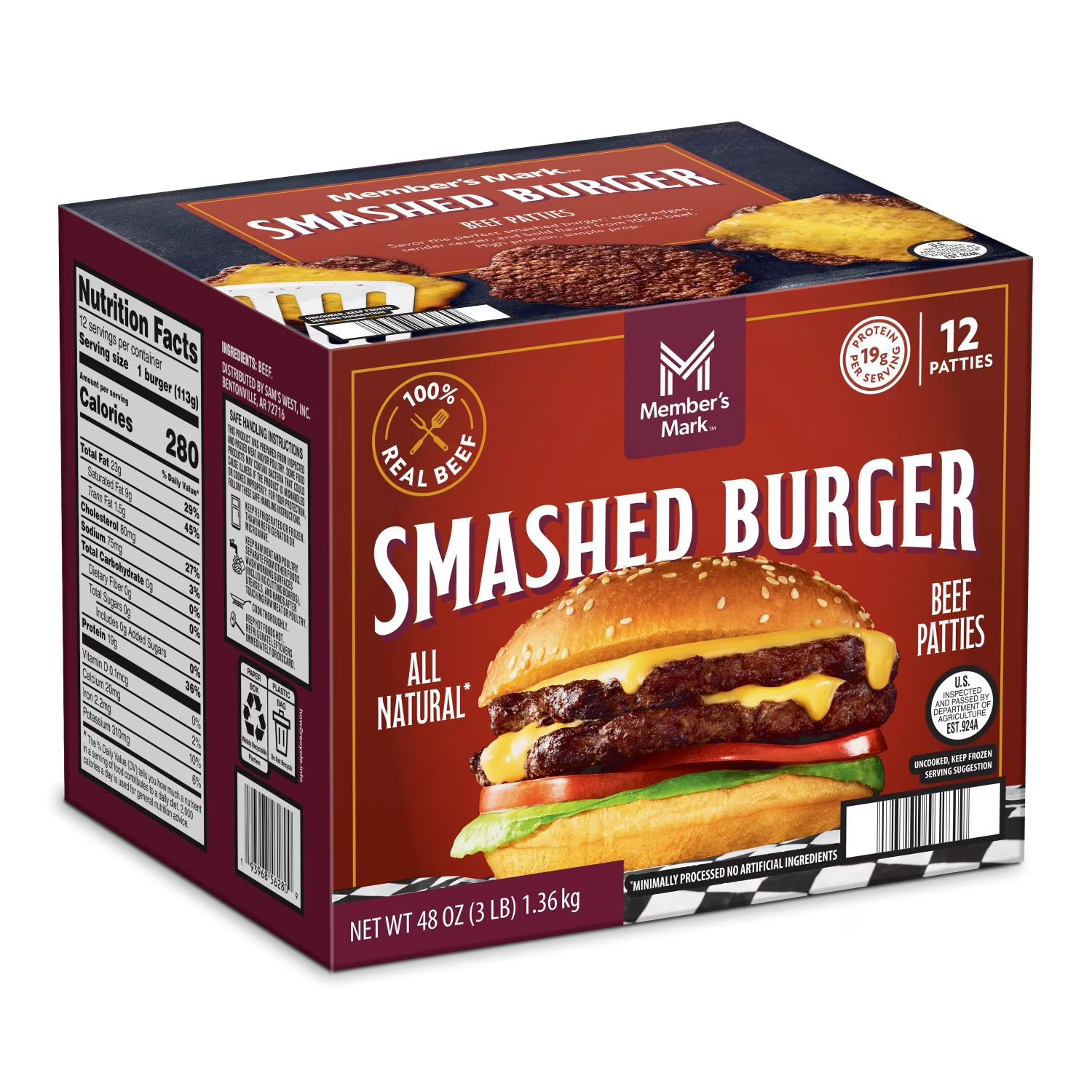
Product images · Packaging may change
Member's Mark Smashed Burgers
Twelve frozen raw beef burgers, likely including grain-finished beef; the pictured package identifies Cargill’s Butler, Wisconsin processor.
Retailer antibiotic policy
Medical use permitted; ionophore exceptionCertifications
BRCGS Food SafetyProcessed in
United StatesLikely some grain-finished beef
Likely some grain-finished beefA CLOSER LOOK
The food facts.
Negatives
Likely some grain-finished beefMediocre
Likely includes grain-finished beef. Conventional retail blends commonly use trim from grain-finished cattle, sometimes mixed with other beef. This is an inference, not a disclosed recipe.
More info
Mediocre
Likely includes grain-finished beef. Conventional retail blends commonly use trim from grain-finished cattle, sometimes mixed with other beef. This is an inference, not a disclosed recipe.
This sourcing preference favors lifetime forage feeding. The product identity and conventional retail market support likely grain inclusion; an industry pattern is not a lot-level observation. No safety or residue conclusion follows.
Grain finishing supplies energy-dense feed for weight gain and marbling before slaughter. We would choose grass and forage for cattle. In beef comparisons, forage feeding generally produces more omega-3 fat and a lower omega-6 to omega-3 ratio.
Actual supplier, ration and grain proportion are unresolved.
Ground blends may include grass-fed trim; the inference does not apply to every animal.
Sources
- USDA cattle production and trade · Cattle feeding; U.S. beef trade
- USDA assessment of beef imports — July 2023 · Special article, p. 31: retail ground-beef trim
Product information
Origin & producer
Related businesses
Processed in · United States
United States
Brand · Member's Mark
Member's Mark
Processor · Cargill Meat Solutions Corporation
Cargill Meat Solutions Corporation
Origin & producer notes · The exact package identifies Cargill’s further-processing establishment 924A in Butler, Wisconsin.
The exact package identifies Cargill’s further-processing establishment 924A in Butler, Wisconsin.
Processing
Freezing history · Sold frozen
Sold frozen
Ground-meat safety controls · Validated pathogen controls and lot testing required
Validated pathogen controls and lot-based E. coli testing are required. Approved upstream negative test certificates can satisfy testing. The requirement does not identify this package’s wash, processing aid or test result.
Grinding can spread contamination through meat. Validated controls and sampling target that hazard, while an ingredient list alone does not disclose processing aids. No safety clearance or quality grade is inferred.
Independent grinders and integrated slaughter/grinding routes have different validation thresholds.
The standard does not allocate the actual intervention, agent, dose, concentration or residue to this package.
Some testing may be performed upstream; requirements do not prove that each retail pack was separately tested.
Sources
- Walmart raw-ground-meat supplier standard · Fresh/frozen ground ruminants, validation, facility disclosure and lot sampling
- Walmart beef and bison programme FAQ · Pages 1–3; controls, upstream test certificates and precooked exemption
Ingredients
Ingredients · Beef
Excellent
Sam’s Club’s January 2026 Made Without announcement concerns specified ingredients in Member’s Mark food and beverage shipments. It does not establish beef-only formulas, animal feed or medicine practices.
Plain meat best fits our ingredient preference. A simple ingredient list cannot rule out processing aids used earlier.
Ingredients describe what goes into the food. Processing treatments are covered separately.
Dated shipment policy with stated exclusions; exact package ingredients remain separate.
Sources
Ingredients notes · Current 12-count unseasoned formulation; older 20-count seasoned burgers are separate.
Current 12-count unseasoned formulation; older 20-count seasoned burgers are separate.
Certifications
Certifications · BRCGS Food Safety
BRCGS Food Safety
Certifications notes · Butler facility: BRCGS Issue 9, Grade A; certificate issued June 18, 2026, expires July 15, 2027. This is a facility food-safety certification.
Butler facility: BRCGS Issue 9, Grade A; certificate issued June 18, 2026, expires July 15, 2027. This is a facility food-safety certification.
How it's raised
Likely early pasture access
Likely some pasture access early in life in this conventional beef supply. Dairy-derived, imported or specialty inputs can differ; this does not establish pasture finishing.
The source cattle likely follow a pasture-based cow-calf start before later finishing. USDA cow-calf/stocker descriptions and the matched conventional line support this qualified pattern; an existing grain inference alone does not prove pasture. No exact herd, duration, lifelong access or welfare audit assigned.
Actual cattle mix, ranches and individual animal pasture histories remain unconfirmed.
Dairy-derived or other imported/specialty cattle can differ; this is not a grass-finished, year-round-outdoor or US-raising claim.
Sources
- USDA cattle production: cow-calf and stocker phases · UpdatedMay22 2025; cow-calf operations and cattle feeding: grazing before finishing
- Exact conventional beef product identity
- MLA Regional feedlot investment study: pasture before grain finishing · Section2.1,printedp9/physical11. Industry account, not this product farm/lot.
Antibiotics & hormones
Retailer antibiotic policy · Medical use permitted; ionophore exception
Veterinary antibiotic care is permitted. The retailer asks suppliers to end growth-promotion use, except ionophores, and report antibiotic use annually. This is a retailer policy, not an animal treatment record.
Medical treatment/control/prevention is permitted under responsible-use expectations. The explicit ionophore exception means this is not a universal growth-antibiotic or never-use exclusion. Permission is not proof of use.
Actual treatment, individual medicines, diversion and residues remain unassigned.
Supplier requests and annual reporting expectations do not establish every supplier’s compliance or this animal’s treatment.
Sources
- Walmart and Sam’s Club antibiotic supplier position · Antibiotics in Farm Animals Position; supplier requests and footnote5
An unknown answer does not mean “none.” Check your package for current details.
KEEP EXPLORING
Also in the meat aisle
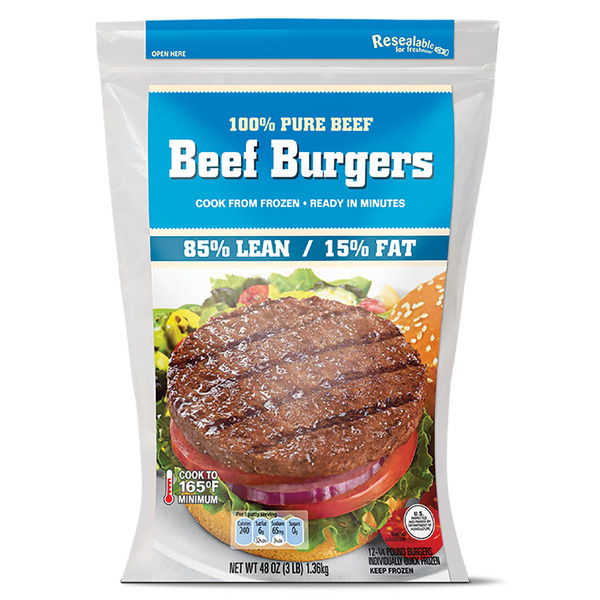
85% Lean / 15% Fat Beef Patties
- Likely some grain-finished beef
- Likely some grain-finished beef
- Origin
- United States
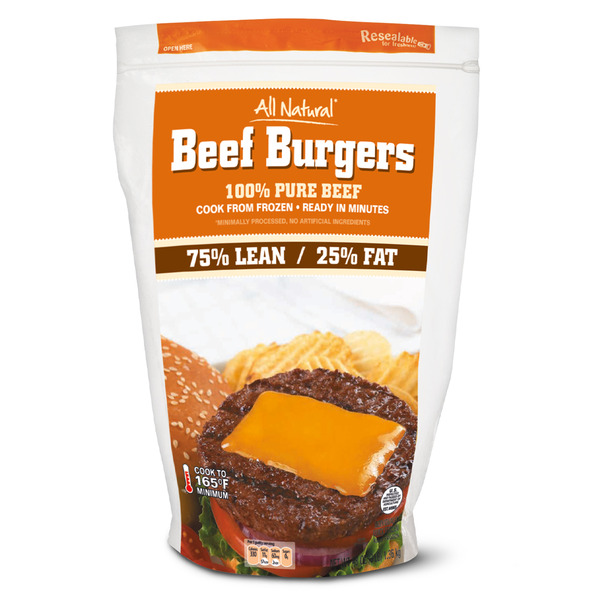
All Naturals
All Naturals 75% Lean / 25% Fat Beef Patties
- Likely some grain-finished beef
- Likely some grain-finished beef
- Origin
- United States
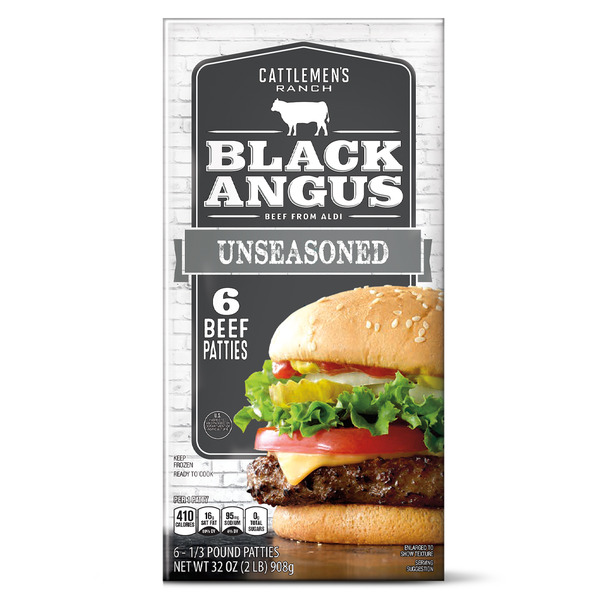
Cattlemen’s Ranch
Cattlemen's Ranch Unseasoned Black Angus Beef Patties, 6 Pack
- Likely some grain-finished beef
- Likely some grain-finished beef
- Origin
- United States