
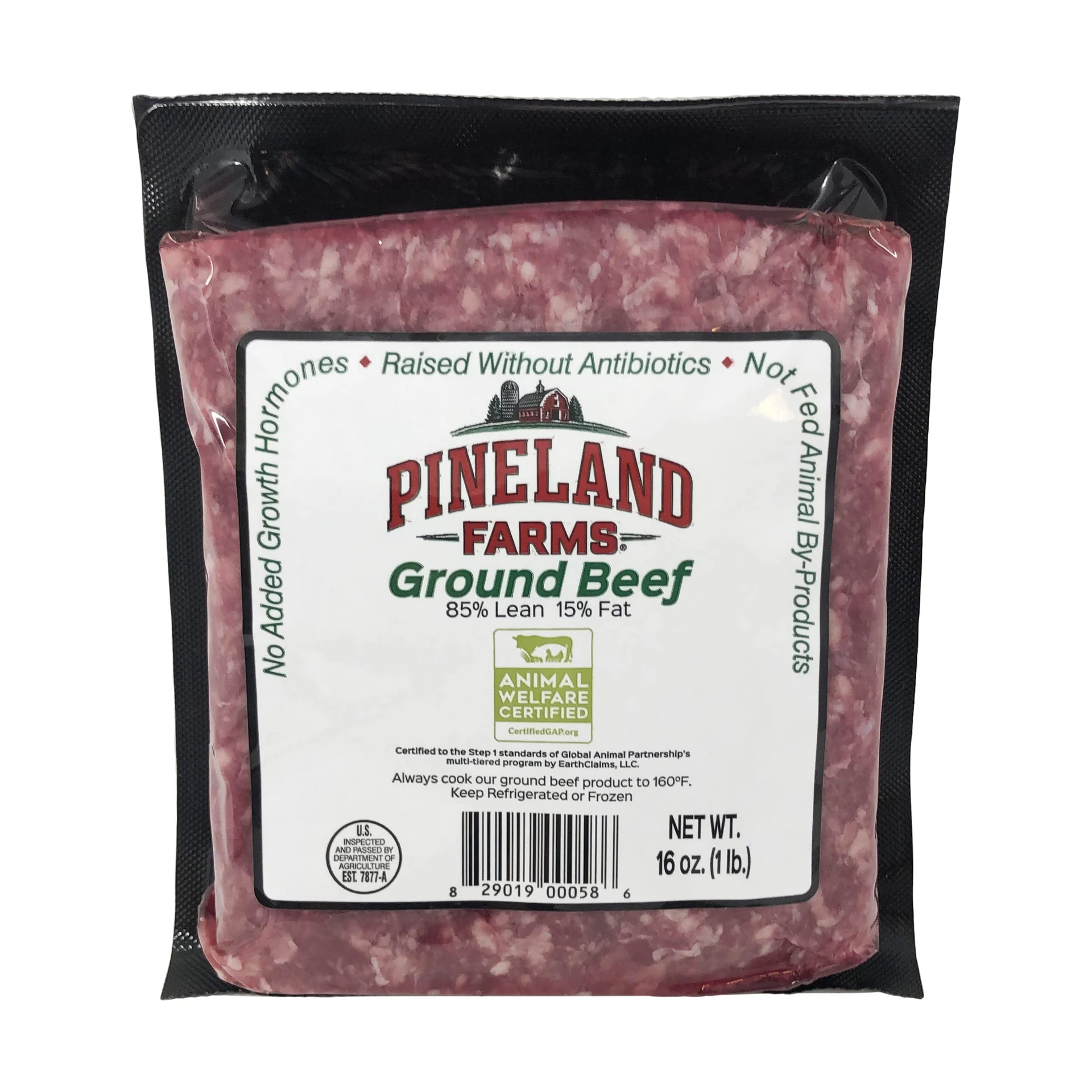
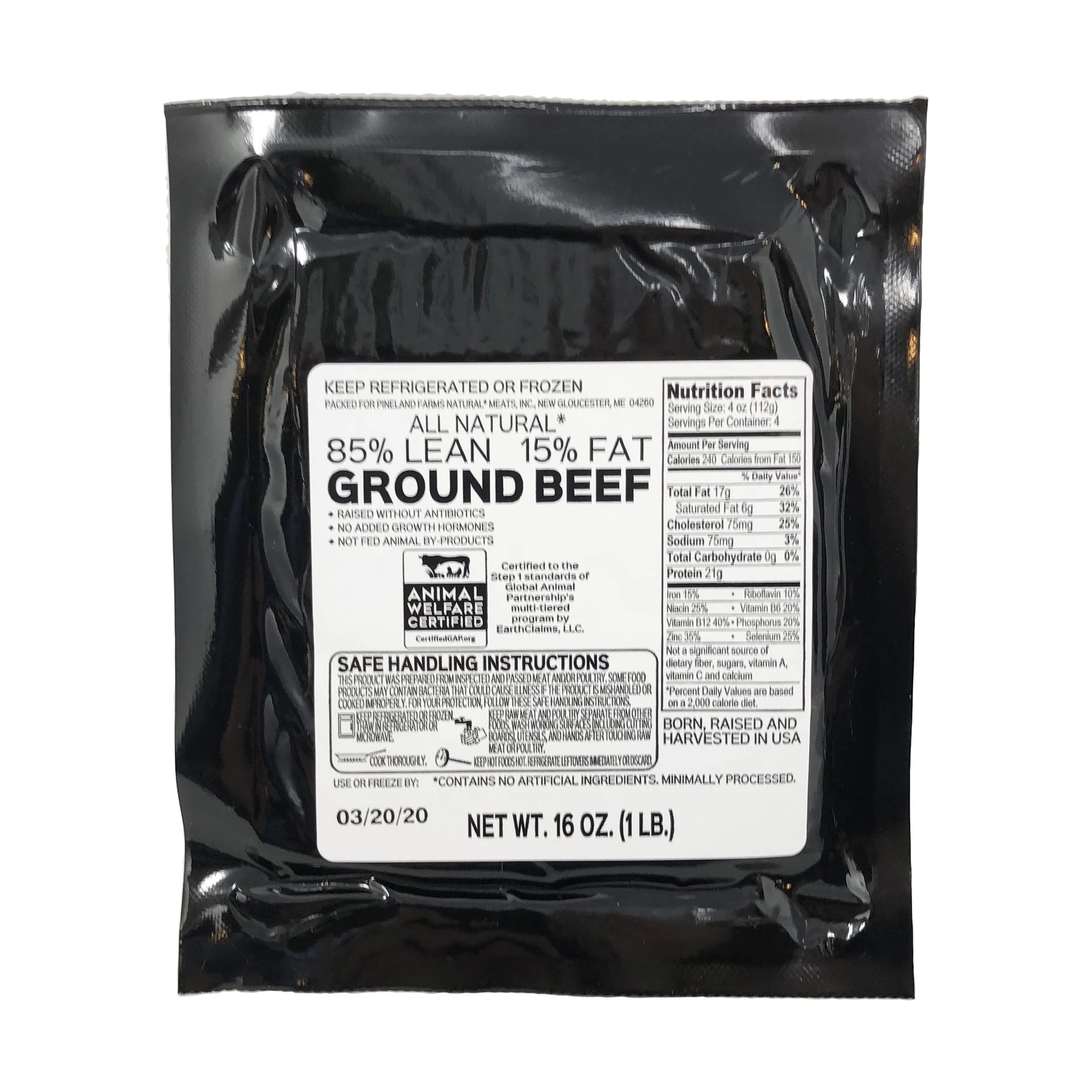
Product images · Packaging may change
Pineland Farms Natural Meats Ground Beef 85/15
U.S. beef. Grain-finished vegetarian diet. G.A.P. Step 1 requires pasture for at least two-thirds of life when conditions permit; finishing away from pasture is allowed.
Feed
Grain-finished; Diet includes grass / forageCertifications
G.A.P. Animal Welfare Certified — Step 1Origin
United StatesA CLOSER LOOK
The food facts.
Negatives
FeedGrain-finished; Diet includes grass / forageMediocre
Grain-finished on a vegetarian diet under Pineland’s 2025–26 supplier standard.
More info
Mediocre
Grain-finished on a vegetarian diet under Pineland’s 2025–26 supplier standard.
A lifetime forage diet excludes grain, including during finishing. Grass-fed beef generally has more omega-3 fat and a lower omega-6 to omega-3 ratio than grain-fed beef.
2table prefers lifetime forage feeding. Grain finishing is a sourcing preference distinction, not a measured health effect or residue finding.
Grain finishing supplies energy-dense feed for weight gain and marbling before slaughter. We would choose grass and forage for cattle. In beef comparisons, forage feeding generally produces more omega-3 fat and a lower omega-6 to omega-3 ratio.
No grain proportions, finishing duration, GMO-feed rule or retail-lot farm is selected.
Sources
- Pineland producer requirements, 2025–26 · Printed p.63 / PDF p.65: grain finishing, animal-by-product exclusion and G.A.P. Base-or-higher eligibility
Product information
Origin & producer
Related businesses
Born, raised & processed in · United States
Born, raised and processed in the United States under Pineland’s beef programme. The exact current farm and processing establishment are unconfirmed.
Programme sourcing explains the existing selected U.S. origin answer; historical plants and farms remain distinct.
No particular current farm, slaughter establishment, or photographed package date is generalized.
The original producer pages were retained before redirects to Hewitt; this selection does not claim their current wording was freshly verified.
Sources
Brand · Pineland Farms Natural Meats
Pineland Farms Natural Meats
Feeder-farm network · Moran Fairview Farms, West Virginia
Moran Fairview Farms in Fisher, West Virginia markets G.A.P.-approved feeder cattle through Pineland. This is a named supply-network connection, not this package’s farm or finishing location.
A named supplier relationship adds sourcing context without assigning a current package, cattle ration, farm certification outcome or finishing/slaughter route.
The farm’s separate breeding-stock and antibiotic-free chicken enterprises are not this beef programme’s practices.
Sources
- Moran Fairview Farms — Pineland feeder-cattle relationship · Homepage: G.A.P.-approved feeder cattle marketed through Pineland; Fisher, West Virginia
- West Virginia Cattlemen’s Association — spring 2025 Moran interview · Printed page 8; named Moran family and Pineland feeder relationship
Historical pictured packer (2020) · Rastelli, Swedesboro New Jersey (2020)
The pictured pack has a March 20, 2020 use-or-freeze-by date and EST. 7877-A: Rastelli in Swedesboro, New Jersey. This is historical packing information, not the current processor or upstream slaughterhouse.
Readable processing identification helps distinguish packing from cattle raising and slaughter.
Package artwork does not establish the current processor for every purchased lot.
Sources
- Pineland 85/15 historical package — front
- Pineland 85/15 historical package — rear
- Rastelli — establishment 7877-A verification document · February 12, 2012 footer; establishment identity, not current lot assurance
Feed
Feed exclusions · No animal by-products
No animal by-products
How it's raised
Pasture for at least two-thirds of life
At least two-thirds of life on pasture or range when seasonal conditions permit; removal for finishing and weather-related welfare needs is allowed.
The identified certification establishes a minimum pasture requirement. It does not establish uninterrupted year-round occupancy, grass-only feeding or actual performance beyond the standard.
Certification is a program requirement, not this animal’s attendance log.
Sources
- G.A.P. cattle standard v1.2 · §7.1.1–7.1.2; §7.3
Antibiotics & hormones
No antibiotics
Excellent
No antibiotics
Routine antibiotic use can select for resistant bacteria. A no-antibiotics supply commitment keeps treated animals out of that programme; sick animals still need care.
Raised without antibiotics. Limiting routine antibiotic use helps reduce selection for antibiotic-resistant bacteria. Sick animals can still receive care and be kept out of this supply.
No added hormones
Excellent
No added hormones
Added growth hormones accelerate weight gain. We would choose meat raised without that intervention.
A no-added-hormones commitment excludes hormone treatments used to accelerate weight gain.
Processing
No added solution
Excellent
No added solution
Added solution introduces water and other ingredients into meat, changing what you are buying by weight.
Added solution introduces water and other ingredients into meat, changing what you are buying by weight.
Antimicrobial trim treatment (2021)
2021 account: Elite 360 applied antimicrobial solution to beef trim for grinding. The chemical and current use for this package are unconfirmed.
The treatment aims to reduce microbial contamination. A supplier account and separate validation trial are not current lot test results, residue measurements or health outcomes.
No current product treatment, chemical concentration or residue is assigned.
The separate undated whole-muscle PAA trial does not identify the grinder solution or current retail process.
Sources
- Pineland Elite360 implementation — February12,2021 supplier-authored account · All grind applications, regardless of customer; treatment of beef trim at the grinder.
Meat-department processing standards · Irradiation, meat glue and LFTB prohibited
Whole Foods’ Meat-department standards prohibit irradiation, transglutaminase (meat glue) and lean finely textured beef. These restrictions do not rule out antimicrobial washes or other processing aids.
The retailer excludes these processing methods and beef input; the requirement does not establish all upstream treatments.
Sources
- Whole Foods Meat Department Quality Standards · Our Baseline Standards; retained October 16, 2026
Certifications
Certifications · G.A.P. Animal Welfare Certified — Step 1
G.A.P. Animal Welfare Certified — Step 1
Ingredients
Label nutrition (2020) · 21 g protein per 4 oz (2020 label)
March 2020 label, per 4 oz (112 g): 240 calories, 21 g protein, 17 g fat including 6 g saturated fat, 75 mg cholesterol and 75 mg sodium.
Neutral declared nutrition; no health benefit, product grade or composition assay inferred.
Four servings per pack. The pictured March 2020 label may differ from current packages.
Sources
- Pineland 85/15 — March 2020 rear label · Nutrition Facts: 4 oz (112 g), four servings
An unknown answer does not mean “none.” Check your package for current details.
KEEP EXPLORING
Also in the meat aisle
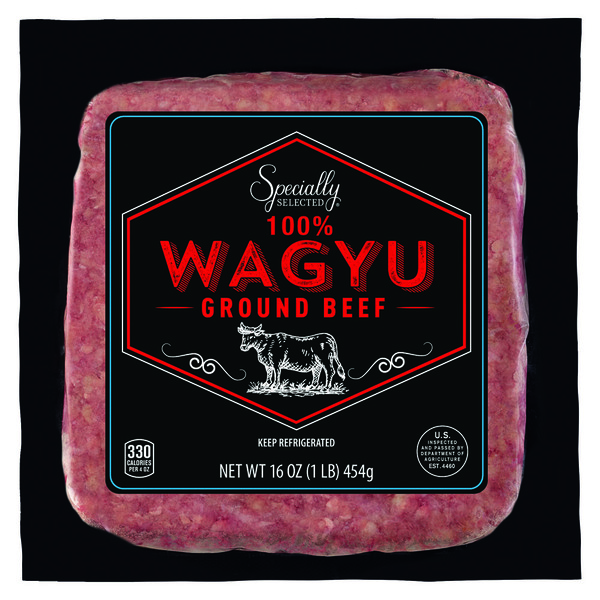
Specially Selected
Specially Selected 75% Lean/25% Fat Wagyu Ground Beef
- Likely grain finishing
- Likely grain-finished
- Origin
- Not specified
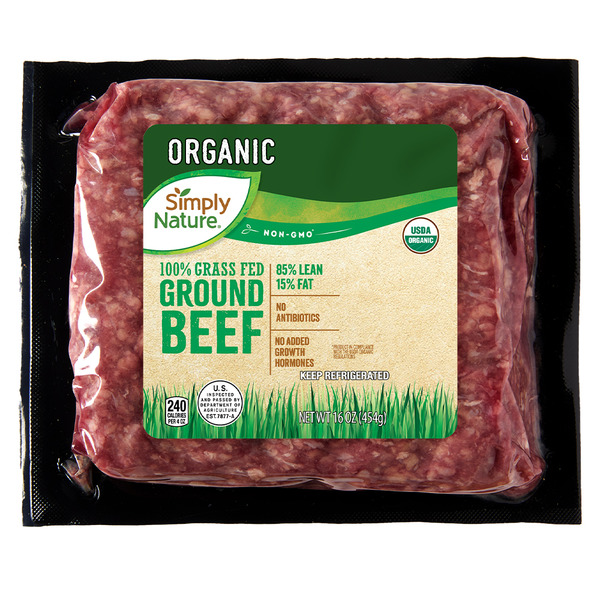
Simply Nature
Simply Nature Organic Grass Fed 85% Lean Ground Beef
- Feed
- 100% grass-fed
- Origin
- Australia, Uruguay, United States
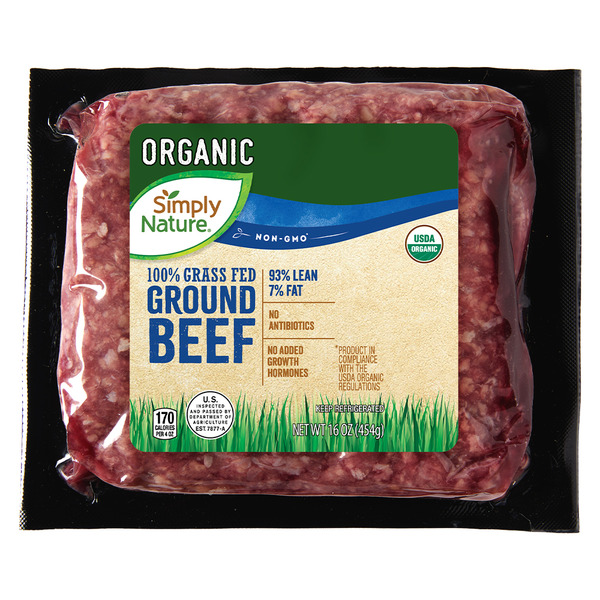
Simply Nature
Simply Nature Organic 100% Grass-Fed 93% Lean Ground Beef
- Feed and finishing
- 100% grass-fed organic non-GMO
- Origin
- Australia, Uruguay, United States