
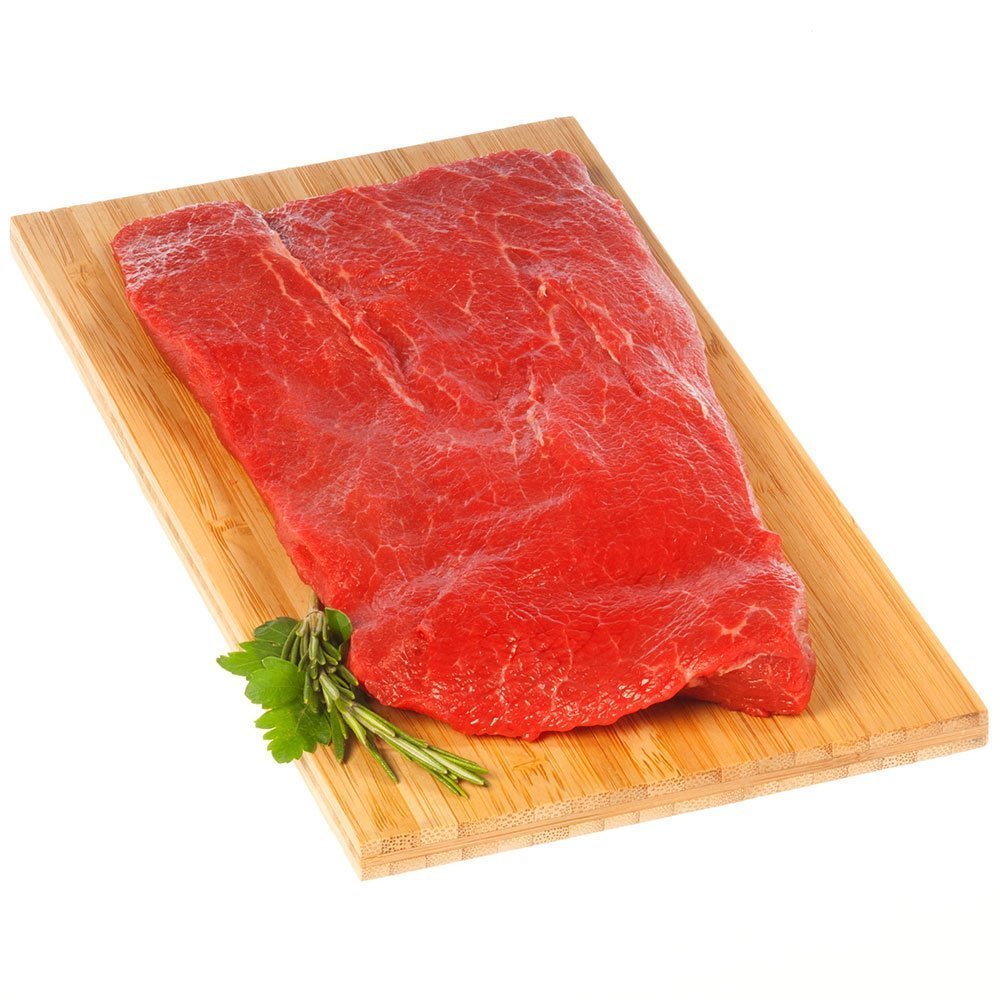
Product images · Packaging may change
Pineland Farms Natural Meats Beef Flat Iron Steak
U.S. grain-finished beef. Whole Foods lists G.A.P. Step 4.
Feed
Grain-finished; Diet includes grass / forageCertifications
G.A.P. Animal Welfare Certified — Step 4Origin
United StatesA CLOSER LOOK
The food facts.
Negatives
FeedGrain-finished; Diet includes grass / forageMediocre
Grain-finished on a vegetarian diet under Pineland’s 2025–26 supplier standard.
More info
Mediocre
Grain-finished on a vegetarian diet under Pineland’s 2025–26 supplier standard.
A lifetime forage diet excludes grain, including during finishing. Grass-fed beef generally has more omega-3 fat and a lower omega-6 to omega-3 ratio than grain-fed beef.
2table prefers lifetime forage feeding. Grain finishing is a sourcing preference distinction, not a measured health effect or residue finding.
Grain finishing supplies energy-dense feed for weight gain and marbling before slaughter. We would choose grass and forage for cattle. In beef comparisons, forage feeding generally produces more omega-3 fat and a lower omega-6 to omega-3 ratio.
No grain proportions, finishing duration, GMO-feed rule or retail-lot farm is selected.
Sources
- Pineland producer requirements, 2025–26 · Printed p.63 / PDF p.65: grain finishing, animal-by-product exclusion and G.A.P. Base-or-higher eligibility
Whole Foods Meat standards
Whole Foods’ Meat-department standards exclude animal by-products in feed. Its processing standards also prohibit irradiation, meat glue and lean finely textured beef.
Retailer department eligibility, not a farm feed log or complete processing-aid inventory.
Sources
Product information
Origin & producer
Related businesses
Born, raised & processed in · United States
Born, raised and processed in the United States under Pineland’s beef programme. The exact current farm and processing establishment are unconfirmed.
Programme sourcing explains the existing selected U.S. origin answer; historical plants and farms remain distinct.
No particular current farm, slaughter establishment, or photographed package date is generalized.
The original producer pages were retained before redirects to Hewitt; this selection does not claim their current wording was freshly verified.
Sources
Brand · Pineland Farms Natural Meats
Pineland Farms Natural Meats
Feeder-farm network · Moran Fairview Farms, West Virginia
Moran Fairview Farms in Fisher, West Virginia markets G.A.P.-approved feeder cattle through Pineland. This is a named supply-network connection, not this package’s farm or finishing location.
A named supplier relationship adds sourcing context without assigning a current package, cattle ration, farm certification outcome or finishing/slaughter route.
The farm’s separate breeding-stock and antibiotic-free chicken enterprises are not this beef programme’s practices.
Sources
- Moran Fairview Farms — Pineland feeder-cattle relationship · Homepage: G.A.P.-approved feeder cattle marketed through Pineland; Fisher, West Virginia
- West Virginia Cattlemen’s Association — spring 2025 Moran interview · Printed page 8; named Moran family and Pineland feeder relationship
Feed
Whole Foods Meat standards
Whole Foods’ Meat-department standards exclude animal by-products in feed. Its processing standards also prohibit irradiation, meat glue and lean finely textured beef.
Retailer department eligibility, not a farm feed log or complete processing-aid inventory.
Sources
How it's raised
Conditions · Pasture-raised
Pasture-raised
Listed Step 4 pasture requirement
Whole Foods lists Step 4 but also uses Enriched Environment, the Step 2 description. If Step 4 applies, cattle must spend at least three-quarters of life on pasture when seasons permit, with weather-related welfare exceptions.
The listed tier’s cattle standard sets a minimum pasture requirement. It does not establish uninterrupted year-round occupancy, grass-only feeding or actual performance beyond the standard.
Whole Foods calls this Step 4 but also uses the descriptor Enriched Environment, which G.A.P. assigns to Step 2. The current product certificate was not independently verified.
The standard is a program requirement, not this animal’s attendance log.
Sources
- Whole Foods Market flat iron steak listing · Product description and about this item; checked November 11, 2026
- G.A.P. cattle standard v1.2 · §7.1.1–7.1.2; §7.3
How it's raised notes · Whole Foods lists G.A.P. Step 4, whose cattle standard requires at least three-quarters of life on pasture or range when seasonal conditions permit; removal is limited to weather-related welfare needs.
Whole Foods lists G.A.P. Step 4, whose cattle standard requires at least three-quarters of life on pasture or range when seasonal conditions permit; removal is limited to weather-related welfare needs.
Antibiotics & hormones
No antibiotics
Excellent
No antibiotics
Routine antibiotic use can select for resistant bacteria. A no-antibiotics supply commitment keeps treated animals out of that programme; sick animals still need care.
Raised without antibiotics. Limiting routine antibiotic use helps reduce selection for antibiotic-resistant bacteria. Sick animals can still receive care and be kept out of this supply.
No added hormones
Excellent
No added hormones
Added growth hormones accelerate weight gain. We would choose meat raised without that intervention.
A no-added-hormones commitment excludes hormone treatments used to accelerate weight gain.
Certifications
Certifications · G.A.P. Animal Welfare Certified — Step 4
G.A.P. Animal Welfare Certified — Step 4
An unknown answer does not mean “none.” Check your package for current details.
KEEP EXPLORING
Also in the meat aisle
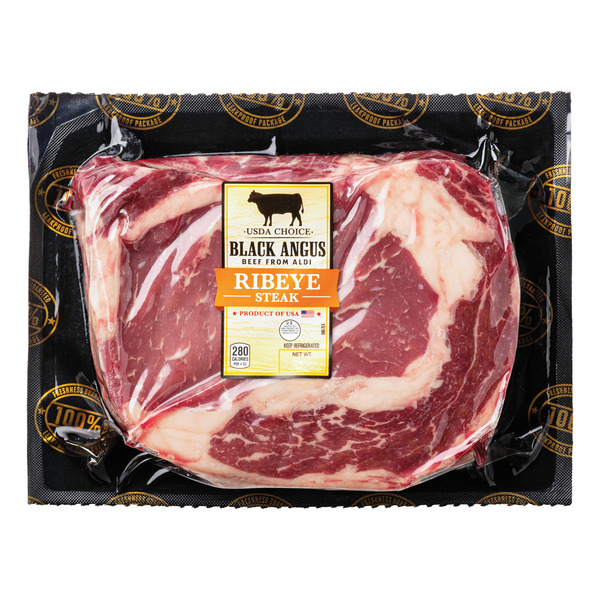
USDA Choice Black Angus Ribeye Steak
- Likely grain finished
- Likely grain finished
- Origin
- United States
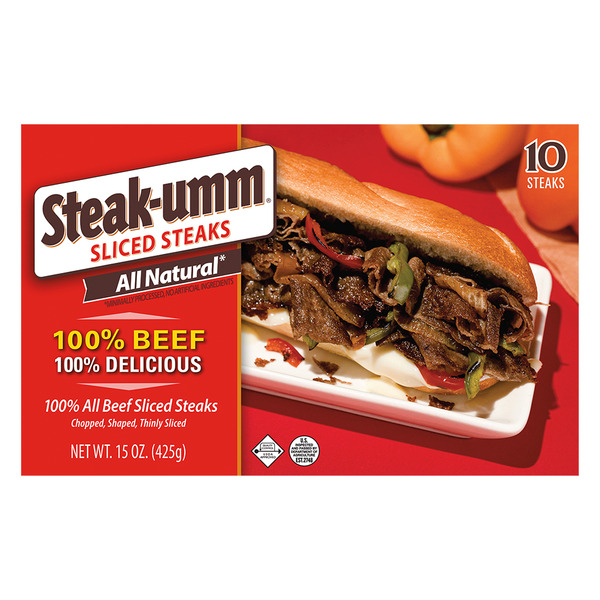
Steak-umm
Steak-umm 100% Beef Sliced Steaks, 10 Steaks, 15 oz
- Feed
- Not specified
- Origin
- Not specified
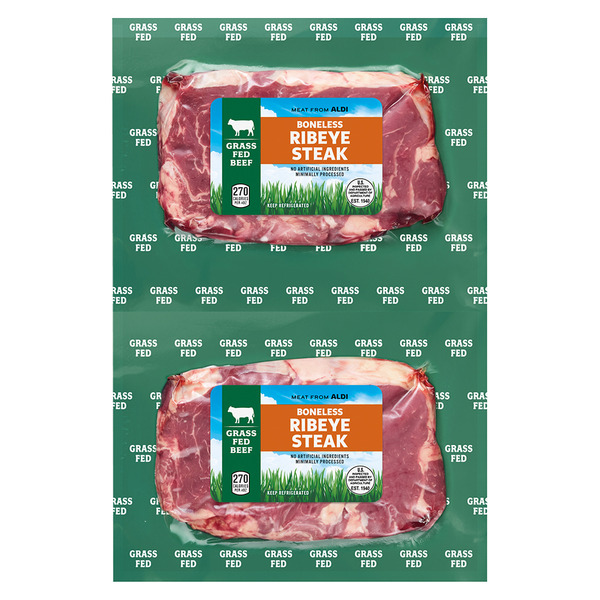
Grass-Fed Boneless Ribeye Steak
- 100% grass-fed
- 100% grass-fed
- Origin
- United States