
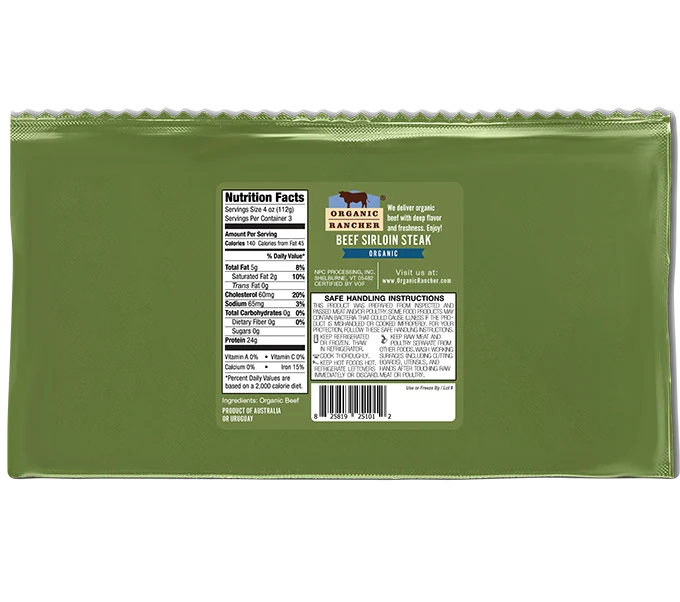
Product images · Packaging may change
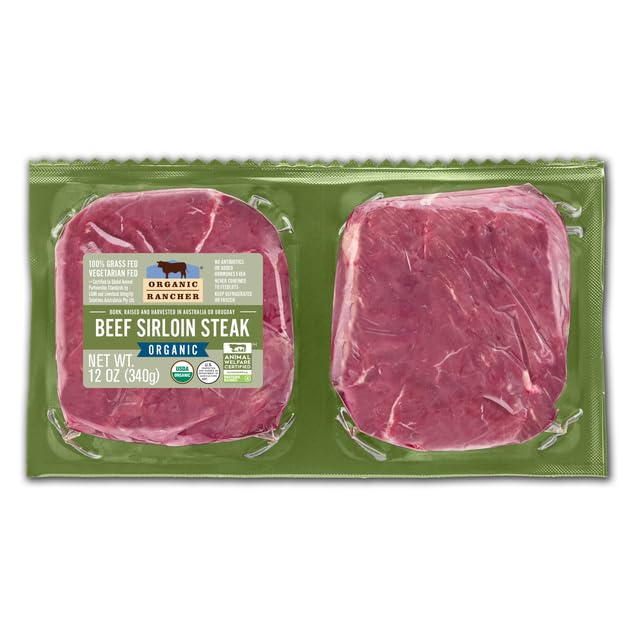
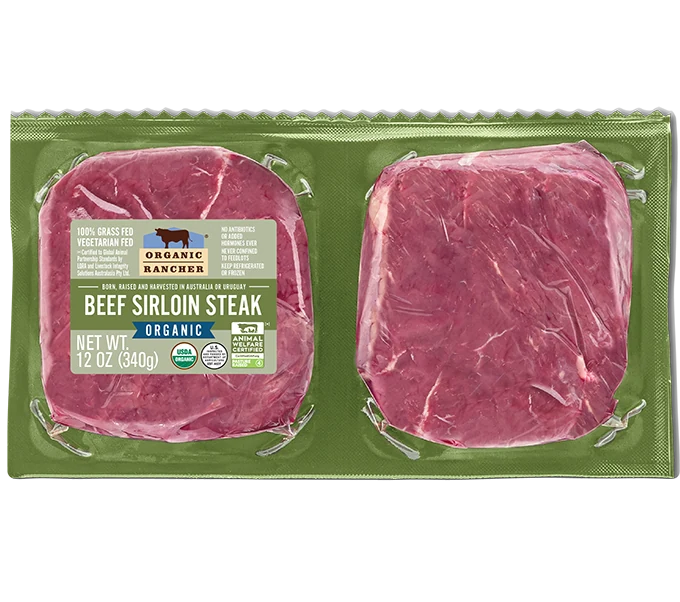
OrganicOrganic Rancher, Organic Beef Top Sirloin Steak, 100% Grass Fed & Grass Finished, USDA Organic, Pasture Raised Free Range, G.A.P. Step 4, 12 oz
100% grass-fed organic non-GMO. Pasture raised without feedlots; G.A.P. Step 4.
Feed
100% grass-fed organic non-GMOCertifications
USDA Organic, G.A.P. Animal Welfare Certified — Step 4Origin
Australia, UruguayA CLOSER LOOK
The food facts.
Positives
Feed100% grass-fed organic non-GMOGood
Grass and forage through finishing, with organic non-GMO feed and no grain or animal by-products.
More info
Good
Grass and forage through finishing, with organic non-GMO feed and no grain or animal by-products.
Supported practice/context; no ingredient contamination, individual farm allocation or clinical outcome inferred.
A lifetime forage diet excludes grain, including during finishing. Grass-fed beef generally has more omega-3 fat and a lower omega-6 to omega-3 ratio than grain-fed beef.
Programme statements are distinct from an individual package assay or farm record.
Product information
Origin & producer
Related businesses
Country of origin · Australia, Uruguay
Australia, Uruguay
Born, raised & harvested in · Australia, Uruguay
Born, raised and harvested in Australia or Uruguay. These are label statements; the specific country for a received package is not established.
A package statement describes the stated life stages or processing location, not an identified farm or lot.
Artwork is not a current purchased package.
Sources
Named U.S. business · NPC Processing named on the label
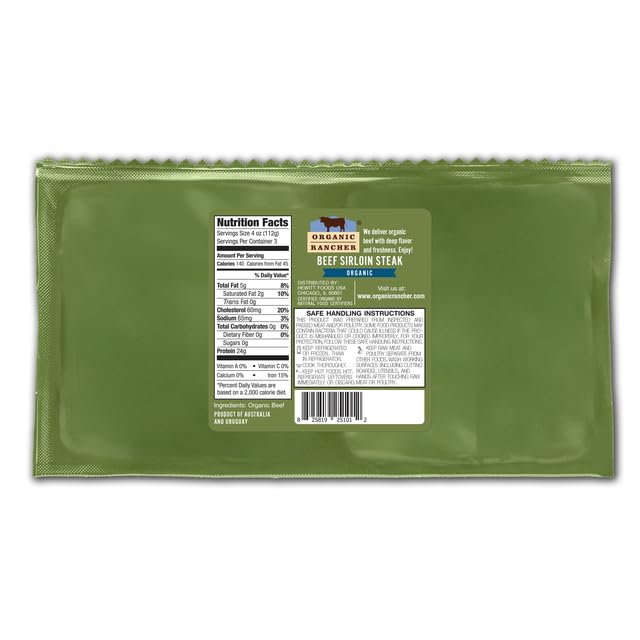
The sirloin’s back label names NPC Processing in Shelburne, Vermont. The exact establishment number remains unreadable; this does not assign a processing plant, overseas slaughterhouse or current lot.
The pictured business name does not identify the supplying farm or slaughter plant.
Source versions and qualifications retained; actual farm/animal/lot remains unassigned.
Sources
How it's raised
Pasture access · Pasture raised; no feedlots
Raised and finished on pasture without feedlots. Temporary removal for animal welfare can still occur under G.A.P. Step 4 rules.
Supported practice/context; no ingredient contamination, individual farm allocation or clinical outcome inferred.
Programme statements are distinct from an individual package assay or farm record.
Animal transport · Step 4: normally 16-hour transport limit
G.A.P. beef Step 4 normally limits transport to 16 hours, with a welfare-protection exception (v1.2, 2022). This is a programme requirement; the actual journey and slaughter plant remain unconfirmed.
The transport limit is a programme requirement; the animal’s actual journey is not known.
Source versions and qualifications retained; actual farm/animal/lot remains unassigned.
Antibiotics & hormones
No antibiotics
Excellent
No antibiotics
Routine antibiotic use can select for resistant bacteria. A no-antibiotics supply commitment keeps treated animals out of that programme; sick animals still need care.
Raised without antibiotics. Limiting routine antibiotic use helps reduce selection for antibiotic-resistant bacteria. Sick animals can still receive care and be kept out of this supply.
No added hormones
Excellent
No added hormones
Added growth hormones accelerate weight gain. We would choose meat raised without that intervention.
A no-added-hormones commitment excludes hormone treatments used to accelerate weight gain.
Ingredients
Ingredients · Organic beef
Excellent
The pictured package lists organic beef as its ingredient. Package versions may differ.
Plain meat best fits our ingredient preference. A simple ingredient list cannot rule out processing aids used earlier.
The ingredient declaration does not describe all processing aids.
Ingredients describe what goes into the food. Processing treatments are covered separately.
The image is undated and is not an individually received package.
Sources
Shared-equipment allergens · Brand facility: dairy sesame soy wheat
The brand’s facility shares equipment with dairy, sesame, soy and wheat products. Allergen products run last, with daily sanitation and routine allergen testing. This is facility context, not an ingredient list or a match to every package’s plant.
Supported practice/context; no ingredient contamination, individual farm allocation or clinical outcome inferred.
Programme statements are distinct from an individual package assay or farm record.
Certifications
Certifications · USDA Organic, G.A.P. Animal Welfare Certified — Step 4
USDA Organic, G.A.P. Animal Welfare Certified — Step 4
Organic marketing · Organic does not guarantee zero synthetic inputs
The brand markets organic production as free of synthetic chemicals. USDA rules allow specified synthetic substances, including some vaccines. Organic certification does not prove zero residues or identify every treatment used.
Supported practice/context; no ingredient contamination, individual farm allocation or clinical outcome inferred.
Programme statements are distinct from an individual package assay or farm record.
Sources
Processing
Packaging · Vacuum sealed
Vacuum sealed. Removing oxygen gives the meat a darker purple color; exposure to air restores a red color.
Supported practice/context; no ingredient contamination, individual farm allocation or clinical outcome inferred.
Programme statements are distinct from an individual package assay or farm record.
Thawed-steak storage · Brand FAQ allows longer than USDA household guidance
The brand FAQ gives an example of about 15 days after thawing a steak frozen halfway through its 30-day freshness window. USDA household guidance is 3–5 days after refrigerator thawing at 40°F or below.
A practical difference between the brand’s thawed-storage example and USDA household advice, without a finding that a package is contaminated.
The FAQ does not state the temperature, unopened-package condition or validation behind its thawed-storage example.
General household guidance does not independently invalidate a validated commercial vacuum-packed shelf life.
This compares storage advice; it does not establish contamination, illness or the condition of an individual package.
Sources
- Organic Rancher — FAQ: how long beef keeps after purchase · Steak freshness and freeze-on-day-15 example
- USDA FSIS — The Big Thaw: safe defrosting methods · Refrigerator thawing: red-meat cuts, 3–5 days at 40°F or below
An unknown answer does not mean “none.” Check your package for current details.
KEEP EXPLORING
Also in the meat aisle
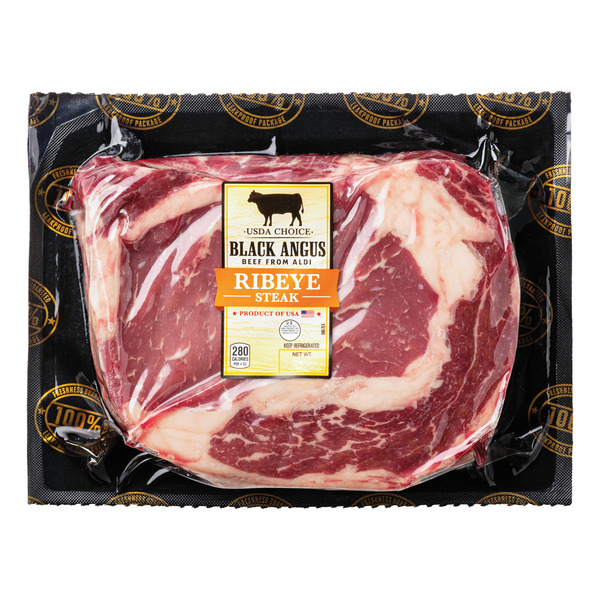
USDA Choice Black Angus Ribeye Steak
- Likely grain finished
- Likely grain finished
- Origin
- United States
Steak-umm
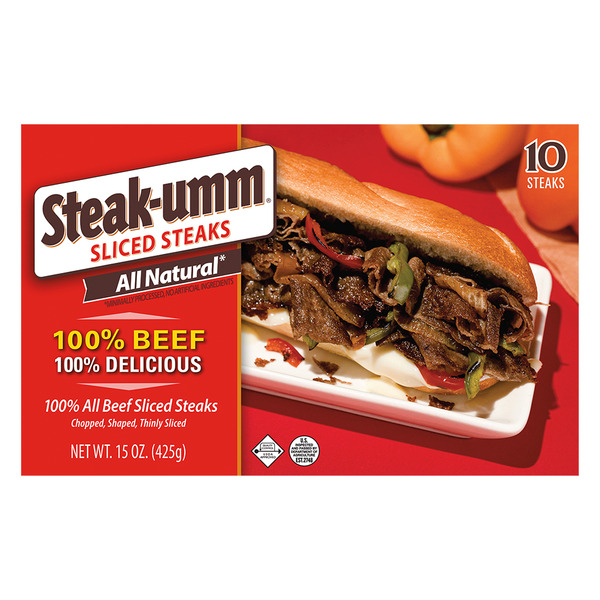
Steak-umm 100% Beef Sliced Steaks, 10 Steaks, 15 oz
- Feed
- Not specified
- Origin
- Not specified
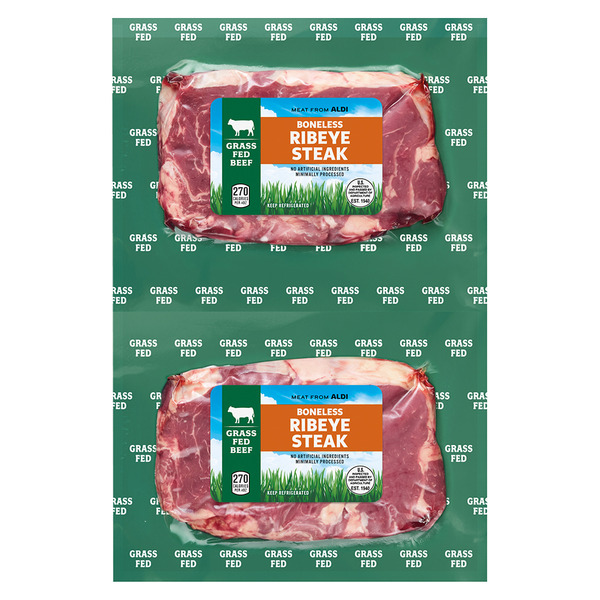
Grass-Fed Boneless Ribeye Steak
- 100% grass-fed
- 100% grass-fed
- Origin
- United States