
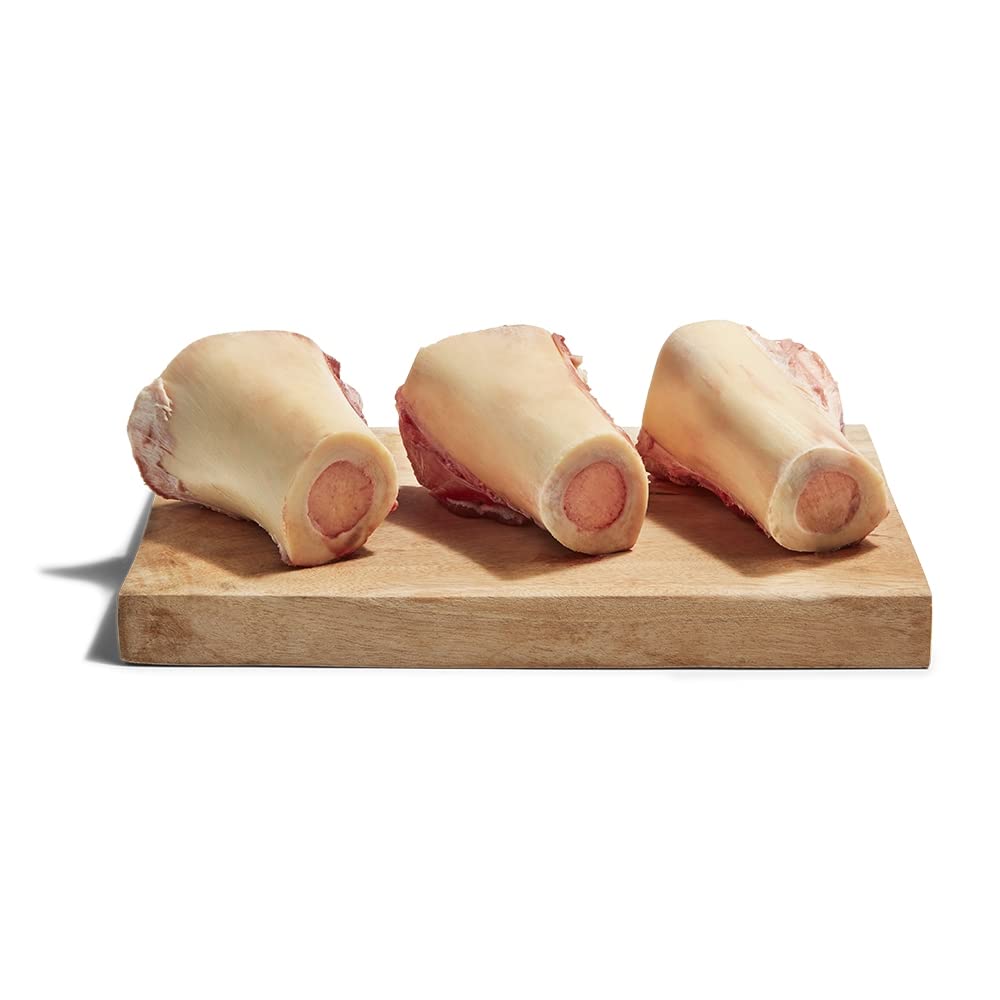
Product images · Packaging may change
A CLOSER LOOK
The food facts.
Negatives
Grain-fed source cattleMediocre
Includes beef from cattle fed grain during their lifetime. Finishing diets are not specified.
More info
Mediocre
Includes beef from cattle fed grain during their lifetime. Finishing diets are not specified.
2table favors lifetime grass and forage feeding over grain feeding.
Grain feeding supplies energy-dense feed for weight gain. We would choose grass and forage for cattle. In beef comparisons, forage feeding generally produces more omega-3 fat and a lower omega-6 to omega-3 ratio.
Actual cattle/ranch mix, ration and pasture history are unresolved.
Imported, dairy/cull or revised specialty supply may differ. Historical overseas supplier accounts are context, not current lot allocation.
Product information
Feed
Feed exclusions · No animal by-products
Whole Foods’ Meat-department standards exclude animal by-products in feed. Its processing standards also prohibit irradiation, meat glue and lean finely textured beef.
Retailer department eligibility, not a farm feed log or complete processing-aid inventory.
Sources
Antibiotics & hormones
No antibiotics
Excellent
No antibiotics
Routine antibiotic use can select for resistant bacteria. A no-antibiotics supply commitment keeps treated animals out of that programme; sick animals still need care.
Raised without antibiotics. Limiting routine antibiotic use helps reduce selection for antibiotic-resistant bacteria. Sick animals can still receive care and be kept out of this supply.
No added hormones
Excellent
No added hormones
Added growth hormones accelerate weight gain. We would choose meat raised without that intervention.
A no-added-hormones commitment excludes hormone treatments used to accelerate weight gain.
How it's raised
Likely early pasture access
Likely some pasture access early in life, following the usual beef cow-calf pattern for this conventional supply.
Qualified early grazing can coexist with grain feeding. No pasture duration, lifetime outdoor access, exact herd type or welfare audit is established.
Actual cattle/ranch mix, ration and pasture history are unresolved.
Imported, dairy/cull or revised specialty supply may differ. Historical overseas supplier accounts are context, not current lot allocation.
Slaughter welfare audits · Animal-welfare audits required at slaughter
Whole Foods requires animal-welfare audits at slaughter for its beef supply. This is a retailer requirement; the listing does not identify the slaughter plant or provide its audit result.
Separates the required oversight from an observed result or current processing allocation.
An unknown answer does not mean “none.” Check your package for current details.
KEEP EXPLORING
Also in the meat aisle
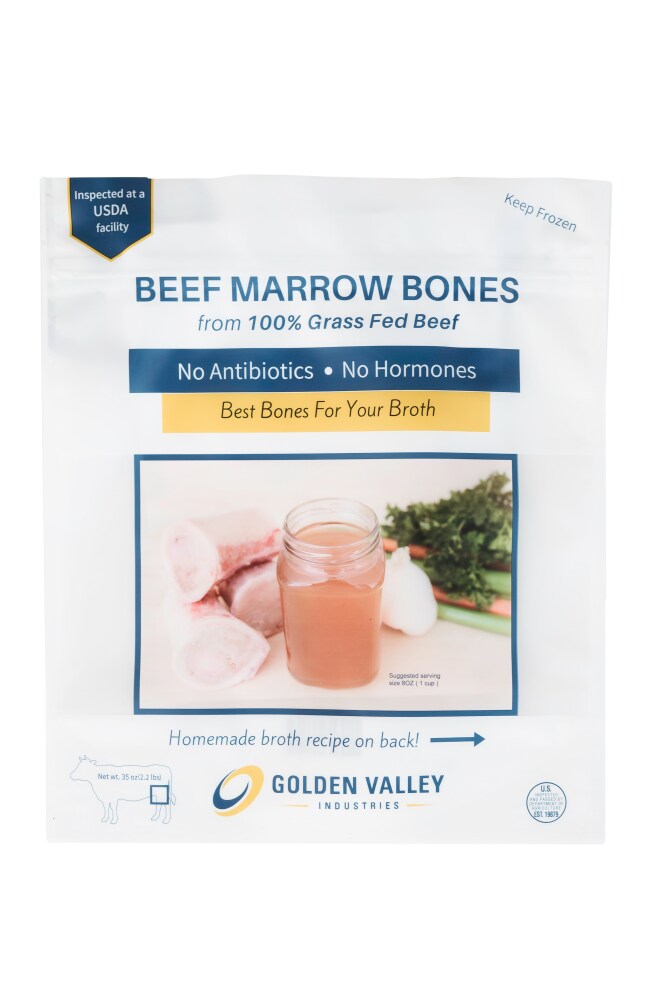
GVI
GVI Grass-Fed Beef Marrow Bones
- 100% grass-fed
- 100% grass-fed
- Processed in
- Modesto, California, United States
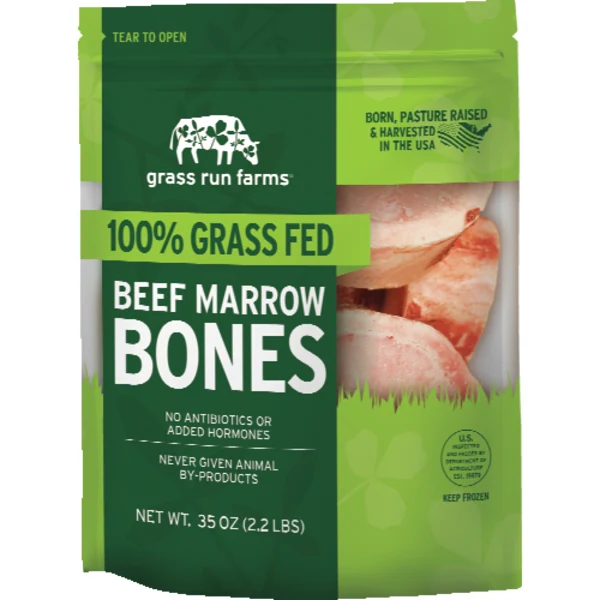
Grass Run Farms
Grass-Fed Frozen Beef Marrow Bones
- Feed
- 100% grass-fed
- Origin
- United States
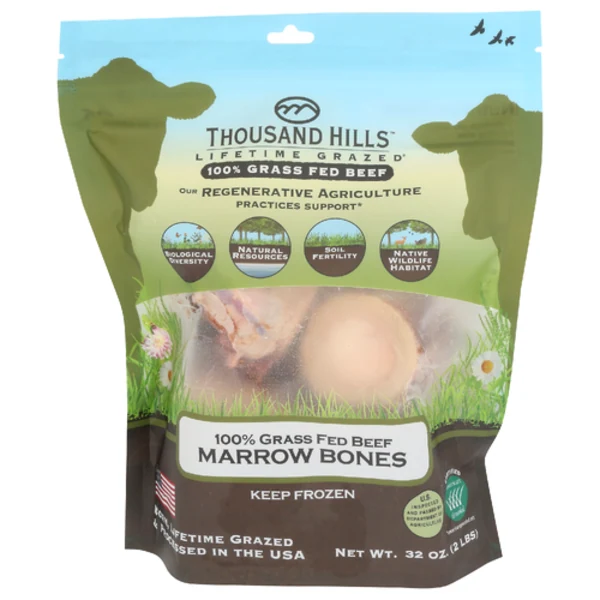
Thousand Hills
100% Grass Fed Beef Marrow Bones
- Feed
- 100% grass-fed
- Origin
- United States