
Product images · Packaging may change
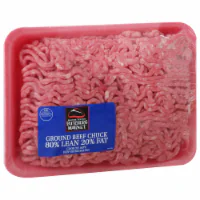
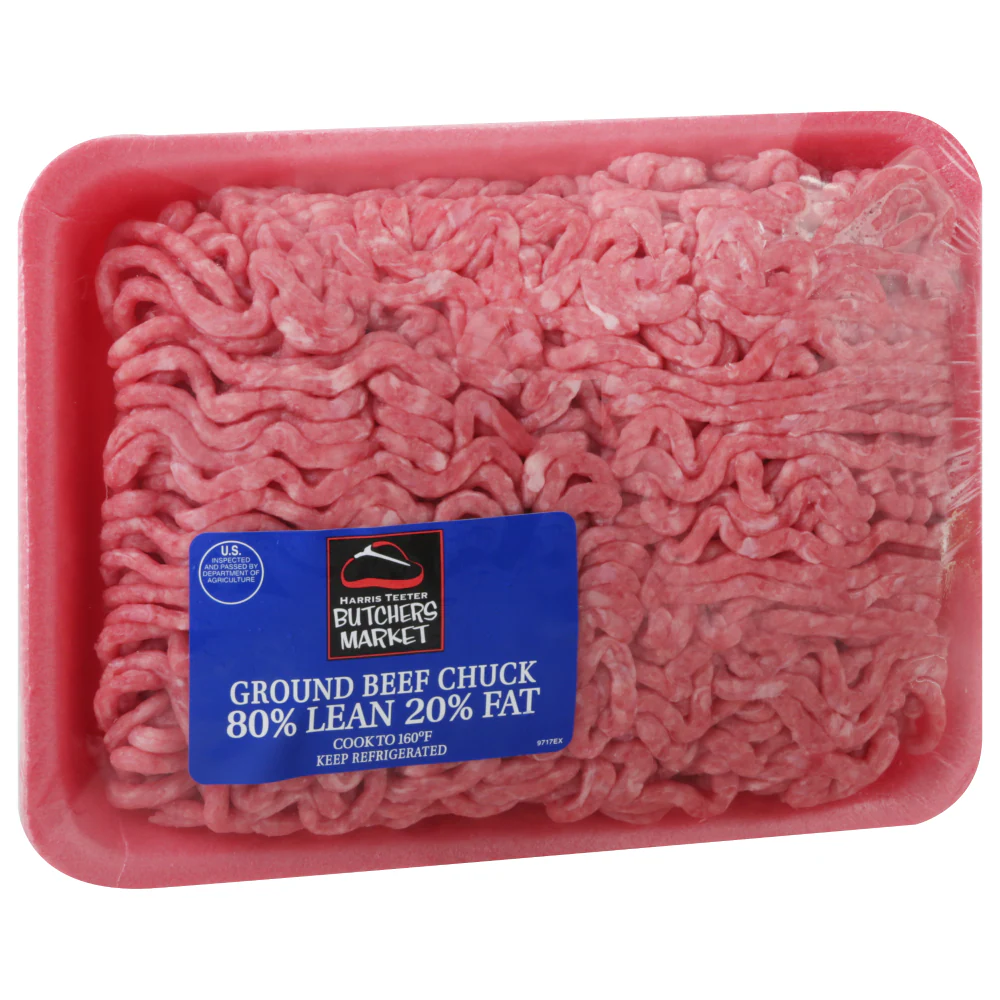
Harris Teeter Butchers Market 80/20 Ground Beef Chuck
80/20 ground chuck with natural flavors. Likely includes grain-finished beef with an early pasture stage; the exact ranch and ration remain unconfirmed.
Ingredients
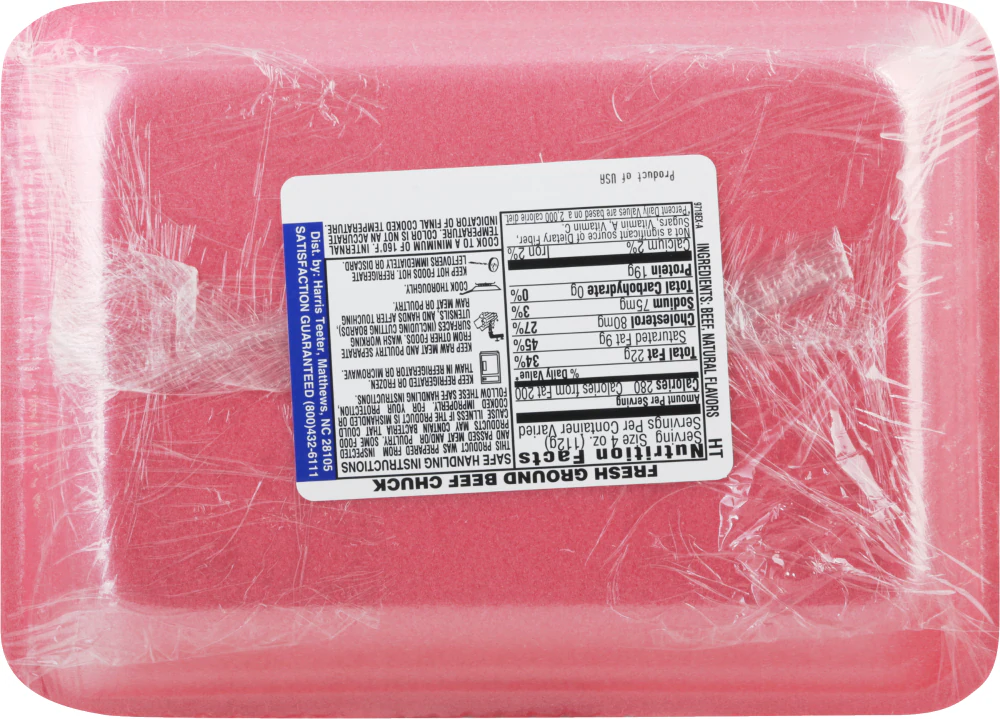
Natural flavors addedOrigin
United StatesLikely some grain-finished beef
Likely some grain-finished beefA CLOSER LOOK
The food facts.
Negatives
IngredientsNatural flavors addedMediocre
Natural flavors are listed as an ingredient.
More info
Mediocre
The ingredient declaration includes natural flavor. Its composition and application method are not disclosed.
We favor plain meat without added flavoring.
Natural flavor is an additional declared ingredient; a natural-meat name does not establish a beef-only formula.
Added flavouring makes plain meat into a formulated product. We would choose meat with straightforward ingredients.
Applies to the retained product version; current package declarations can change.
Sources
Likely some grain-finished beefMediocre
Likely includes grain-finished beef. Conventional retail blends commonly use trim from grain-finished cattle, sometimes mixed with other beef. This is an inference, not a disclosed recipe.
More info
Mediocre
Likely includes grain-finished beef. Conventional retail blends commonly use trim from grain-finished cattle, sometimes mixed with other beef. This is an inference, not a disclosed recipe.
This sourcing preference favors lifetime forage feeding. The product identity and conventional retail market support likely grain inclusion; an industry pattern is not a lot-level observation. No safety or residue conclusion follows.
Grain finishing supplies energy-dense feed for weight gain and marbling before slaughter. We would choose grass and forage for cattle. In beef comparisons, forage feeding generally produces more omega-3 fat and a lower omega-6 to omega-3 ratio.
Actual supplier, ration and grain proportion are unresolved.
Ground blends may include grass-fed trim; the inference does not apply to every animal.
Sources
- USDA cattle production and trade · Cattle feeding; U.S. beef trade
- USDA assessment of beef imports — July 2023 · Special article, p. 31: retail ground-beef trim
Product information
Origin & producer
Related businesses
Country of origin · United States
United States
Pictured processor · Cargill West Columbia SC (photos uploaded April 2024)
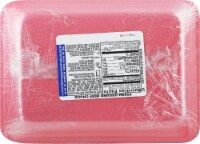
The photographed regular 80/20 chuck pack bears EST. 86A, identifying Cargill West Columbia for further processing. Photos uploaded April 27, 2024 do not date production. This connection does not allocate the separate value pack or current lot.
Actual practice or traceability context; no current farm/slaughter allocation or unmeasured health outcome.
Original report/source dates preserved; a pictured mark is not an all-lot guarantee.
Older U.S. origin label · U.S. label on a 2024 pack
The photographed regular chuck pack, uploaded in April 2024, says Product of USA. That older label could cover U.S. processing of imported beef; it does not establish where the cattle were born or raised.
Preserve the actual U.S. label and processing context without treating the older claim as proof of cattle raising country.
No claim that this pack used imported beef; animal origin remains unresolved.
Sources
- Photographed regular chuck rear
- USDA FSIS U.S.-origin labeling final rule · 89FR19472: prior minimally-processed U.S. policy;19473: January1,2026 compliance date
Product of USA · Product of USA on the pictured label
Product of USA on the pictured label.
Retains the actual product-origin claim without assigning birth, raising or slaughter locations.
Sources
Processing
No added solution
Excellent
No added solution
Added solution introduces water and other ingredients into meat, changing what you are buying by weight.
Added solution introduces water and other ingredients into meat, changing what you are buying by weight.
Ingredients
Ingredients notes · Natural-flavor composition is not disclosed.
Natural-flavor composition is not disclosed.
How it's raised
Likely early pasture access
Likely some pasture access early in life in this conventional beef supply. Dairy-derived, imported or specialty inputs can differ; this does not establish pasture finishing.
The source cattle likely follow a pasture-based cow-calf start before later finishing. USDA cow-calf/stocker descriptions and the matched conventional line support this qualified pattern; an existing grain inference alone does not prove pasture. No exact herd, duration, lifelong access or welfare audit assigned.
Actual cattle mix, ranches and individual animal pasture histories remain unconfirmed.
Dairy-derived or other imported/specialty cattle can differ; this is not a grass-finished, year-round-outdoor or US-raising claim.
Sources
- USDA cattle production: cow-calf and stocker phases · UpdatedMay22 2025; cow-calf operations and cattle feeding: grazing before finishing
- Exact conventional beef product identity
- MLA Regional feedlot investment study: pasture before grain finishing · Section2.1,printedp9/physical11. Industry account, not this product farm/lot.
An unknown answer does not mean “none.” Check your package for current details.
KEEP EXPLORING
Also in the meat aisle
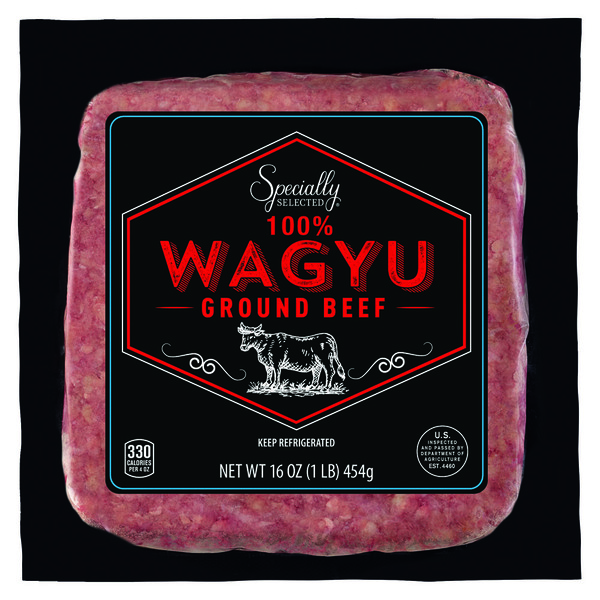
Specially Selected
Specially Selected 75% Lean/25% Fat Wagyu Ground Beef
- Likely grain finishing
- Likely grain-finished
- Origin
- Not specified
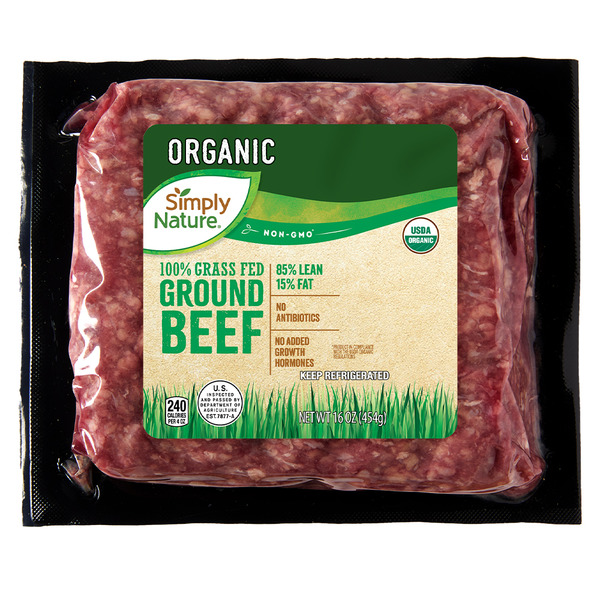
Simply Nature
Simply Nature Organic Grass Fed 85% Lean Ground Beef
- Feed
- 100% grass-fed
- Origin
- Australia, Uruguay, United States
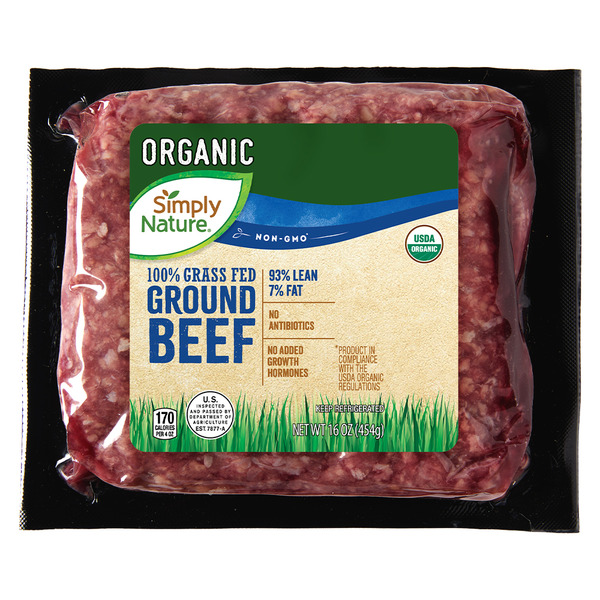
Simply Nature
Simply Nature Organic 100% Grass-Fed 93% Lean Ground Beef
- Feed and finishing
- 100% grass-fed organic non-GMO
- Origin
- Australia, Uruguay, United States