
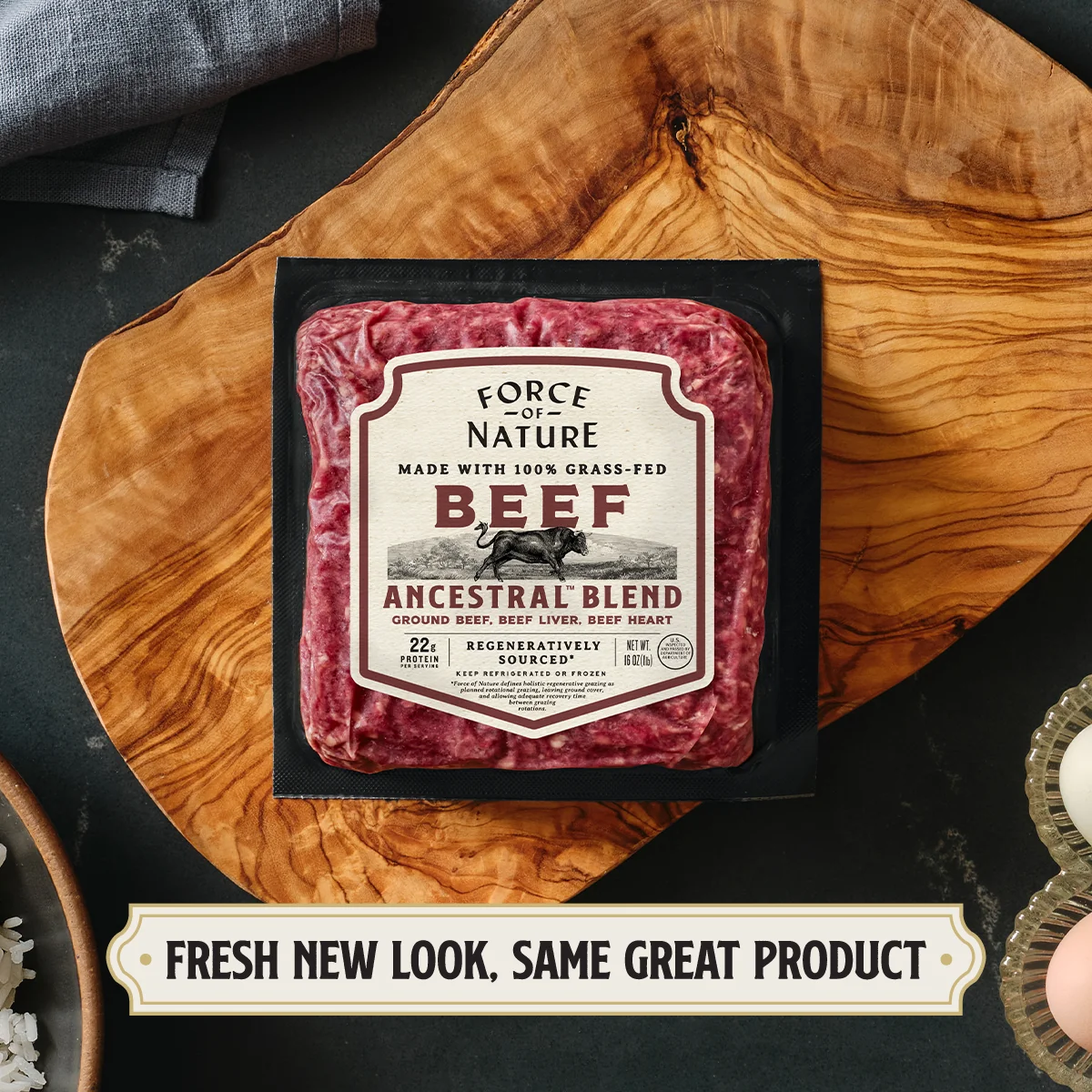
Product images · Packaging may change
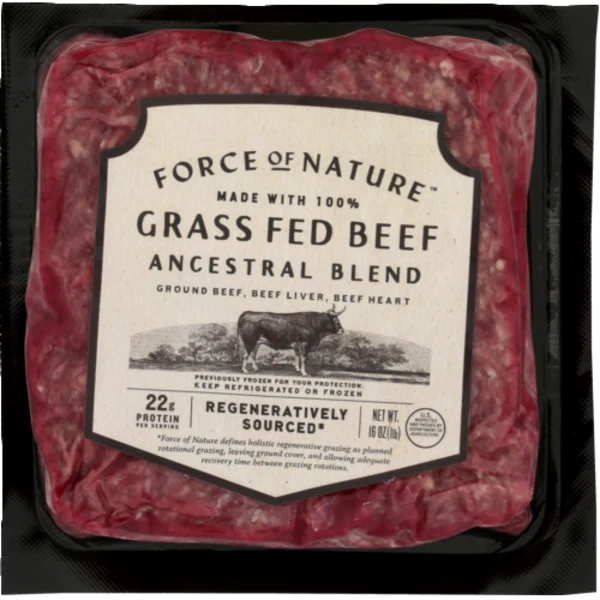
100% Grass Fed Ancestral Blend Ground Beef
100% grass-fed non-GMO beef with 4% liver and 4% heart. Year-round pasture access. The pictured pack says previously frozen.
Outdoor access
Lifelong pasture; no feedlotsProcessing washes
Peracetic acid (PAA)Feed
100% grass-fed non-GMOOrigin
United States, Australia, New ZealandA CLOSER LOOK
The food facts.
Negatives
Processing washesPeracetic acid (PAA)Mediocre
In September 2026, Force of Nature identified peracetic acid (PAA) as an antimicrobial used in beef and bison processing.
More info
Mediocre
In September 2026, Force of Nature identified peracetic acid (PAA) as an antimicrobial used in beef and bison processing.
Stabilizer residues: Some PAA blends contain HEDP, which can remain on meat. Worker exposure: PAA mist and vapor can irritate eyes, skin and airways. Bacterial tolerance: Repeated sublethal exposure increased PAA tolerance in some Listeria strains in lab tests. Hygiene concerns: In the poultry-wash debate, consumer group BEUC warned that chemical washes could replace efforts to prevent contamination.
PAA washes kill bacteria during processing. We would choose meat without this extra chemical treatment. Some formulations include HEDP, a stabilizer that can remain on meat. PAA mist can also irritate workers’ eyes and airways.
PAA use is established for the stated program or facility scope; these general concern sources do not identify this product’s wash formula or measure its residues.
HEDP occurs in some formulations, not all. The cited EFSA poultry assessment found no toxicity concern at the exposures assessed and did not expect measurable lipid peroxidation.
Worker irritation concerns chemical contact and inhalation. No injury or unsafe exposure at this product’s processor is established.
The bacterial-tolerance study used repeated sublethal exposure in laboratory broth, not a commercial carcass wash or this product. It does not establish antibiotic-resistant infection in shoppers.
BEUC’s 2014 position concerns poultry-decontamination policy. Its warning is not evidence of poor hygiene at this product’s processor.
The full treatment list is not established.
Sources
- PAA formulations — USDA technical review · Composition and stabilizers; general chemistry, not this product’s wash formula
- PAA and HEDP assessment — EFSA, 2014 · Summary and toxicological safety; poultry exposure scenarios
- Worker exposure — NIOSH · March 2017 background: eye, respiratory-tract and skin irritation
- PAA adaptation in Listeria — 2025 laboratory study · Sections 2.4, 3.3 and Table 3; repeated sublethal exposure, not carcass treatment
- Hygiene concerns — BEUC’s 2014 poultry position · Pages 2, 4 and 11: attributed concern about reliance on chemical washes
Positives
Outdoor accessLifelong pasture; no feedlotsGood
Year-round pasture access under the beef and bison programme, with no finishing feedlots or confinement barns.
More info
Good
Year-round pasture access under the beef and bison programme, with no finishing feedlots or confinement barns.
Supporting source attached to an existing rated practice; no new categorical fact or rating.
Lifelong pasture or range, without feedlot finishing, gives animals freedom to graze and move throughout raising. A pasture start, seasonal grazing or access to an outdoor yard does not establish that commitment.
Feed100% grass-fed non-GMOGood
Grass and forage through finishing, with free-choice mineral supplements. No grain or feedlots.
More info
Good
Grass and forage through finishing, with free-choice mineral supplements. No grain or feedlots.
A lifetime forage diet excludes grain, including during finishing. Grass-fed beef generally has more omega-3 fat and a lower omega-6 to omega-3 ratio than grain-fed beef.
Force of Nature’s beef and bison programs permit free-choice mineral supplements alongside grass and forage. A grass-fed claim is not a complete ration ingredient list.
A lifetime forage diet excludes grain, including during finishing. Grass-fed beef generally has more omega-3 fat and a lower omega-6 to omega-3 ratio than grain-fed beef.
Mineral supplementation is permitted; the exact supplements used for this animal are not supplied.
GMO feed
Good
GMO ingredients are excluded under the published beef and bison programme; this does not establish organic feed or a residue result.
A non-GMO feed commitment excludes genetically engineered feed crops. It rules out those crops in the ration.
Supporting source attached to an existing rated practice; no new categorical fact or rating.
Non-GMO feed excludes genetically engineered crops from the ration.
Product information
Origin & producer
Related businesses
Country of origin · United States, Australia, New Zealand
Beef sourcing is mainly U.S., with Australia and New Zealand also in the programme. This package’s country and ranch are unconfirmed.
Supported product/programme information with species, source-version and measurement limits preserved.
A programme statement is not a current retail lot or independent outcome measurement.
Sources
Brand · Force of Nature
Force of Nature
Pictured processor · Atkins, Fremont California — pictured version
One retailer package image shows EST. 20581, mapped in the September 2026 FSIS directory to Atkins Sheep Ranch/Hastings Ranch in Fremont, California, for processing. It does not identify the slaughterhouse or supplying ranch.
Identifies processing and packing provenance while keeping slaughter, cattle/organ origins and farm allocation separate.
Redesigned manufacturer artwork has an unnumbered seal; versions remain separate.
No Atkins lamb programme, meat-contact treatment, certification, country or current operating result is inherited.
Featured ranch · Stemple Creek Ranch, California — featured in 2023
Force of Nature featured Stemple Creek Ranch near Tomales, California, in November 2023. This dated brand/ranch feature does not identify this package’s ranch or establish present supply.
A named ranch feature provides historical brand context without establishing current procurement or package origin.
No current supply contract, volume, shipment or package allocation is established by the feature.
Origin & producer notes · These are the species program’s sourcing countries. Origins vary across supply; this package’s country is not identified.
These are the species program’s sourcing countries. Origins vary across supply; this package’s country is not identified.
How it's raised
Conditions · Pasture-raised
Pasture-raised
Finishing location · Pasture
Pasture
Antibiotics & hormones
No antibiotics
Excellent
Therapeutic antibiotics are permitted for serious illness; treated animals leave the Force of Nature beef supply.
Routine antibiotic use can select for resistant bacteria. A no-antibiotics supply commitment keeps treated animals out of that programme; sick animals still need care.
The company says use is permitted when herd well-being is threatened. Its FAQ says vaccines are sometimes used, depending on species and region. Neither statement establishes individual treatment or diversion.
Raised without antibiotics. Limiting routine antibiotic use helps reduce selection for antibiotic-resistant bacteria. Sick animals can still receive care and be kept out of this supply.
Programme policy is not a treatment record or proof of outcomes for a particular animal.
No added hormones
Excellent
No added hormones
Added growth hormones accelerate weight gain. We would choose meat raised without that intervention.
A no-added-hormones commitment excludes hormone treatments used to accelerate weight gain.
Residue screening
Monthly antibiotic-residue checks and independent-laboratory sampling for 300+ chemicals. Reported results are not detected or below reporting thresholds; this is a screening programme, not proof of zero chemicals.
Screening is a useful disclosed control; below reporting or quantification thresholds is not universal chemical absence or a demonstrated clinical benefit.
No sample-linked laboratory report, numerical thresholds or batch coverage is established.
The named public analyte list is not evidence that every listed compound was assayed in each batch.
Sources
- Force of Nature testing disclosure · February 19, 2026: sampling and reporting limits
- Published standards and named analyte list · October 12, 2026 retained current source review
Antibiotics & hormones notes · Animals treated with antibiotics are excluded from the brand’s beef and bison supply.
Animals treated with antibiotics are excluded from the brand’s beef and bison supply.
Processing
Freezing history · Sold frozen
Sold frozen
No added solution
Excellent
No added solution
Added solution introduces water and other ingredients into meat, changing what you are buying by weight.
Added solution introduces water and other ingredients into meat, changing what you are buying by weight.
Processing notes · Peracetic acid is a processing antimicrobial; this does not establish residues or an added solution in the finished meat.
Peracetic acid is a processing antimicrobial; this does not establish residues or an added solution in the finished meat.
Ingredients
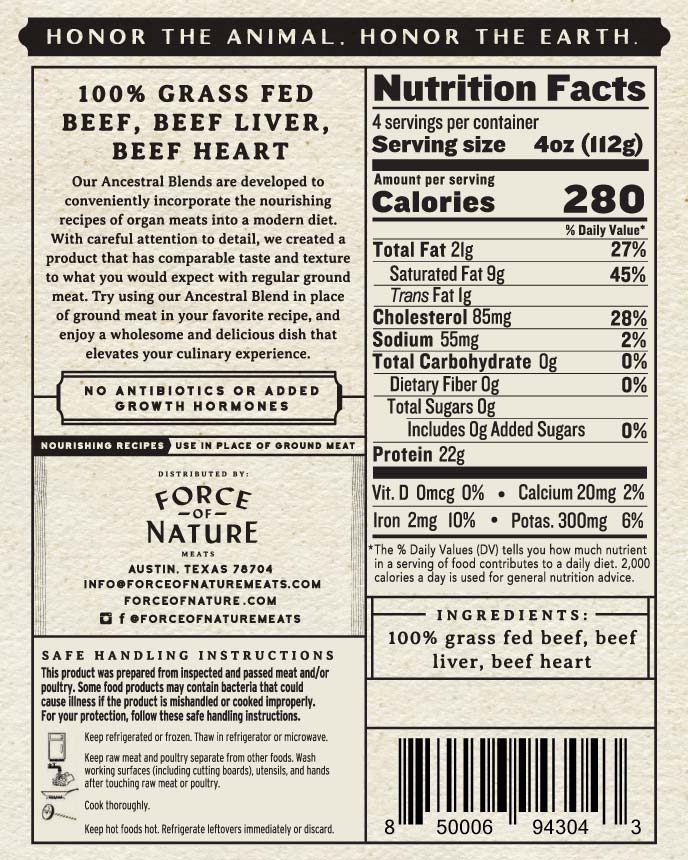
Ingredients · Grass-fed beef, Beef liver, Beef heart
Excellent
The manufacturer’s ancestral beef and bison recipes call for 4% liver and 4% heart.
Plain meat best fits our ingredient preference. A simple ingredient list cannot rule out processing aids used earlier.
The June 2026 manufacturer recipe describes 8% organs in total; a recipe is not an analysis of an individual package.
Ingredients describe what goes into the food. Processing treatments are covered separately.
Published blend formulation; does not apply to plain meat products or establish every historical package.
Sources
Ingredients notes · The current manufacturer recipe includes 4% liver and 4% heart.
The current manufacturer recipe includes 4% liver and 4% heart.
An unknown answer does not mean “none.” Check your package for current details.
KEEP EXPLORING
Also in the meat aisle
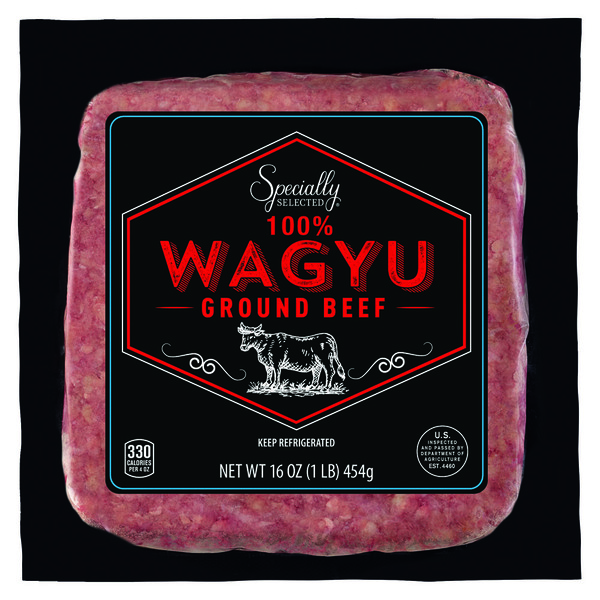
Specially Selected
Specially Selected 75% Lean/25% Fat Wagyu Ground Beef
- Likely grain finishing
- Likely grain-finished
- Origin
- Not specified
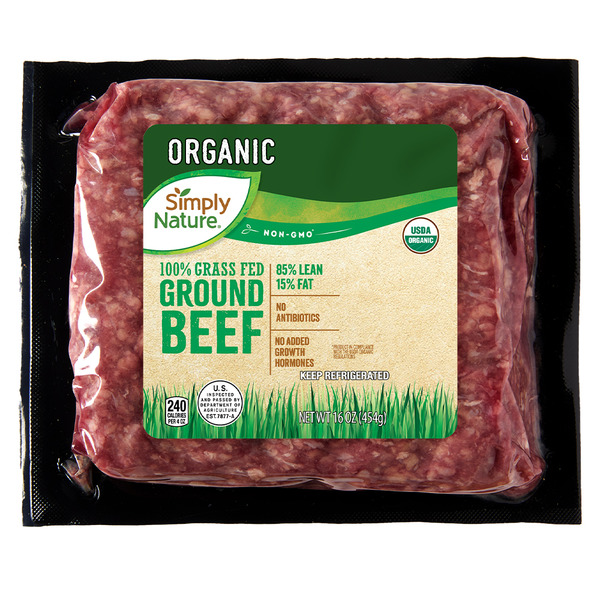
Simply Nature
Simply Nature Organic Grass Fed 85% Lean Ground Beef
- Feed
- 100% grass-fed
- Origin
- Australia, Uruguay, United States
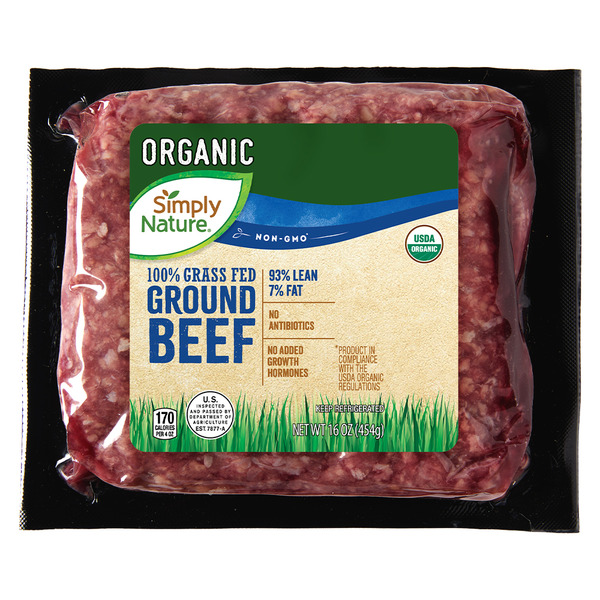
Simply Nature
Simply Nature Organic 100% Grass-Fed 93% Lean Ground Beef
- Feed and finishing
- 100% grass-fed organic non-GMO
- Origin
- Australia, Uruguay, United States